
 Mattress Reviews
 Best Mattresses
 Compare Mattresses
 Accessory Reviews
 Sleep Science
 Sleep Disorders
 Sleep Tips
 Health






















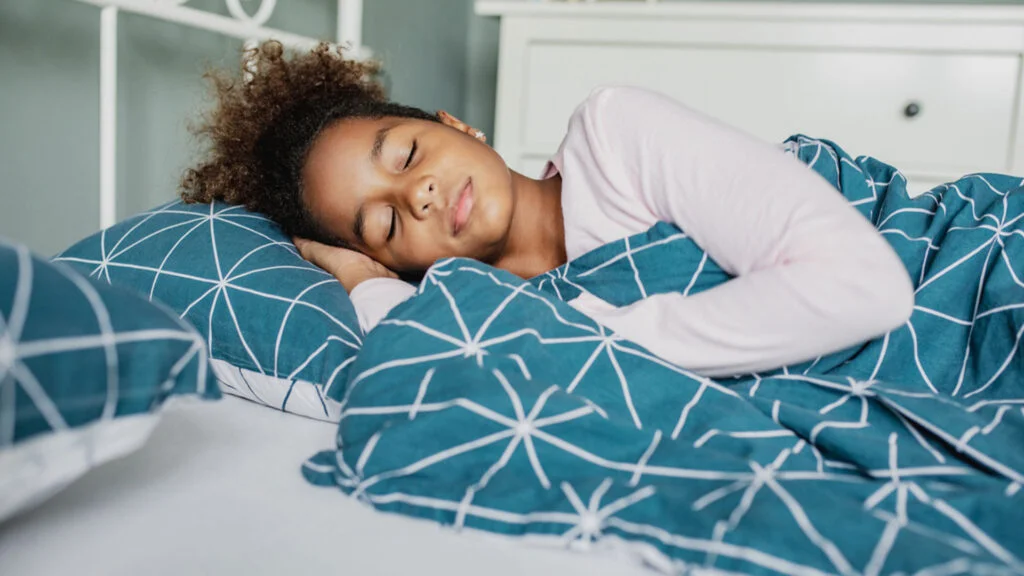
If you ask any parent about their biggest kid-related challenges, there’s a good chance sleep is going to be at the forefront of them. Babies, toddlers, and kids of all ages may, at some point, experience sleep issues—leading to restless parents dreaming of the day when they can sleep again. We spoke with Dr. Harvey Karp, a pediatrician and child development expert, to share some sleep tips for kids on how to help them fall asleep and stay asleep (so parents can too).
Note: The content on Sleepopolis is meant to be informative in nature, but it shouldn’t be taken as medical advice, and it shouldn’t take the place of medical advice and supervision from a trained professional. If you feel you may be suffering from any sleep disorder or medical condition, please see your healthcare provider immediately.
Long Story Short
- Sleep hygiene recommendations for how to help kids fall asleep can depend on age.
- Setting a routine, limiting screen time, keeping pets out of the bedroom, making sure kids stay active throughout the day, or keeping an eye on any nightmare-inducing TV shows are all go-to ways to help get your kids to sleep.
- It’s the same for kids as it is for adults: creating a comfortable, cozy, distraction-free sleeping environment is crucial to helping kids get some rest.
How Much Sleep Does My Child Need?
Depending on your child’s age, sleep requirements can differ. Below, I included the American Academy of Sleep Medicine’s (AASM) general recommendations for how much sleep children or adolescents should be getting each night (1):
- 4 months to 12 months: 12 to 16 hours per 24 hours (including naps)
- Children 1 to 2 years of age: 11 to 14 hours per 24 hours (including naps)
- Children 3 to 5 years of age: 10 to 13 hours per 24 hours (including naps)
- Children 6 to 12 years of age: 9 to 12 hours per 24 hours
- Teenagers 13 to 18 years of age: 8 to 10 hours per 24 hours
Challenges to Getting Your Kids to Sleep
Drawing on Dr. Harvey Karp’s book “The Happiest Baby on the Block,” I list below some examples of environmental barriers within your control that may be preventing a consistent bedtime routine or quality sleep for your kids.
- Screen time and TV shortly before bed can complicate melatonin production in children.
- Bright lights can disrupt children’s relaxation and signal that it isn’t time to sleep.
- Messy bedrooms can make it difficult for children to feel settled and unwind for bedtime.
- Noise and commotion, such as loud conversations or music, can interrupt a child’s deep sleep or prevent them from falling asleep.
- Too hot or too cold non-neutral temperatures can potentially lead to children’s discomfort and prevent or interrupt sleep.
- Changes in curfew or inconsistent bedtimes can disrupt a smooth, peaceful bedtime routine for your kids.
Teach Good Sleep Hygiene
You should start teaching your children healthy sleep habits early in life. Try to communicate this in a kid-friendly way, so they can take it more seriously and understand the long-term benefits.
Creating a Consistent Routine
According to Karp, “Babies and children depend on routines and boundaries to feel safe and secure, so having a consistent bedtime routine and sleep/wake times are a must”. He adds, “Using predictable sleep cues as part of a night-night routine helps to get the brain prepared to sleep. Little ones quickly learn that it’s time to wind down their brains and bodies for sleep, which can help keep bedtime battles at bay.”
One way to approach this is to set a regular bedtime that your children can anticipate. Begin creating a cozier atmosphere by dimming lights or creating a quieter space that signifies it’s time for them to ‘chill out’.
Dr. Karp suggests a warm bath could help during this period, as it calms your child down (just like it does for adults). After this, you can start story time or play lullabies as you put your child to bed, creating a calmer environment that helps your child feel safer falling asleep.
A noise machine can also help to maintain a calm atmosphere after reading, helping your child stay asleep while you slowly leave the room. Dr. Karp also suggests “bedtime sweet talk”, where you can talk about how great the day was, or offer anxiety-relieving words about your love for them and how good things were that day (communicating the day has finished, but it was well lived).
Stuffed animals or security blankets, also called comfort items, can help alleviate children’s insecurities as you try to leave them alone to sleep. Upon leaving, Dr. Karp suggests “gradual check-ins”: if they begin crying after you leave or refuse to sleep, you can leave for a while and then check in to make sure they’re ok. However, try increasing the time between check-ins to encourage growth in self-soothing.
Overall, it’s helpful to establish a final goodnight ritual. Whether an additional goodnight to their stuffed-animal friend, or a special saying between you and your child that signifies it’s time to rest, a final goodnight ritual can help switch your child’s mind to focus on resting rather than resisting bedtime.
Bedtime routines don’t only make it easier to get your kids to sleep, either (2). There’s strong data showing that creating consistent sleep routines for your children can have additional benefits for your child’s growth. According to a 2017 study (3) on the benefits of a bedtime routine for children, “A bedtime routine can contribute to an array of positive developmental outcomes beyond improved sleep, inclusive of language development, literacy, child emotional and behavioral regulation, parent–child attachment, and family functioning, among other outcomes.”
Make Sure Your Kids are Keeping Active
Karp recommends making sure kids get outdoor activity, particularly in the daytime. He says, “Not only will toddlers and older children burn energy that’ll help them sleep better in the evening, but exposure to morning sunlight lowers the production of the sleep hormone, melatonin, to help children feel awake in the morning.”
Moreover, daytime activity offers sunlight and is recommended more than evening activity for children. If morning activities aren’t possible, it’s still recommended to keep an active child, but it’s best to leave as much time between their bedtime and any activity as possible. According to one study, moderate physical activity is associated with improved sleep quality for children (4).
Create A Television Curfew
“Turn off screens about 30 to 60 minutes (5) before bedtime,” Karp suggests. “The blue light from TVs, phones, and tablets can overstimulate tired children and postpone the release of melatonin, which makes the kids feel more awake.”
His recommendation doesn’t go unfounded. One 2019 study suggested that screen time among adolescents and children can contribute to later bedtimes, worsened sleep, increased trouble falling asleep, and next-day exhaustion (6). Karp compares screen time to candy — “a little is okay every so often, but not a steady diet of it.”
Regulate Scary/Non-age Appropriate Media Exposure
It’s an important protective measure to keep your kids’ exposure to on-screen media violence or horror-related content to a minimum. Notably, the American Academy of Child & Adolescent Psychiatry has found that overexposure of children to violence on television can normalize violence, numb children to it, and even encourage them to imitate it or see it as a way to resolve problems (7).
Karp also said, “In the evening, it helps to keep the volume of the TV turned a bit lower and always turn off screens if there’s anything violent or upsetting.” He added that, “Seeing violence is disturbing for adults, but it’s majorly magnified in the impressionable minds of children — even if it’s in the background and you don’t think your child is watching.”
Keep Pets Away When it’s Time to Sleep
One study found that it’s unsafe for babies or young children to sleep with their pets (8). Karp says, “When co-sleeping with the family pet, there’s always a chance a dog (or cat) could get startled and scratch or bite.”
Age-Based Suggestions
We asked Karp for some helpful suggestions on helping kids sleep based on their age-specific needs. And it’s not just about getting them the best crib mattress or best mattress for kids.
Babies
For about the first four months, newborn babies struggle with sleep as they adapt to their new environment after leaving the uterus. According to Karp, “That’s why doing your best womb impersonation (using motion, low rumbly white noise, and snug swaddling) can go a long way to soothe crying and boost sleep.”
Karp recommends the five S’s: swaddling, shushing, swinging, sucking, and holding the baby positioned on their side or stomach, or even over your shoulder, for soothing. He elaborates on this, saying, “The 5 S’s don’t just mimic the calming sensations experienced in the womb, they activate a newborn’s calming reflex, which is their natural ‘off switch’ for fussing and crying and the ‘on switch’ for sleep.”
Toddlers
Endless curiosity doesn’t stop when it’s bedtime for toddlers. Karp recommends reducing as many distractions, both inside and outside, as possible. Saying to, “Put up blackout curtains, make sure your child’s room is the ideal sleeping temperature (between 68 to 72 degrees Fahrenheit), and use white noise, which creates a blanket of sound that helps mask the sounds of TVs and passing trucks.”
Toddlers are also known to develop newfound fears and anxieties about sleeping in the dark when their parent or guardian leaves the room, so it’s helpful to introduce a stuffed animal or comfort toy, which Karp calls a “lovey.” Karp says such toys “work wonders for easing separation anxiety” and can serve as helpful sleep aids, helping children feel secure and build confidence.
Tweens and Teens
Teens and tweens can also benefit from standard sleep hygiene practices. Especially when combating anxiety. According to Karp, “Sleep-helpers like white noise, blackout curtains, morning sunshine, and daily activity continue to work wonders on the sleep front.” It’s really important to monitor their screen time to help preserve a steady sleep/wake cycle. As Karp says, “Remove iPads and cell phones from bedrooms and implement a strict no-screen rule an hour before lights out.”
Monitoring teenage caffeine intake in the era of energy drinks is also crucial. Karp explains, “If your 12 to 18-year-old has a taste for caffeinated beverages (like soda, energy drinks, or coffee), limit their consumption to less than 100 milligrams of caffeine a day”. He also notes that timing matters when it comes to teenage caffeine consumption, saying, “And no matter how much or little they’re drinking, cut off caffeine after 3 pm or their sleep may be disturbed.”
The Cozier the Environment, the Better
All kids, just like adults, benefit from a calm sleeping environment. Here are some suggestions for creating a better one to encourage sleep:
- Remove distractions from the room. Try to keep your child’s bedroom tidy, placing toys or devices out of sight. This can limit potential distractions and stimulation, making it easier for them to wind down and sleep.
- Keep a temperature-neutral room. Room temperature can affect sleep quality, and most experts recommend keeping the bedroom somewhere between 65°F and 72°F.
- Remove the alarm clock. Children, especially older kids, may find the clock distracting. A sunrise alarm clock can be a better option (one that lets you turn off the digital clock face light at night is best).
- Aromatherapy. Therapeutic scents, like lavender and vanilla, can potentially enhance relaxation and a sense of calm in children (and adults). Kid-friendly bedtime lotions and diffusers are two potential ways to experiment with this.
Creating Nightmare Coping Mechanisms
Karp points out that nightmares are common and can begin as early as two or three years old. He suggests a few ways to help your child deal with this:
- Encouraging your child to draw out what’s scaring them the day after a nightmare. Then let them rip up the sketch or jump up and down on it.
- Create a story of a relatable character that struggles with a nightmare, but has the nightmare end with a funny or happy ending, so it’s not as frightening.
- Participatory role-playing can be a big help. For example, pretend you’re the frightened child and your child is the big monster in their dreams. Then, you can switch roles so your child is the brave child and you’re the monster. This can help encourage courage.
- Stuffed animals or security blankets can help a child cope with night terrors.
- Pretend you created a protective solution for the monster in their dreams. For example, you could sprinkle water around the bed and tell your child it’s a special anti-monster spray.
Consistency is Key
Weekends can disrupt routine, but aiming for consistent bedtimes and a consistent sleep/wake cycle for your children will make life easier in the long run (for everyone). Karp explains that, “Not only do children crave and thrive on routines, but predictability helps them understand expectations, relax, and sleep better.”
Obviously, life is unpredictable, and things can come up that interrupt your child’s sleeping routine. But Karp says not to panic when your schedule gets interrupted, and “Simply do your best to use predictable nighttime sleep cues, like dimming the lights, turning on white noise, and reading a bedtime story.”
When to Consult a Physician
Occasional poor sleep is not the end of the world, according to Karp. Parents should expect some ups and downs in their children’s sleep patterns as they grow. “But if your child’s sleep is frequently disturbed to the point where they’re not able to get a good night’s rest, have trouble concentrating, or are very sleepy during the day, it’s time to call the pediatrician,” he says. He also points out other times to consider a doctor’s visit, saying, “Other sleep behaviors that you should bring up with a doctor include sudden fearfulness, snoring, suddenly wetting the bed, frequent night terrors, grinding teeth, or pauses in breathing.”
FAQs
How do I encourage my child to calmly fall asleep alone?
There is a strategy Karp calls “Twinkle Interruptus.” With this technique, you help your child practice patience-stretching by giving them some space on their own (while still ensuring they are safe from a distance, of course). “Once your little one has learned to be more patient, try using it at night,” Karp explains. “When you’re just about ready to give good-night kisses, suddenly say, ‘Oh gosh! Wait! Wait! Just one second! I need to check on something! Here, cuddle Mr. Teddy. I’ll be right back!’ Then leave the room for a few seconds before returning.”
When you return, applaud your child’s patience. Then, begin the bedtime routine, but find a way to exit the room once again, in a calm fashion. “Repeat this a few times, gradually increasing the time your tot is left waiting by a minute or two.” Over a few nights, Karp says, “you’ll likely find that your toddler has fallen asleep while waiting for your return.” “The key, of course, is to always return,” he adds.
How do I help a child relax and sleep?
Following a consistent and calming nighttime routine is an excellent way to help children relax into sleep. Karp says, “About 30 to 60 minutes before bedtime, turn off screens, dim the lights, shut the shades, and turn on white noise to get a child into the sleepy-time mindset”. “Then engage in some sweet, calming activities”, he adds.
Once your kid is in bed, he suggests you have a soothing bedtime talk. Speak softly, mention some of your child’s fun experiences from that day, and maybe a few things to look forward to tomorrow. Karp says, “Filling your tyke’s sleepy mind with gratitude for all the wonderful things they did nurtures their sense of optimism, making for good dreams and sound sleep.”
The Last Word From Sleepopolis
At some point, parents are going to have to endure some sleepless nights; it comes with the terrain. However, maintaining proper sleep hygiene habits with your children early on can help encourage better sleep practices by them as they develop.
Consistency is key, so while it’s not always easy, do your best to maintain a consistent bedtime and wake-up time. Don’t forget to make sure your kid gets off the couch and gets daily activity. Check what they’re watching to monitor for violent or scary content. Try to regulate the amount of screen time they have, and when it’s enough for the day. And, do your best to offer them a cozy, calm environment every night when you put them to bed.
Furthermore, always do your best, but if you’re seriously worried about your child’s sleeping patterns, consult a pediatrician.
Citations
- Karp, Harvey. Personal interview. September 2024.
- Karp, H. (2002). The Happiest Baby on the Block. Bantam Books.
Studies
- Paruthi, S, et al. Recommended Amount of Sleep for Pediatric Populations: A Consensus Statement of the American Academy of Sleep Medicine. Journal of Clinical Sleep Medicine. 2016. https://doi.org/10.5664/jcsm.5866
- Mindell JA, Li AM, Sadeh A, Kwon R, Goh DY. Bedtime routines for young children: a dose-dependent association with sleep outcomes. Sleep. 2015 May 1;38(5):717-22. doi: 10.5665/sleep.4662. PMID: 25325483; PMCID: PMC4402657.
- Mindell JA, Williamson AA. Benefits of a bedtime routine in young children: Sleep, development, and beyond. Sleep Med Rev. 2018 Aug;40:93-108. doi: 10.1016/j.smrv.2017.10.007. Epub 2017 Nov 6. PMID: 29195725; PMCID: PMC6587181.
- Master, L., Nye, R.T., Lee, S. et al. Bidirectional, Daily Temporal Associations between Sleep and Physical Activity in Adolescents. Sci Rep 9, 7732 (2019). https://doi.org/10.1038/s41598-019-44059-9
- Hale L, Kirschen GW, LeBourgeois MK, Gradisar M, Garrison MM, Montgomery-Downs H, Kirschen H, McHale SM, Chang AM, Buxton OM. Youth Screen Media Habits and Sleep: Sleep-Friendly Screen Behavior Recommendations for Clinicians, Educators, and Parents. Child Adolesc Psychiatr Clin N Am. 2018 Apr;27(2):229-245. doi: 10.1016/j.chc.2017.11.014. PMID: 29502749; PMCID: PMC5839336.
- Hale L, Kirschen GW, LeBourgeois MK, Gradisar M, Garrison MM, Montgomery-Downs H, Kirschen H, McHale SM, Chang AM, Buxton OM. Youth Screen Media Habits and Sleep: Sleep-Friendly Screen Behavior Recommendations for Clinicians, Educators, and Parents. Child Adolesc Psychiatr Clin N Am. 2018 Apr;27(2):229-245. doi: 10.1016/j.chc.2017.11.014. PMID: 29502749; PMCID: PMC5839336.
- TV Violence and Children. (2017). https://www.aacap.org/AACAP/Families_and_Youth/Facts_for_Families/FFF-Guide/Children-And-TV-Violence-013.aspx
- Rosano J, Howell T, Conduit R, Bennett P. Co-Sleeping between Adolescents and Their Pets May Not Impact Sleep Quality. Clocks Sleep. 2021 Jan 4;3(1):1-11. doi: 10.3390/clockssleep3010001. PMID: 33406702; PMCID: PMC7838871.