
 Mattress Reviews
 Best Mattresses
 Compare Mattresses
 Accessory Reviews
 Sleep Science
 Sleep Disorders
 Sleep Tips
 Health















If you’ve been on TikTok or Instagram recently, you may have seen influencers and regular folks alike talking about a new sleep fad: mouth tape. Training yourself to breathe “correctly,” meaning through your nose, seems to be the origin of this trend.
Considering that “mouth-breather” is a well-worn insult, it’s not that surprising that many are looking for ways to correct breathing through their mouth. However, mouth breathing can be more than just unsightly for some. Aside from aesthetics, there are many drawbacks to this breathing method (most often during sleep) that could adversely affect your health.
As a certified sleep science coach, I started thinking more and more about mouth taping. I wondered if this seemingly simple method could help reduce snoring and other sleep issues or if it was merely social media hype.
And, as if she could sense my curiosity about this trend, at my last appointment, my dentist told me I might be a good candidate for mouth taping. So, at her recommendation, I decided to do some research and then try it for myself to see if this social media sensation had sticking power.
Disclaimer: This article is not a substitute for medical advice. Always speak to a healthcare professional or your primary care provider if you have any concerns and before trying any solutions.
What is Mouth Taping?
Mouth taping is precisely what it sounds like — placing tape over your mouth to keep it from falling open when you sleep. The idea is simple: the adhesive covering your mouth creates a barrier that encourages your body to breathe through your nose. Since we can’t directly control what we do while we’re sleeping, it’s advertised as an accessible, minimally invasive way to keep our breathing habits in check.
Mouth tape isn’t just any ol’ scotch tape or duct tape (please don’t try these). For taping your mouth while you sleep, use skin-safe silicone- or latex-based tape. You can purchase mouth tape everywhere, from drugstore chains to higher-end beauty stores, with prices ranging from $5 to over $10 for more “luxurious” options that include skincare elements, for example.
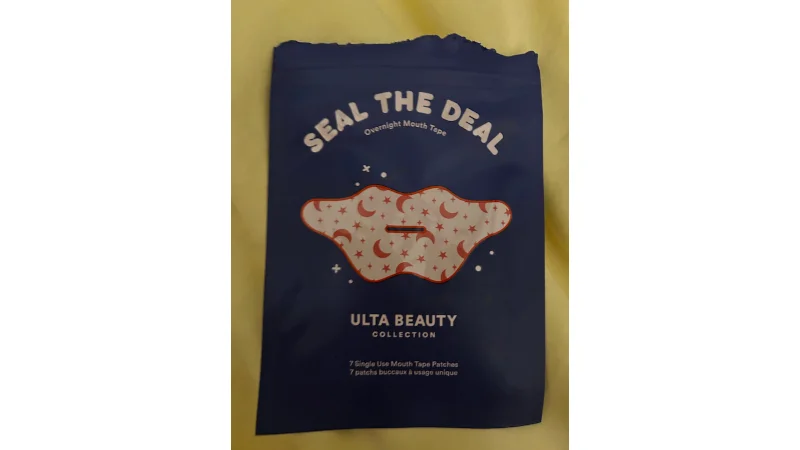
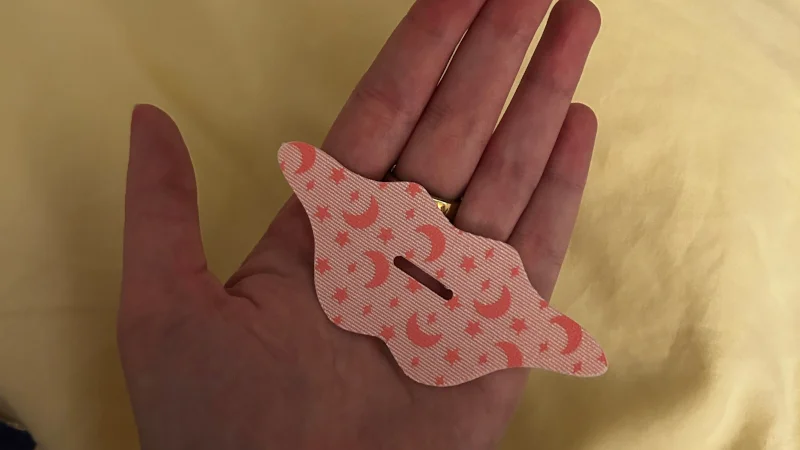
The most common shape is a rectangular strip that completely covers your mouth and most, if not all, of your lips. Most are applied horizontally, but others are vertical, covering only the center of your mouth. I found that there are cute, novelty ones and even those with a small hole in the center, perfect if you need to drink water at night or if you slip up and have to breathe through your mouth.
Benefits of Mouth-Taping
Though some might call it a viral sensation, there are pros to mouth-taping that could help manage certain issues or improve sleep at night.
- Encourages nasal breathing, which can reduce snoring and OSA symptoms
- Improves oral health
- Minimally invasive
- Affordable, accessible treatment compared to others (i.e., CPAP)
- Easy to use and apply
Cons of Mouth-Taping
Some potential downsides to mouth tape include the following:
- Not recommended for those with nasal congestion or obstruction
- May not address underlying cause of mouth-breathing
- Flimsy, with effectiveness of adhesive varying product-to-product
- Under-researched
Why I Decided to Try Mouth Taping
Now that we know exactly what mouth taping entails, let’s go over why I decided to try it. As I said, I had the trend on my social media, but I didn’t consider it until my last dentist appointment. During my examination, she pointed out that one of my teeth was blossoming with an early-stage cavity.
After the list of usual suspects – my brushing and flossing habits and penchant for sweets was cleared, she then asked if I sleep with my mouth open. Since I wake up with a small but sizable puddle of drool on my pillow every morning, I assume yes, I do.
Upon hearing this, she said, “Breathing out of your mouth actually dries it out, and that lack of moisture can cause cavities to get worse.” This is because saliva is essential for maintaining pH and protecting enamel, a must-have for tooth health, my dentist continued.
“However, when you breathe through your nose, it acts as a natural filter, meaning the air is moister and warmer, and therefore better for your mouth biome,” she said.
She recommended mouth taping because it’s easy, affordable, and, hopefully, a quick fix for this issue. Therefore, I purchased a few varieties and gave it the old college try. I ultimately went with some pink lip-shaped ones – for the whimsy.
My Mouth Taping Experience
So, the million-dollar question: am I a mouth taping convert? I admittedly struggle to give a definitive yes-or-no answer. I’m already a finicky sleeper with a fairly rigid nighttime routine.
To get a high sleep score, I need a near-perfect environment that includes my Saatva Classic mattress, a set of cooling bamboo sheets, a super-loud white noise machine, and little to no distractions. Even then, sometimes the comforter touching my face the “wrong” way wakes me up.
The first night I tried to use mouth tape, I couldn’t fall asleep. I was acutely aware of the glue on my skin, feeling it slipping off in the middle of the night. Also, I am a skincare fiend who likes to apply serums and moisturizers right before bed. These definitely made it harder for the tape to stick and stay in place. And, yes, I could have let my face dry, but that would have delayed bedtime – which I am not a fan of doing.
Also, taping my mouth shut was simply new and different. Although I didn’t experience it myself, the prospect of waking up with your mouth “stuck” could cause disorientation and even panic, according to experts. The tape I used had a hole I could drink water through a straw, but if yours doesn’t, it would definitely have made taking sips from a nightstand water bottle more frustrating. As someone diagnosed with anxiety, I don’t want anything to potentially make it worse.
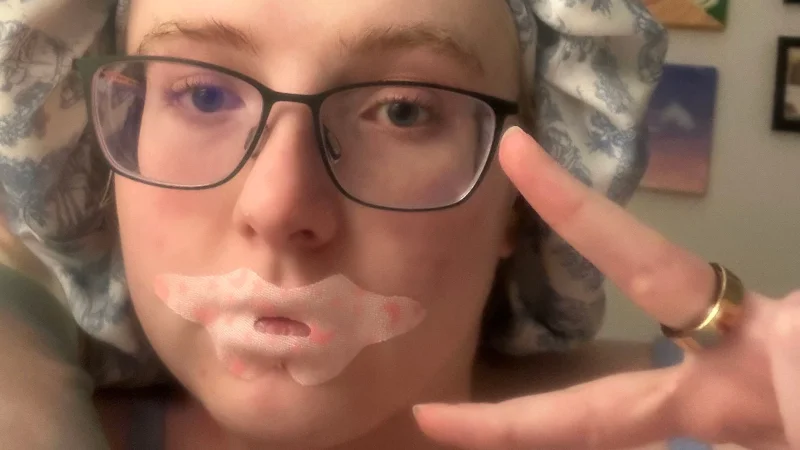
But all of this is to say, I did spend a few successful nights asleep with the tape on — and it was still there when I woke up. I didn’t feel any worse or any better than usual overall. However, I often wake up with a throbbing head (a popular complaint for me, that has also led to a sleep apnea evaluation), and I noticed that I was headache-free the mornings after using mouth tape.
Still, for me, the cumbersome nature and possible risks outweigh any marginal improvement of mouth-taping. I’d rather sleep comfortably and continuously through the night tape-free, then rehydrate and brush my teeth in the morning.
Additional Reasons to Try Mouth Taping
Although it wasn’t the solution I was hoping for, it doesn’t mean you have to write off this practice entirely. As I said, I am someone who needs my sleep environment to be in perfect harmony, and many people swear by the benefits of mouth taping.
Here are some ways that mouth taping could benefit your sleep.
Mouth Taping for Dry Mouth
As mentioned, my dentist was most concerned about dry mouth and the worsening (or development) of cavities it can cause. Dry mouth is also just plain uncomfortable, causing anything from a chalky feeling on your tongue to a burning in your throat.
There’s even research suggesting that mouth-breathing can dehydrate your body faster, a problem for sleep, since you can’t drink water periodically to counteract it. A study states that those with obstructive sleep apnea (OSA) had elevated hemoglobin levels upon waking — a sign that the body was losing more water. The majority of them also reported breathing out of their mouths.
Be aware that dry mouth is a symptom of many other conditions and even medications, and therefore may not be addressed solely by mouth-taping.
Mouth Taping for Snoring
My dad once tried a strip of tape over his nosebridge to cure snoring — and after sharing a hotel room with him on family vacations, I don’t think it works. But as some snoring occurs while a sleeper breathes through their mouth, using mouth tape could be more effective. Training the body to breathe through the nose may reduce snoring — or at least the noise — for those who share a room with a snorer.
Snoring is also a common sign of sleep apnea, another condition that could benefit from mouth-taping.
Mouth Taping for Sleep Apnea
Some sleep apnea patients have used mouth tape alongside CPAP or other treatments, since mouth-breathing is a common comorbidity with this condition. Because of your obstructed airway, your body may try to gulp down air through your mouth.
One study showed that using mouth tape alongside a CPAP can lead to “better CPAP adherence,” meaning sleepers didn’t take either off during the night. “Mouth tape statistically improved Epworth Sleepiness Scale score, snoring visual analog scale, mouth/throat dryness, and night awakenings,” the results report.
Mouth Taping for Drooling
This wasn’t brought up by my dentist, but it goes in conjunction with my mouth-breathing: the dreaded drool. I’ve even woken up with irritated skin. I figured if the tape was covering this entire area, there’d be less chance of it happening.
This is more of an anecdotal recommendation, but I did see many mouth-tape brands advertising it as a possible solution. So, take it with a grain of salt.
Is Mouth-Taping Safe?
While the idea and execution seem straightforward, many still ask: is mouth-taping dangerous? It’s a relatively new trend, and most healthcare professionals seem to view it as more of a fad than a fact-based one.
An Expert’s Opinion:
I asked sleep psychologist Dr. Michael Gradisar, Head of Sleep Science at Sleep Cycle, for his opinion on this trend, including its efficacy and safety. “While one small study has shown promising results in reducing sleep apnea severity with mouth taping, the evidence is still limited, and more rigorous research is needed to confirm its effectiveness,” he stated.
He raised a few concerns about the downsides of mouth-taping, including those who should steer clear. “Risks include improper application, such as taping the mouth completely shut, which can cause panic attacks or difficulties for those with restricted nasal airflow,” he said. “It’s also not suitable for individuals who are prone to anxiety or have previously experienced sleep-related panic.”
Dr. Gradisar advised against using mouth-tape as a “first-line approach.” Instead, he suggested: “Tailored advice from a professional should always be sought before trying mouth-taping.”
If you have worries about waking up with an obstructed airway, mouth-taping may not be for you. The fear alone could affect your overall sleep quality. As someone who frequently deals with sinus problems and persistent congestion, I’d caution against using mouth tape if you have any nasal obstruction.
There’s also the matter of the tape itself causing skin irritation, so make sure you aren’t allergic to any ingredients. Many tapes are latex-based, for example.
| Who Might Like Mouth Tape | Who Might Not Like Mouth Tape |
| Sleepers with obstructive sleep apnea (OSA) | Folks prone to sleep anxiety |
| Chronic snorers | Sleepers with chronic nasal congestion |
| Sleepers prone to breathing out of their mouth | Sleepers with sensitive skin or allergies |
| Excessive droolers (like yours truly) | Anyone with a medical condition that limits nose-breathing |
Does Mouth Tape Work?
While there isn’t much data yet and my results were mixed, whether mouth-taping works largely depends on the individual trying it. It could be a good stepping stone to training your body to breathe a certain way, but there’s also a good chance your mouth-breathing is a symptom of something larger.
Therefore, I always recommend you talk to a healthcare professional before diving in blind. They can offer you insights on the symptoms you’re experiencing and ways to address them — without feeding into the latest trends.
Mouth-Taping FAQs
Is Mouth-Taping Good or Bad for Sleep?
It’s difficult to say whether mouth-taping is good or bad as a whole. While some studies show promise, a majority report that there are little (or even negative) effects associated with the practice. As it’s a more recent venture popularized by social media, experts agree that more study is necessary to form a concrete opinion on its effectiveness.
Do Dentists Recommend Mouth-Taping?
While my dentist recommended I try out mouth tape, that doesn’t necessarily mean it’s right for you. Always talk to your dentist or primary care provider before trying out mouth tape or any other interventions for mouth-breathing. They may have better insight based on your history.
Who Should Avoid Mouth-Taping?
If you’re prone to anxiety attacks, mouth-taping may not be a match for you. Waking up in the middle of the night with your mouth forcibly closed could induce panic or confusion. I’d also advise against it if you frequently deal with congestion, sinus problems, have a cold, or otherwise cannot breathe through your nose.
Of course, we always recommend checking in with your doctor before going on a mouth-taping adventure.
Sources
- Can, H. E., & Pınar Güvenç. (2025). The Role of Saliva in Preventing Tooth Caries. Dental Caries – From Prevention to Restoration. https://doi.org/10.5772/intechopen.1011688
- Ying Joanna, N. Di, & Thomson, W. M. (2015). Dry mouth – An overview. Singapore Dental Journal, 36, 12–17. https://doi.org/10.1016/j.sdj.2014.12.001
- Avika Meksukree, Sirincha Pitipanyakul, Wasin Laohavinij, Busarakam Chaitusaney, Naricha Chirakalwasan, Prakobkiat Hirunwiwatkul, & Natamon Charakorn. (2025). The role of mouth tape for CPAP use in mouth breathing patients with OSA. Journal of Clinical Sleep Medicine. https://doi.org/10.5664/jcsm.11870
- Yi-Fong Su, V., Chou, K.-T., Tseng, C.-H., Kuo, C.-Y., Su, K.-C., Perng, D.-W., Chen, Y.-M., & Chang, S.-C. (2022). Mouth opening/breathing is common in sleep apnea and linked to more nocturnal water loss. Biomedical Journal. https://doi.org/10.1016/j.bj.2022.05.001
- Lee, Y.-C., Lu, C.-T., Cheng, W.-N., & Li, H.-Y. (2022). The Impact of Mouth-Taping in Mouth-Breathers with Mild Obstructive Sleep Apnea: A Preliminary Study. Healthcare, 10(9), 1755. https://doi.org/10.3390/healthcare10091755
- Fangmeyer, S. K., Badger, C. D., & Thakkar, P. G. (2024). Nocturnal mouth-taping and social media: A scoping review of the evidence. American Journal of Otolaryngology, 46(1), 104545. https://doi.org/10.1016/j.amjoto.2024.104545