
 Mattress Reviews
 Best Mattresses
 Compare Mattresses
 Accessory Reviews
 Sleep Science
 Sleep Disorders
 Sleep Tips
 Health



















As someone with chronic insomnia, consistent sleep is as elusive as the Holy Grail. That’s why, like many others, I gravitated toward sleep-tracking wearables. These rings or watches record biometrics like heart rate, blood oxygen levels, and skin temperature to see whether you’re getting a good night’s rest.
My lack of nightly sleep meant I was dealing with daytime fatigue. I was looking for something more accessible than a full-blown clinical sleep study to shed some insight into my nightly habits. So, I decided I’d try a wearable.
Among the many popular options out there, from Whoop to the Oura Ring, I decided on the RingConn — one of the more affordable yet comprehensive options. While it’s also prized for its activity tracking, as a certified sleep science coach, I was more interested in specifically reviewing the RingConn’s sleep tracking.
I’ve been wearing my RingConn for a few months now, and it’s become second nature to ensure I have it on and fully charged before getting into bed. I paid close attention to my sleep scores for over a month. Based on my experience, let’s explore whether a ring can track your sleep and if it can make a difference in your sleep quality.
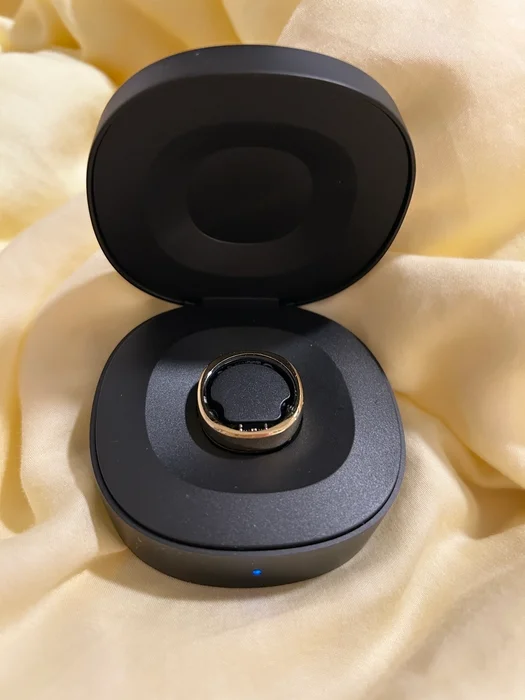
What is RingConn?
The RingConn is more than just a sleep-tracking ring. It features a built-in movement sensor to track various aspects of your activity and vital signs, such as the number of steps you take and calories burned. A PPG sensor uses light to detect changes in blood flow, which gives insights into your pulse, heart rate variability (HRV), and oxygen saturation (or SpO2) throughout the day. Finally, a temperature sensor records fluctuations with a precision of 0.1 degrees Celsius to help you monitor your body temperature.
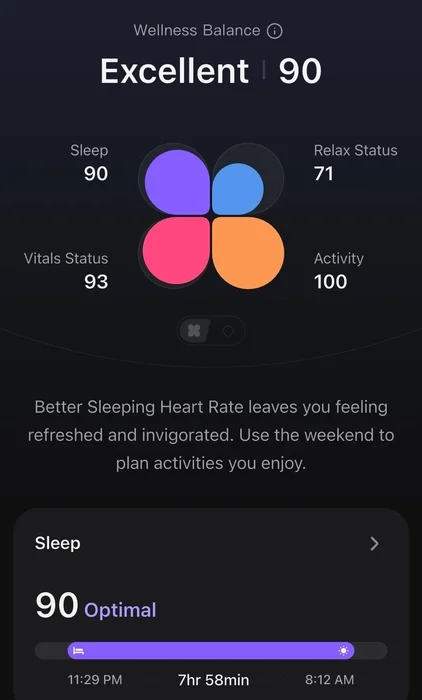
It assigns scores for the major aspects of health: activity, stress, and sleep, as well as a final rating for your vital signs overall. These are tracked and factored into a total lifestyle score, so you can monitor your wellness balance and make sure you’re not neglecting any area of your health.
Of course, these metrics all factor into getting good sleep as well as your overall wellbeing. But when I purchased the RingConn, I was treating it as a “sleep ring” first and foremost. Though if you’re an athlete or looking for a reliable health tracker, the fitness tracking could be a bonus.
Wearing the RingConn
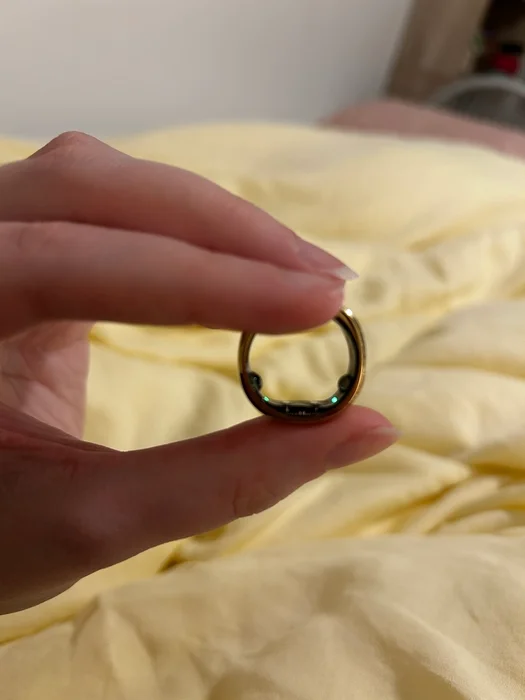
The RingConn is 6.8mm wide and 2mm thick, weighing anywhere from 2 to 3 grams. The brand recommends wearing the ring on your non-dominant hand. I wear it on my left middle finger, and though it took some getting used to as I’m quite the fidgeter, I don’t notice it during my daily tasks. Neither have I slipped it off and tossed it across the room while I’m asleep (something I find myself doing with sleep masks).
It’s a bit more discreet than bulkier wearables, which I’d most certainly give the same treatment as my discarded eye masks. My colleague and certified sleep science coach, Sosha Lewis, scorns her Garmin watch for similar reasons.
“I’m very interested in my sleep score, but despite several attempts, I do not like to sleep in it,” she says. “It makes my arm itchy, and I’ve clunked myself in the head with it a couple of times. I’ve considered getting some kind of ring for this reason alone.”
I will note that I used RingConn’s complimentary sizing kit to find the right fit — something I recommend, as the sizes differ from those of typical jewelry. For reference, I wear a 6.5-7 on my ring finger, but I chose a size 8 for my RingConn.
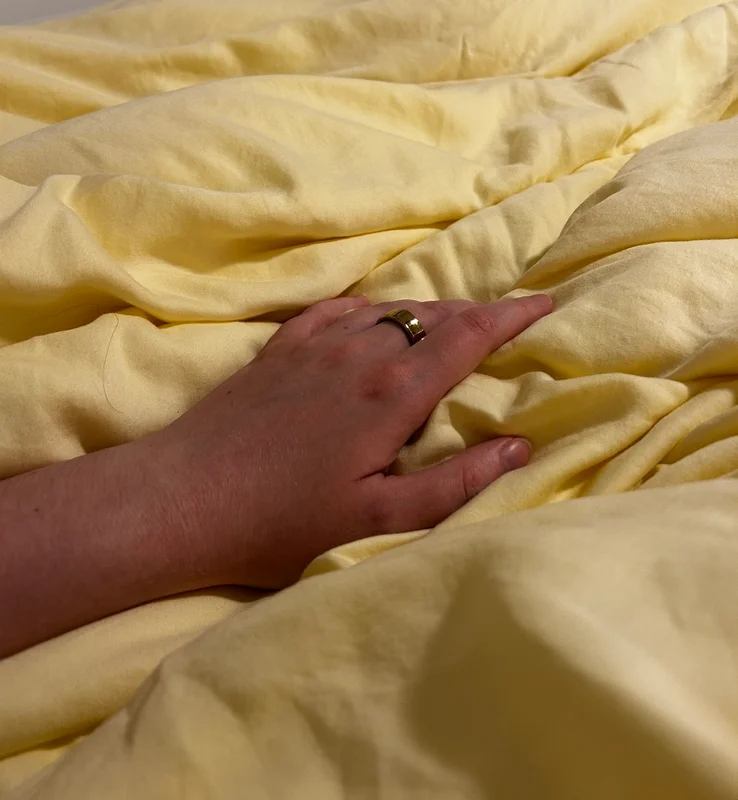
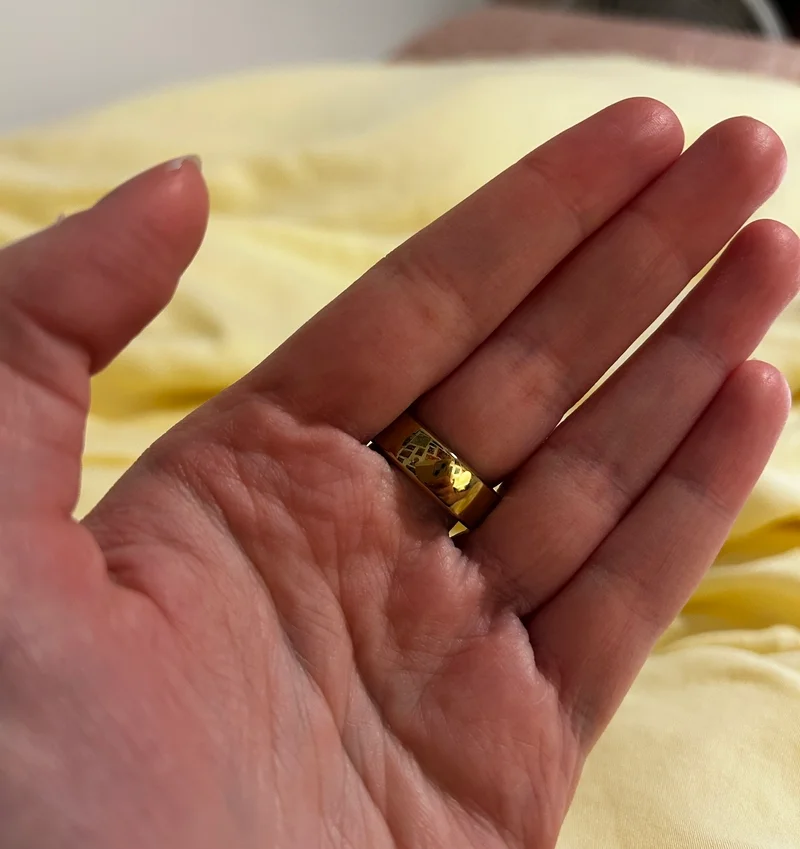
My RingConn is the standard Gen 2 version, which retails for around $300 for the standard colors (gold, silver, and matte black). The Gen 2 Air, a thinner model for folks who find the original a bit too bulky, is also available. RingConn has recently introduced the Gen 3, which, for a higher price, gets you more “vascular insights” and a longer battery life.
How RingConn Tracks Your Sleep
RingConn automatically tracks your sleep every night, so long as you’re wearing your ring. It measures your heart rate to determine whether you’re asleep, so you don’t have to notify it when you’re going to bed or even settling in for a nap. Your heart rate also tells RingConn which stage of sleep you’re in, as certain stages are associated with lower or higher heart rates.
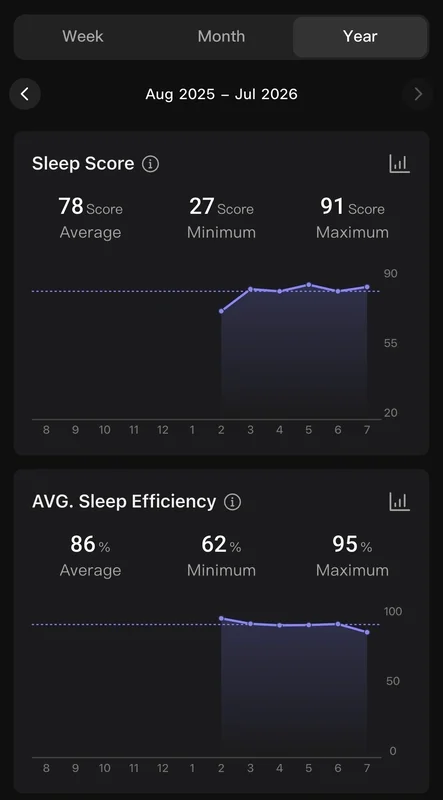
Upon waking, you can refresh the RingConn app to see your sleep score. This number (from 1 to 100) reflects how long you spent in bed, how much of it you were sleeping, and how “efficient” your sleep was.
The lowest sleep score I’ve ever received is 27, thanks to a faulty noise machine keeping me up the night before my friend’s bridal shower. I only had about 4 and a half hours of sleep, and I indeed felt rundown throughout the day.
My highest sleep score is 91 with 95% sleep efficiency. RingConn tells me my average sleep score is about a 78, a C+ by American grading standards. Though I’m not failing, there’s certainly room for improvement.
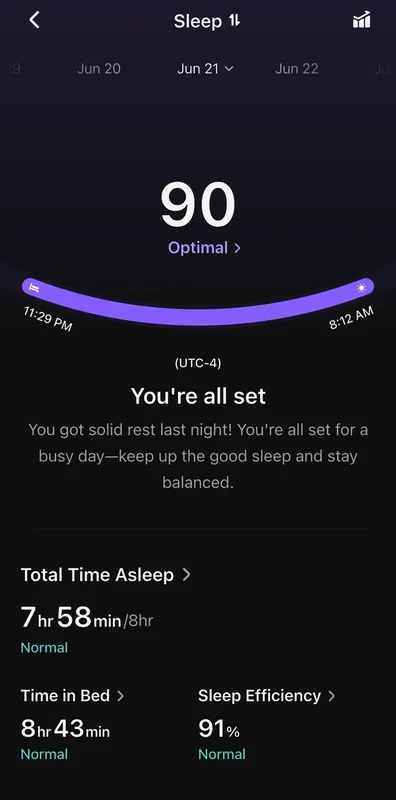
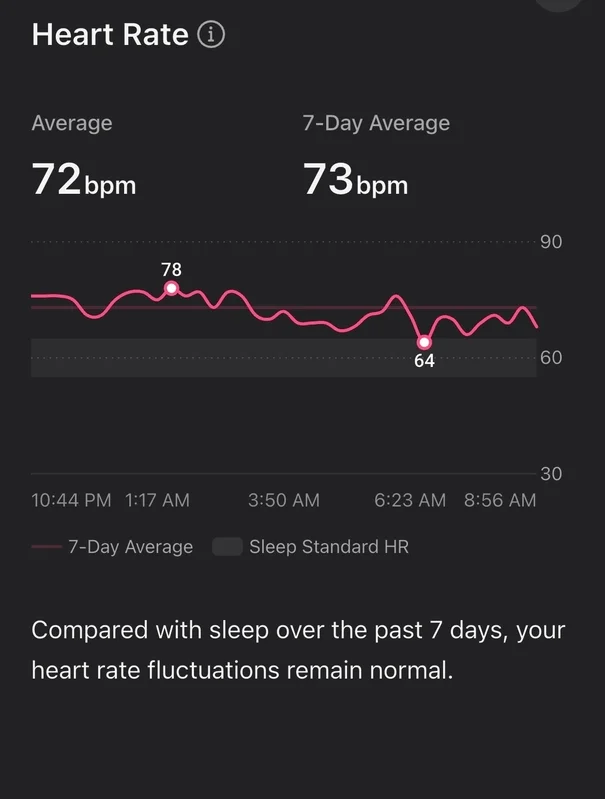
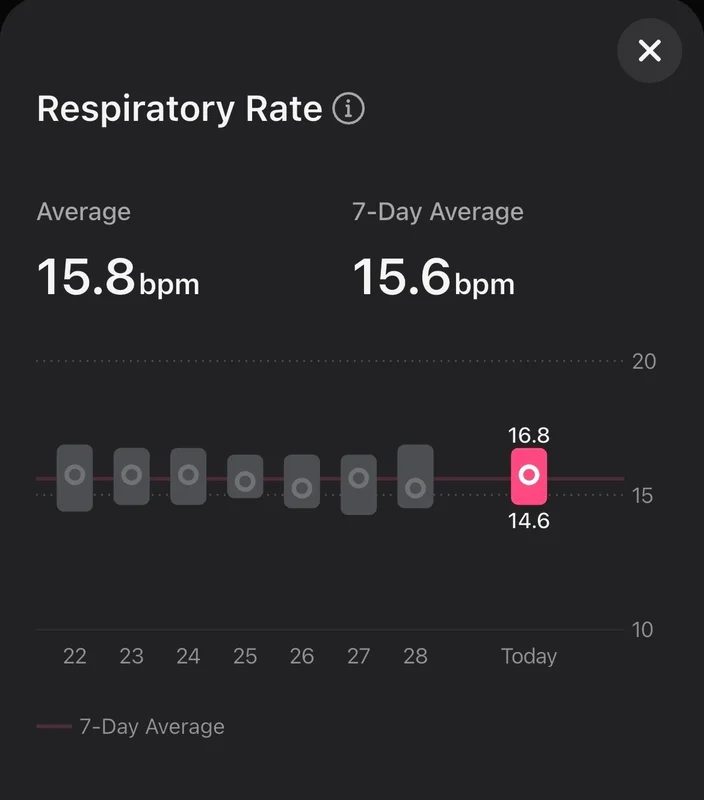
Efficient sleep means you weren’t frequently waking and spent adequate time in each sleep stage. It’s also influenced by your resting heart rate, how much you moved, your respiratory rate, your SpO2, and your HRV.
The ring also tracks your skin temperature during sleep, though I wouldn’t rely on its accuracy for fevers, since skin temperature isn’t as reliable as core body temperature.
Clicking on each of these metrics, you can see more in-depth records on fluctuations throughout the night. It will also show the highest and lowest points of each cycle. At the bottom, you can see insights from the data collected. My HRV is usually on the lower side if I have a restless night, so RingConn warns me that my recovery may be affected by this stress.
But what intrigues me most, and what I feel is most beneficial to understanding how well I slept, is RingConn’s breakdown of the stages of your sleep cycle.
The Sleep Cycle
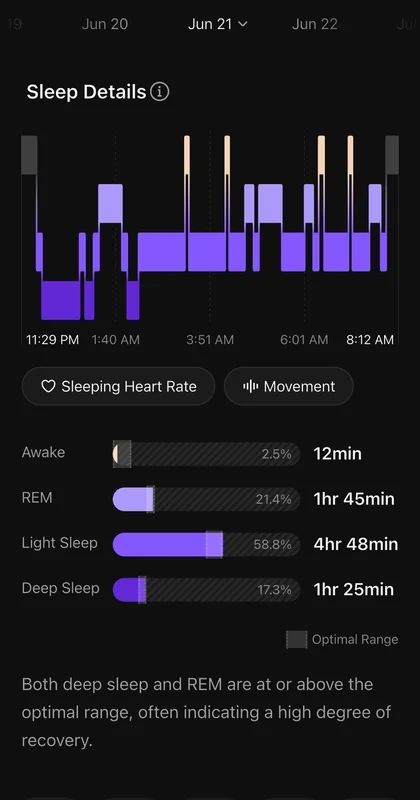
There are two types of sleep in a nightly cycle: REM and non-REM. REM sleep stands for rapid eye movement. We commonly associate it with dreaming. The non-REM portion of sleep is further divided into N1, N2, and N3.
N1 is considered light sleep, where you can be most easily awakened. Most people don’t even realize they’ve entered light sleep. N2 and N3 are each forms of deep sleep, with the “deepest” being N3, also called slow-wave sleep. An ideal night’s rest includes these major sleep stages in perfect balance, with N2 making up the majority, followed by N3 and then REM.
RingConn’s breakdown isn’t as detailed as these four stages; instead, it separates sleep into light, deep, and REM sleep. It also notes the times you were awake throughout the night. The best night’s sleep will have an ideal balance of sleep cycles, plus low awake time.
I often lag behind in either deep sleep or REM, which RingConn is sure to point out. As a particularly light sleeper, I also wake at the slightest provocation, so I often get warnings about that, too.
Sleep Apnea Monitoring
Another nifty feature of the RingConn’s sleep tracking is its sleep apnea monitoring. Sleep apnea is a condition in which you stop breathing throughout the night, either due to constricted airways (obstructive sleep apnea) or to missed signals from the brain (central sleep apnea). It can lead to daytime sleepiness or other negative side effects. Most folks don’t even know they have sleep apnea, so this tracking can be especially helpful.
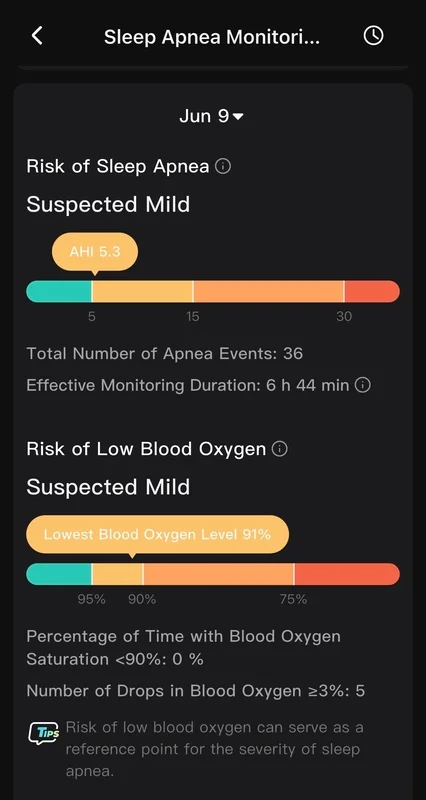
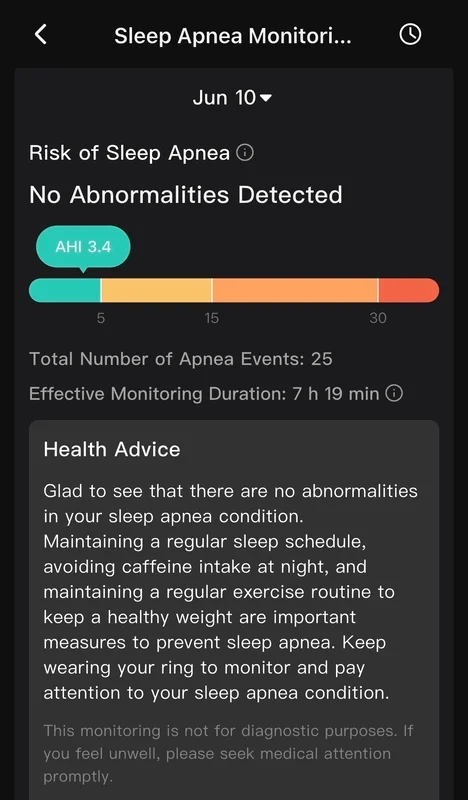
This feature must be turned on manually when your ring has enough power. It will monitor your oxygen saturation for three consecutive nights, noting instances where the number is low enough to indicate sleep apnea.
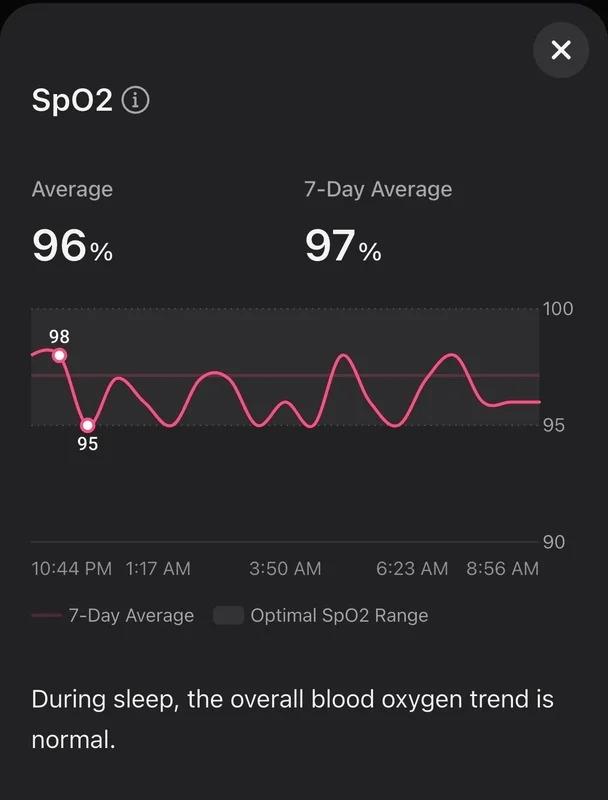
I’ve experienced a few instances of “mild” sleep apnea disturbances where my SpO2 was below 95%. This could explain why I wake up periodically throughout the night or why I still feel tired upon waking.
Is RingConn Sleep Tracking Accurate?
Like all at-home health trackers, I think the RingConn’s sleep accuracy should be taken with a grain of salt. It is fairly reliable in measuring how much time I spend asleep, which can provide genuine insights into my mood and energy when I wake up the next morning.
But in my experience, I’ve noted a few instances where the RingConn’s sleep tracking falters in its accuracy. One particular instance comes to mind: I was sitting back in bed, reading a book on my phone. While I felt tired, I was still actively reading, so I couldn’t have fallen asleep. However, the RingConn registered it as a 30-minute nap. I can assure you that I wasn’t asleep during this time; I was simply so relaxed that it misregistered my low heart rate and lack of movement as sleep.
I’ve also seen data “hallucinations” during the ring’s sleep apnea monitoring. While it’s very possible I could have a minor case, I do often lie directly on the hand that bears my ring. This can constrict blood flow to the fingers, mimicking sleep apnea symptoms and giving a false reading of too-low spO2.
Studies have shown that wearable sleep trackers, such as watches and rings, cannot match the accuracy of polysomnography. This is performed by professionals during a clinical sleep study, where brain activity is recorded and monitored to determine the phases of sleep. Terms like slow-wave sleep refer to the brain waves observed in polysomnography.
If you’re dealing with life-altering sleep issues and complex questions, I always recommend seeking out a healthcare professional to see if a sleep study could help.
Benefits of Sleep Tracking
While at-home sleep tracking isn’t infallible, it can have many benefits. Being in touch with your body can help you understand and identify bad habits that may affect your sleep. For me, that’s worth it.
Another benefit of smart ring sleep tracking is that you have some evidence to back up how you feel. We’ve all been at the doctor’s office and given wishy-washy answers about how well we’ve slept, and we usually get told to turn off the phone, read a boring book before bed, or count sheep.
After a month or so with my RingConn, I brought up my findings to my doctor, with whom I’ve been working to find treatment for my insomnia and chronic fatigue. She was personally unaware of the depth that went into at-home sleep trackers, and since there was nothing truly shocking in my report, we decided against a full-blown sleep study and instead explored other avenues.
Drawbacks of Sleep Tracking
One of the most common drawbacks of at-home sleep tracking is something called “orthosomnia.” The term comes from “ortho” meaning correct, and “somnia,” meaning sleep — it’s essentially an obsession with perfecting their sleep.
An Expert’s Opinion
Dr. Michael Kaine, MD, ABPN, a board-certified psychiatrist and Chief Medical Officer at the Indiana Center for Recovery, states, “Consumer sleep tracking apps are best used as trends rather than as a diagnostic tool.” If you notice poor sleep scores after consuming alcohol or caffeine before bed, for example, it might be time to monitor these behaviors more closely.
“However, the minute the data is more important to the user than their actual bodily sensations, problems arise.” Dr. Kaine says. “For example, receiving a low ‘sleep score’ prior to waking up each morning could lead to an increase in anxiety.”
Studies have reported that consumers push back against polysomnographic studies of their own sleep, citing their sleep trackers as more trustworthy. Even if they are getting restorative, exceptional sleep, if their wearable device says otherwise, they may default to that opinion. This feedback loop could negatively impact their sleep and stress levels in the long term.
Is Improvement Within Reach?
Taking all this into account, can you use a sleep tracker to improve your overall sleep? I’d say yes and no. There are definitely insights to be gleaned outside of the possible faulty readings or stress-inducing scores.
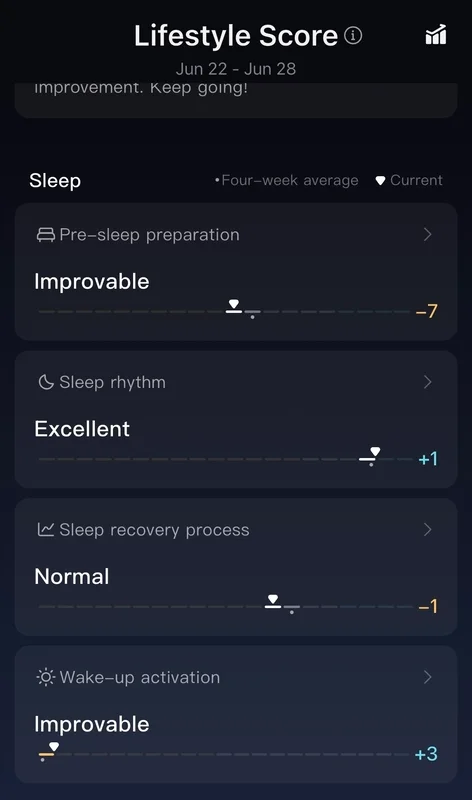
I find the “wind down” and “wake-up activation” tracking a good example of more subjective observations. RingConn tracks your heart rate and activity level each night to note whether you felt relaxed before bed. Similarly, it notes how long you spent in bed awake before getting up — two areas where I could surely improve. It’s like a nagging parent telling you to turn off the phone and turn on the lights.
The RingConn may help you understand why you feel the way you do after a night’s rest, but I wouldn’t let it rule you. Form an opinion and take stock of your condition before you see that sleep score rating, then decide whether you need to make a change.
Pros & Cons of RingConn Sleep Tracking
| Pros of Sleep Tracking | Cons of Sleep Tracking |
| Insight into how long you spent in each sleep stage | AI-based tracking can misread signals (i.e., lying down on a ring-bearing hand) and provide inaccurate data |
| Can help identify triggers for poor sleep or practices for better sleep | Low scores upon waking could create anxiety |
| Sleep apnea monitoring for the first warning signs to bring to a healthcare professional | Could create an obsessive and negative feedback loop for sleep tracking |
| Long-term tracking to see patterns or trends | Not as comprehensive or accurate as a polysomnographic sleep study |
Tips to Improve Your Sleep
In addition to my RingConn tracking, I’ve also implemented the following to help improve my chances of consistently obtaining a sleep score worthy of a gold star.
- Quality Mattress – You should invest in a quality mattress that supports your body weight and preferred sleeping position. I went with the Saatva Classic and love it. (However, since what is perfect for me may not be the best for you, I’d recommend checking out our best mattress picks.)
- Sleep Accessories – Also outfit your bed with all the pillows, sheets, and comforters you need. I prefer cooling sheets made with bamboo for a crisp, cool feel. Firm pillows are also some of my favorites to stave off neck pain.
- Cool, Dark and Quiet – As I said, I’m a notoriously light sleeper, and I share an apartment with my roommate. Thankfully, I don’t have a window in my room, so sunlight isn’t a problem. I also have multiple fans going alongside the air conditioning. On top of that, I use a white noise machine to block out as much sound as possible.
- Consistent Schedule – This is still a work in progress, but do as I say, not as I do. I’ve been trying to adhere to going to bed and waking up around the same time every day, even on weekends.
- Limit Screen Time, Alcohol, and Caffeine – I do my best to avoid screen time before bed, to varying degrees of success. I also avoid alcohol and caffeine — especially later in the day, ideally after noon.
Final Thoughts
I’ve overall been quite satisfied with my experience with the RingConn, and I’ll continue to wear it for the foreseeable future. While I’m not inclined to treat it as the end-all-be-all of my sleep health, nor do I see it as a second doctor, I appreciate the insights it’s given me.
There are small improvements that I’ve made thanks to RingConn. When I have a good sleep score, I feel less inclined to take an unnecessary nap. I try to get into bed at a decent time and get myself out of it before I succumb to rotting the day away, in the hopes that my sleep score (and my mood) might improve.
And this, I believe, is how you should be using your sleep tracker. Inspiration to make those little differences to start sleeping better and feeling better.
FAQs
Do sleep rings actually work?
Yes, sleep rings do work and will track your sleep. Just note that there can be hiccups and it will not be as accurate as a professional sleep study. Things like lying on your ring-bearing hand, forgetting to put it on before bed, and running out of battery will affect sleep tracking.
Is there a ring that can track your sleep?
Yes, there are multiple rings that can track your sleep. While I’ve had a good experience with the RingConn smart ring, other popular options from brands are the Oura Ring 4, Samsung Galaxy Ring, and the Ultrahuman Ring Air. Just note that some, like Oura, also come with subscription fees.
How do sleep-tracking rings work?
Smart rings feature multiple sensors to record your heart rate, body temperature, and activity to determine whether you’re asleep. Different parts of the sleep cycle are associated with higher or lower heart rates, and most folks see a drop in temperature once they start drifting off. The ring records this data and makes an estimate of your sleep cycle, including how long you rested and how restorative it should feel.
What are the benefits of using a sleep tracking ring?
A sleep tracking ring can be beneficial in identifying triggers that may affect sleep. If you repeatedly notice poor sleep scores after consuming a certain beverage or performing a certain activity, you may be able to adjust your behavior to achieve better sleep. Some may find it effective in catching sleep apnea symptoms early, which they can present to their doctor or healthcare provider to petition for a clinical sleep study.
What are the limitations of sleep tracking rings?
Like many other wearables, smart rings aren’t infallible. Glitches, hallucinations, and miscalculations are all possible. Even so much as sleeping on the wrong side can affect your final sleep score or give a misreading for sleep apnea. This is why if you’re dealing with life-altering sleep issues, it may be best to speak with your healthcare provider to get a professional sleep study.
How do you choose a sleep tracking ring?
Think about your budget, your needs, and anything else you might want from your ring. Is generalized health tracking a priority? Are you a gym enthusiast who also needs accurate workout tracking?
Is the Oura or RingConn better?
Whether the Oura Ring or RingConn is better will depend on your budget, your needs, and your preferences. After deliberating between the two, I ultimately chose the RingConn over the Oura Ring because it was cheaper and didn’t require a subscription. RingConn also boasts a better battery life.