
 Mattress Reviews
 Best Mattresses
 Compare Mattresses
 Accessory Reviews
 Sleep Science
 Sleep Disorders
 Sleep Tips
 Health



























For the 50 to 60 million Americans grappling with tinnitus, quieting a room enough to sleep often feels impossible. The ringing can be easy to ignore during a busy day, but it suddenly becomes much louder when it’s time to lie down for the night.
Perhaps unsurprisingly, chronic tinnitus disproportionately affects people who work in loud environments (think machinery, tools, construction, manufacturing, and even music).
So, what can you do when the workday ends but the noise follows you home? While there’s no mute button for tinnitus, there are ways to crank down its impact on your sleep.
Read on to learn more about tinnitus and to find out ways to address it.
What Is Tinnitus?
Tinnitus is a symptom that develops when the auditory system is damaged. This system includes the ear and parts of the brain that process sound. If this system is damaged, then the brain may perceive sounds that are not happening in the surrounding environment.
According to Johns Hopkins Medicine, tinnitus is the perception of ringing in the ears without an external sound. Some patients describe the sound as buzzing, clicking, hissing, or whistling inside their heads.
For some people, tinnitus is temporary, but for others it is a chronic condition. It can affect one or both ears and vary in intensity.
What Causes Tinnitus?
Among the handful of possible culprits you can point to when identifying the source of tinnitus are age-related hearing loss and repeated exposure to loud noises (the most common causes).
Less common causes, such as explosions, ear infections, earwax buildup, head or neck injuries, and medications, can also lead to tinnitus.
And, in many cases, tinnitus doesn’t have a traceable cause.
Loud Work Environments and Tinnitus
Work-related noise exposure is a major contributor to adult-onset hearing loss and tinnitus. Workers who spend most of their days near loud machinery, equipment, vehicles, or music may be especially vulnerable, and the risk increases without proper hearing protection.
So, how loud is too loud?
According to the Occupational Safety and Health Administration (OSHA), anything higher than 90 decibels (dBA) over an eight-hour workday is considered unsafe. OSHA also states that exposure to impulsive or impact noise, such as a blast or sudden loud bang, should not exceed a peak sound pressure level of 140 dB.

And while that’s good information to have, you probably aren’t carrying a sound-level meter around with you at work. One simple warning sign is whether you have to raise your voice to talk to someone standing about 3 feet away. According to OSHA, this could indicate noise levels above 85 dBA and is a good signal that a noise survey is overdue, and your employer should take the steps needed to protect your hearing.
Ways to Prevent Tinnitus
If you are consistently exposed to loud noise and suspect you may have tinnitus, you can take a few preventive measures to improve your odds (naturally, avoiding the aforementioned loud noises is one of them).

Avoid Exposure to Loud Noises
It’s obvious, but the primary way to avoid tinnitus is to avoid loud noises altogether. If you can’t avoid them completely because of your occupation, taking protective measures can go a long way. Here are a few ways to limit your exposure to loud noises:
- Wear earplugs in loud environments
- Turn down the volume when wearing headphones or earbuds
- Limit time around loud sounds
- Take listening breaks when listening to music
- Choose noise-canceling headphones to make it easier to hear your music or podcasts without cranking up the volume.
- Move away from the noise source at concerts or events
- Follow workplace hearing-safety guidelines
- Avoid putting objects in your ears, like cotton swabs and other materials
Clean Your Ears
Sometimes the solution is as easy as cleaning the gunk out of your ears. Excessive earwax buildup can obstruct your ear canal and make tinnitus more noticeable. Congestion or dysfunction involving the Eustachian tubes (the tubes that connect the middle ear to the back of the throat) can cause pressure and fullness that aggravate tinnitus symptoms.
If waxy ears are behind your hearing woes, over-the-counter ear drops can help soften the wax so it can clear more easily. For stubborn blockages, your doctor can safely (and maybe somewhat reluctantly) remove the buildup and get a clear look at your eardrums to determine whether something else is contributing to your symptoms.
Remember: avoid inserting cotton swabs or other objects into your ears, as this can push wax deeper or damage the ear canal.
Make Dietary Changes
Research has found that there are a handful of dietary triggers of tinnitus. These foods and ingredients include caffeine, sodium, salicylates, aspartame, sugar, and unhealthy fats. Avoiding these triggers and, where possible, replacing them with antioxidants and foods high in vitamins E, C, and magnesium can help you preserve your hearing.
Avoid Activities Known to Trigger Tinnitus Spikes
When dealing with tinnitus triggers, avoidance is a solid approach. You may need to do some homework to identify your specific triggers, but once you do, avoiding them or minimizing their impact is key.

Common tinnitus spikes include:
- Smoking
- Caffeine
- Alcohol
- Stress
- Anxiety/Depression
- Being around loud noises
Visit an Audiologist
Regular visits to an audiologist can help you preserve and improve your hearing health. During these visits, an audiologist can catch inflammation or infections early and treat them before they cause lasting hearing damage. Generally, it is recommended to see an audiologist once a year, especially if you have already experienced hearing loss or are an older adult.
Tinnitus and Sleep
It should come as no surprise that a condition causing constant ringing in your ears could disrupt your sleep. Left unchecked, it can lead to daytime fatigue, poor concentration, and other effects of insufficient rest.
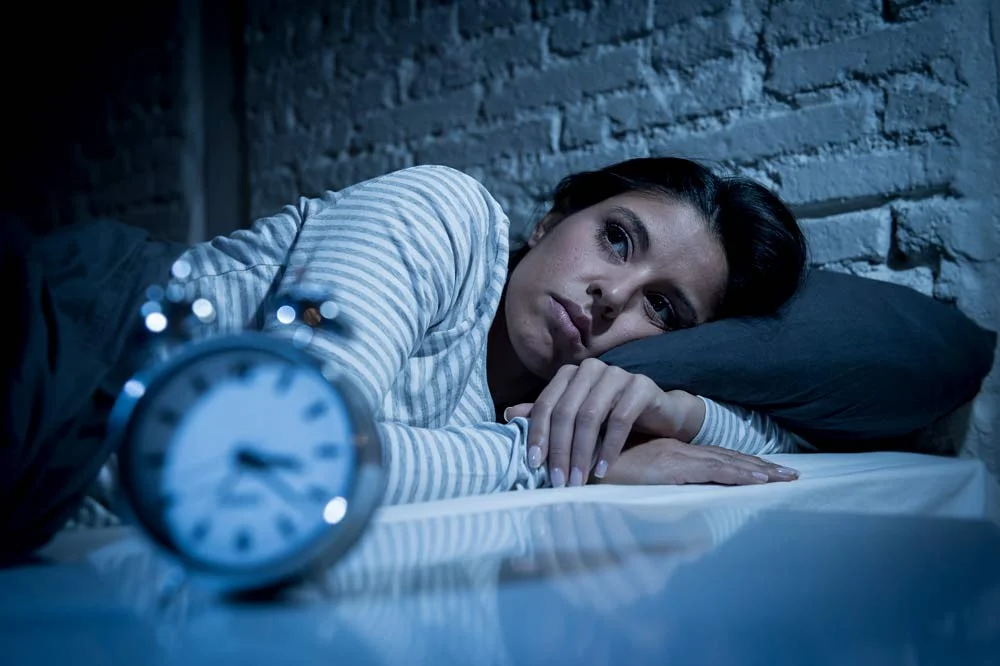
“Tinnitus can make it difficult to fall asleep, as the noise can distract you from being able to relax enough to fall asleep,” explains Amy Sarow, a doctor of audiology. “For some people, it can even wake them up in the middle of the night.”
Below, we’ll explore why tinnitus can be so disruptive at night and what you can do to sleep better.
Can Tinnitus Cause Sleep Disorders?
Tinnitus can contribute to other sleep disturbances, including difficulty falling asleep, frequent nighttime awakenings, shorter overall sleep duration, and poorer sleep quality. By extension, tinnitus is also often the culprit behind fatigue, difficulty concentrating, and mood changes during the day.
However, the most common of these is insomnia. The hallmarks of insomnia include difficulty falling asleep and staying asleep. When viewed alongside tinnitus symptoms (trouble falling asleep, difficulty staying asleep, and frequent nighttime awakenings), the connection becomes clear.
One study even showed that 54% of tinnitus patients were diagnosed with sleep disorders.
Tinnitus And Sleep Apnea
After doing some digging, you may find that tinnitus and sleep apnea are often linked. While those resources may lead you to believe that there’s a cause-and-effect relationship between the two, that’s not quite the case.
“Tinnitus does not cause sleep apnea; however, sleep apnea can make it more likely to perceive tinnitus,” says Sarow. “The reason for this is that stress aggravates tinnitus and can make it louder and more intense. A lack of quality sleep is stressful for the body and can also be a trigger.”
CPAP therapy can also worsen tinnitus or other ear symptoms because the pressurized air can increase pressure in the middle ear and Eustachian tubes. Improper pressure settings, mask leaks, or blocked Eustachian tubes can make it harder for the ears to equalize pressure, which can cause fullness, popping, discomfort, or changes in tinnitus.

In many instances, addressing the underlying issue may help relieve these symptoms. Ensuring your mask fits correctly, treating sinus congestion or blockages, and working with your healthcare provider to ensure your CPAP pressure is appropriate may help restore normal ear pressure and reduce or eliminate tinnitus symptoms.
Tips For Sleeping Better With Tinnitus
While there is no cure for tinnitus, you can take action to mitigate the symptoms, reduce its impact, and get some sleep. See our tips for how to sleep with tinnitus below.
Practice Good Sleep Hygiene
When it feels like the sleep gods are against you, good sleep hygiene is the key to fighting back.
Sarow notes that “sleep hygiene is key. If you’re fighting the good fight every night only to find that sleep still doesn’t come easy, a few tweaks to your sleep hygiene may be in order.”

If you’re fighting the good fight every night only to find that sleep still doesn’t come easy, a few tweaks to your sleep hygiene may be in order. Generally, you should keep your bedroom cool and dark and avoid screen time shortly before bed.
Sarow also suggests “getting regular physical activity during the day and following a set night-time routine.”
Sound Masking
Background noise (i.e., nature sounds, a fan, ambient music, or colored noise) is a common go-to for those with tinnitus. If tinnitus is louder in quiet settings, using a masking sound can help to take the edge off. For instance, gentle nature sounds can be soothing and match the frequency of your tinnitus, thus canceling it out.

White noise machines can also work very well for some people. In fact, one study found that two-thirds of participants preferred white noise for masking tinnitus symptoms, while red noise came in second.
Stress Management
While there seems to be a causal relationship between stress and tinnitus, researchers have yet to untangle exactly how or why. One working theory is that tinnitus acts as an alarm of sorts when stressful situations arise.
Although we don’t know exactly how stress affects tinnitus or vice versa, we do know that plenty of people find their tinnitus symptoms are exacerbated in stressful situations.

If you’re one of them, adopting a few healthy habits may help keep your stress levels in check and make tinnitus feel less intrusive. Regular exercise, meditation, deep breathing exercises, and time outdoors can promote relaxation.
Mind Your Medications
Certain drugs can trigger tinnitus or worsen your symptoms. This includes some antibiotics, nonsteroidal anti-inflammatory drugs (NSAIDs, like Advil), diuretics, and tricyclic antidepressants.
If you take any of these for pain or ongoing issues, you might consider talking to your doctor and exploring possible alternatives.
Conclusion
Tinnitus is relatively common, and for many people, the ringing and noise in their ears can make it difficult to get some quality shut-eye. While there is no cure for tinnitus, you can manage your symptoms with proven treatments.
Improving sleep hygiene and masking the noise is a great place to start. That said, you may want to speak with your doctor for long-term care and management. Your healthcare provider may recommend cognitive behavioral therapy, tinnitus retraining therapy, or even something as simple as changing your medications.
Living with tinnitus can be challenging, but it doesn’t have to keep you up at night.
References
- Tinnitus: Ringing in the ears and what to do about it. (2011, August 23). Harvard Health. https://www.health.harvard.edu/newsletter_article/tinnitus-ringing-in-the-ears-and-what-to-do-about-it
- Tinnitus. (n.d.). Www.Hopkinsmedicine.Org. Retrieved August 27, 2026, from https://www.hopkinsmedicine.org/health/conditions-and-diseases/tinnitus
- Ralli, M., Balla, M. P., Greco, A., Altissimi, G., Ricci, P., Turchetta, R., de Virgilio, A., de Vincentiis, M., Ricci, S., & Cianfrone, G. (2017). Work-related noise exposure in a cohort of patients with chronic tinnitus: Analysis of demographic and audiological characteristics. International Journal of Environmental Research and Public Health, 14(9), 1035. PubMed Central. https://doi.org/10.3390/ijerph14091035
- OSHA. (2019). 1910.95 – Occupational noise exposure. | Occupational Safety and Health Administration. Osha.Gov. https://www.osha.gov/laws-regs/regulations/standardnumber/1910/1910.95
- Wadhwa, S., Jain, S., & Patil, N. (2024). The role of diet and lifestyle in the tinnitus management: A comprehensive review. Cureus, 16(4), e59344. PubMed Central. https://doi.org/10.7759/cureus.59344
- Wang, S., Cha, X., Li, F., Li, T., Wang, T., Wang, W., Zhao, Z., Ye, X., Liang, C., Deng, Y., & Liu, H. (2022). Associations between sleep disorders and anxiety in patients with tinnitus: A cross-sectional study. Frontiers in Psychology, 13. https://doi.org/10.3389/fpsyg.2022.963148
- Dillard, D. (2026, July 30). Solving CPAP issues: CPAP ear problems explained. Sleep & Sinus Centers of Georgia. Sleepandsinuscenters.Com. https://sleepandsinuscenters.com/blog/solving-cpap-issues-cpap-ear-problems-explained
- Barozzi, S., Ambrosetti, U., Callaway, S. L., Behrens, T., Passoni, S., & Bo, L. Del. (2017). Effects of tinnitus retraining therapy with different colours of sound. The International Tinnitus Journal, 21(2), 139–143. PubMed. https://doi.org/10.5935/0946-5448.20170026
- Ciminelli, P., Machado, S., Palmeira, M., Carta, M. G., Beirith, S. C., Nigri, M. L., Mezzasalma, M. A., & Nardi, A. E. (2018). Tinnitus: The sound of stress? Clinical Practice and Epidemiology in Mental Health : CP & EMH, 14, 264–269. PubMed Central. https://doi.org/10.2174/1745017901814010264
- Hoshino, T., Tabuchi, K., & Hara, A. (2010). Effects of NSAIDs on the inner ear: Possible involvement in cochlear protection. Pharmaceuticals (Basel, Switzerland), 3(5), 1286–1295. PubMed Central. https://doi.org/10.3390/ph3051286