
 Mattress Reviews
 Best Mattresses
 Compare Mattresses
 Accessory Reviews
 Sleep Science
 Sleep Disorders
 Sleep Tips
 Health





















We’ve all heard the old adage, “You are what you eat.” But did you hear the news? New research shows that what we eat affects our sleep.
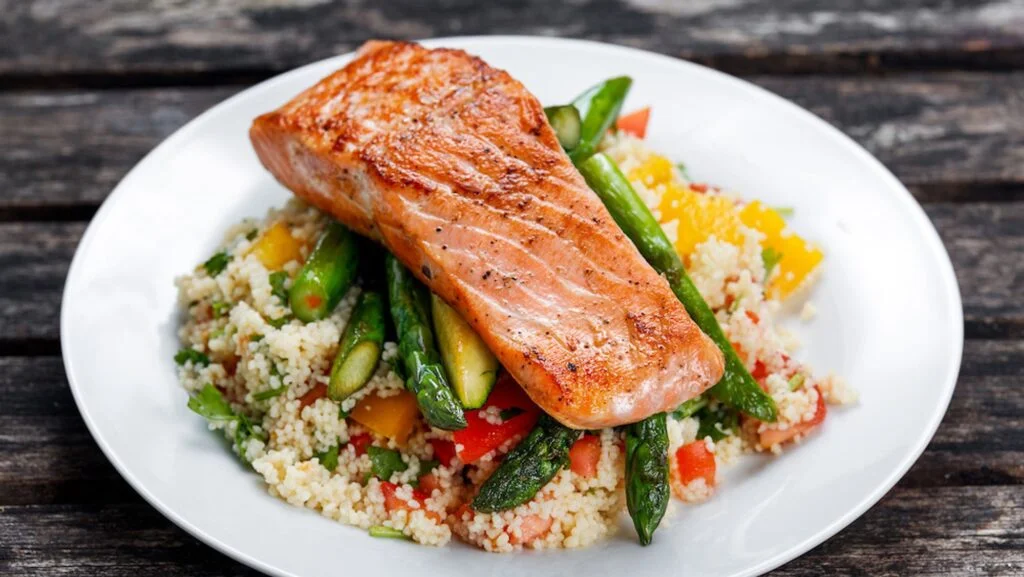
A new study out of West Virginia University evaluated the sleep and nutritional patterns of 23 female collegiate soccer players. Ultimately, the study found that when the athletes consumed more carbohydrates, vitamin B12, and vitamin C, they tended to sleep earlier and wake up earlier than their counterparts who consumed lower amounts of these same nutrients.
Peeling the onion back a bit, the researchers theorize that carbs and vitamins might play a heavy hand in synthesizing hormones that regulate sleep, not the least of which are serotonin and melatonin.
For the study, the athletes used smart rings to track their sleep for 31 consecutive nights during their regular season, and they were tasked with recording their dietary intake during the final three days. While analysis of the results showed a link between nutrient consumption and sleep timing, there was no evidence that it affected sleep duration. Digging a little deeper, researchers found that most of the athletes averaged about seven to eight hours of sleep per night, and while they met the RDA for many vitamins, approximately half of the women were deficient in protein and vitamins A and K. Moreover, almost all of the women came up short on the RDA of vitamin D carbohydrates.
Brendan Duffy, a Sleep Athlete Performance and Recovery Coach and Director at CHSLI Sleep Services, says that the research looks promising. Still, he cautions it’s a small study that relies on self-reporting and wearables, both of which are prone to inaccuracies.
Undoubtedly, the key takeaway from the study is the association between nutrient consumption and sleep timing, but Duffy — like the researchers themselves, warns readers not to look at the results of the study and interpret them as a cause-and-effect relationship between nutrient intake and sleep.
No doubt, the focus is usually on light when we talk about sleep timing and circadian rhythms. But Duffy reminds us that food can be a powerful zeitgeber (time cue) too. Noting that the athletes went to bed earlier and woke up earlier, he adds, “Ultimately, we need to examine what’s really driving that. Is it really a result of their nutrient intake, or is it because they’re waking earlier and getting out into the sun earlier, for example.”
Why Is Sleep So Important to Athletes?
“Sleep is important for athletes for many reasons,” Duffy tells Sleepopolis. Chief among them are improved performance, quicker reaction times, improved accuracy, and fewer injuries as a result of all the above. Beyond its effect on athletic performance, Duffy notes that sleep is also the key to optimal recovery. “When you’re playing or training, you’re actually breaking down your body (causing micro-tears in your muscle, for example). You can have all the ice baths you want, but the best recovery comes from sleep.” Duffy compares it to stocking shelves in a grocery store during the overnight hours. “When the store opens for business the next day, everything is there and ready to go,” he says.
Duffy’s TLDR: “If you want to stay on the field and perform your best, sleep is important.”
Best Foods to Eat as an Evening Snack
While this research specifically looked at the nutrient consumption and subsequent sleep timing of elite female athletes, you don’t have to play college soccer to reap the benefits. Northern Virginia-based dietitian Caroline Thomason says anyone looking to improve their sleep hygiene and keep their circadian rhythms in check stand to benefit from smart evening snacking.
“A lot of fruits, like oranges, kiwi, and strawberries, are excellent sources of vitamin C,” says Thomason. If you’re reaching for those as a bedtime snack, she suggests “pairing them with a protein source to give them a little staying power at night.”
For example, Thomason says not only are cherries a good source of carbs, vitamin C, and melatonin, but they also help with muscle recovery. If cherries sound like a good bedtime snack, she says “to try pairing it with something like Greek yogurt for that shot of protein.” Thomason notes that other good options for a protein punch include peanut butter, string cheese, nuts, and seeds. Anyone looking for a good source of B12 could try a hard-boiled egg paired with fruit.
Foods to Avoid Before Bed
Regarding the foods and beverages to avoid before bed, Thomason offers up the usual suspects. Caffeine and alcohol don’t make good bedfellows. And as you might suspect, fried foods and heavy meals can stymie your sleep too.
Bedtime snacks are fine, but Thomason says that it’s best to keep it light. And while they’re called bedtime snacks, she says not to snack right before you turn in. “Ideally, you want to give your body an hour or two to digest.”
Sources
American Physiological Association, “Study of College Athletes Shows that Nutrition and Sleep May Go Hand in Hand.” https://www.physiology.org/detail/news/2023/04/21/study-of-college-athletes-shows-that-nutrition-and-sleep-may-go-hand-in-hand?SSO=Y. April 21, 2024.
Thomasson, Caroline. Personal interview. May 2024.
Duffy, Brendan. Personal interview. May 2024.