
 Mattress Reviews
 Best Mattresses
 Compare Mattresses
 Accessory Reviews
 Sleep Science
 Sleep Disorders
 Sleep Tips
 Health
























As you search for a new bed, firmness will be a big factor in your decision. But how soft or firm should your mattress feel?
There are pros and cons associated with either option, but, ultimately, the choice is yours, and it depends on a lot of factors: your favorite sleeping position, your body type, and more..
To help you shop smarter, I’ll go over what it means for a bed to be firm or soft, and whether one option is better or worse for you. You can also check out the best soft mattresses and best firm mattresses to see our top picks in either category.
The Mattress Firmness Scale
Alongside written descriptions of firmness, you might often see a number assigned to a mattress. This refers to the mattress firmness scale. The scale ranges from 1 to 10, and each number corresponds to a specific feel. While most manufacturers display firmness this way, the metrics can differ brand-to-brand, with many creating a unique firmness scale for their products. Our firmness scale is based on our years of experience evaluating mattresses.
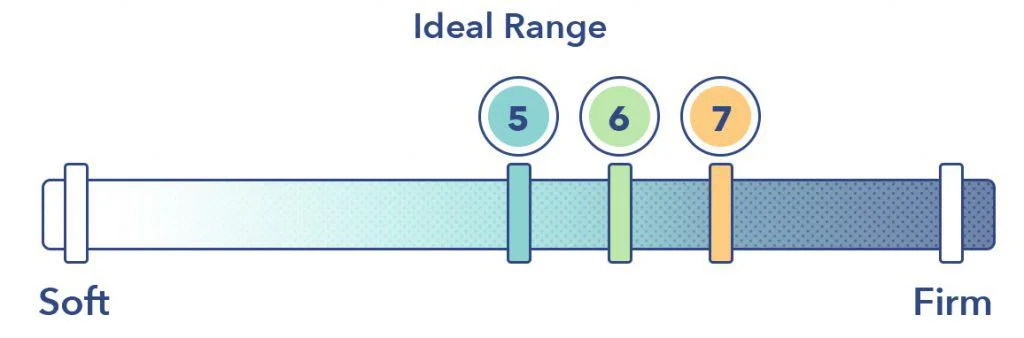
Firmer mattresses skew further toward 10 — think of 10 like sleeping on the floor — while softer beds are closer to a 1, which would feel like sinking into a plush cloud.
It’s rare to see mattresses at either extreme. Most firm mattresses rank at a 7 or above on our scale, while soft beds are somewhere between 3 to 6. The firmness of most online mattresses falls around the middle, at what we call medium-firm: a solid yet comfortable 6.5 out of 10.
A lot of bed-in-a-box mattresses gravitate toward this number, and we consider it an industry average. “This balanced feel can accommodate a wide range of sleepers with its mix of cushioning and support,” explains our chief medical advisor, Dr. Raj Dasgupta. Of course, you may be inclined to skew a little bit softer or firmer, depending on your preferences.
What’s the Difference Between Firm and Soft?
The obvious difference between a firm or soft mattress is how each feels.
A firm mattress is more rigid to the touch and has less give. Lying on it, you won’t sink much at all, and you’ll probably be able to move around on the surface without much effort.
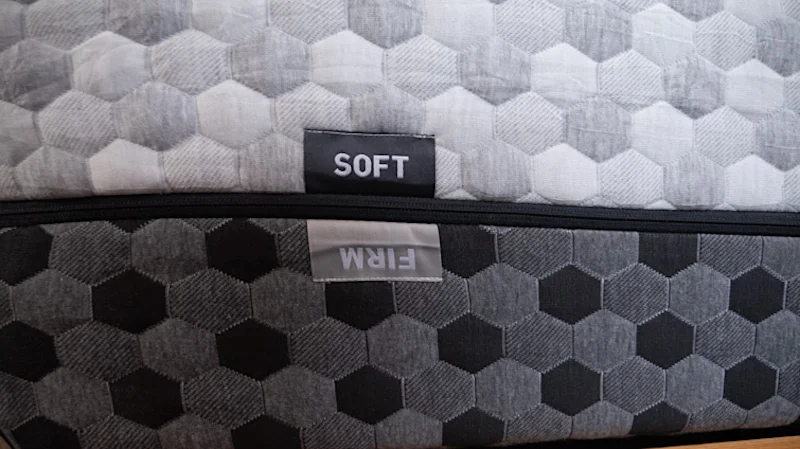
A softer mattress will compress more easily when pressure is applied, leading to more sinkage. Lying on one will make you feel cradled or even cocooned by its layers.
What Affects Mattress Feel?
Although we use our firmness ratings as an easy shorthand when describing how a mattress feels, at the end of the day, firmness is largely subjective from person to person. “Factors like your body type, weight, and preferred sleeping positions can influence how a mattress feels to you,” says Dr. Dasgupta. Below are the top factors that can affect your experience of a bed’s firmness.
Mattress Construction
The individual feel of a soft or firm mattress is partially determined by its construction. Materials like memory foam and latex are often associated with softness, while coils provide firmer support.
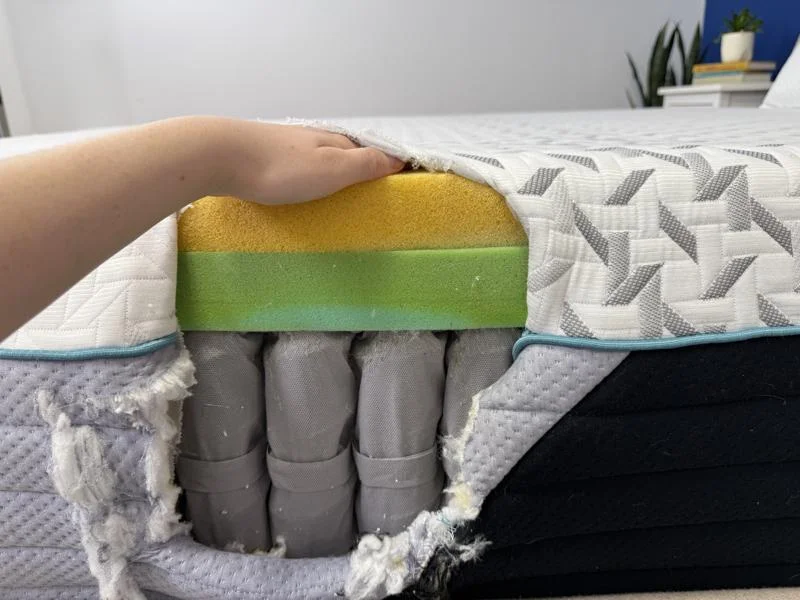
But depending on how these layers are arranged, the resulting feel isn’t always so straightforward. For example, there are memory foam mattresses that can feel rock-solid and innerspring or hybrid mattresses with softer comfort layers.
Body Weight
After years of testing, we’ve found that your weight ultimately affects how a bed performs and feels. Most beds are made with the average consumer in mind. This can sometimes alienate certain markets, like lightweight and heavyweight sleepers.
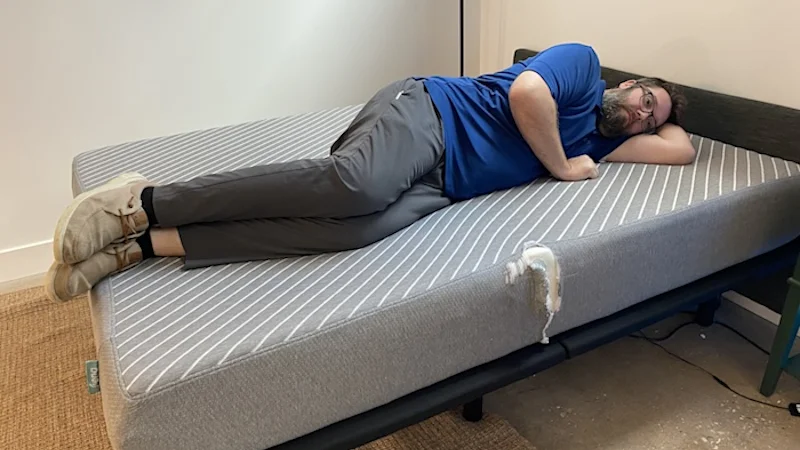
Sleepers over 230 pounds tend to sink further into a mattress, which can influence their impression of the overall firmness. They might think a bed is too soft and unsupportive, especially if they end up “bottoming out” on the super-firm foundational layers.
On the other hand, sleepers under 130 pounds have the opposite problem. If they don’t sink very far into the mattress, they may encounter less sinkage and more pressure buildup. This could make a mattress seem firmer than advertised or expected.
Sleeping Position
Your preferred sleeping position also plays a role in what firmness feels best for you, and how you sleep could also change how the bed feels overall.
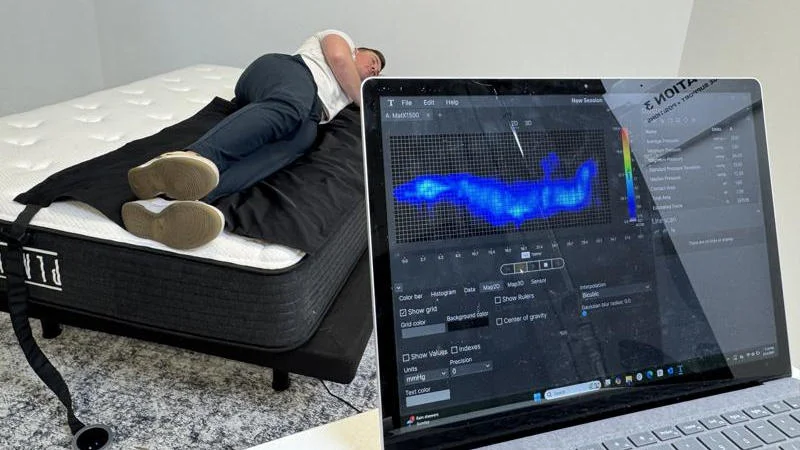
For example, in the side-sleeping position, your hips and shoulders dig into the mattress, which could make a bed seem firmer—especially if you encounter pressure buildup. But the same mattress might feel perfectly comfortable for a back sleeper who experiences excellent alignment, prompting them to say the mattress has a medium feel. Finally, a stomach sleeper, who requires the most support, could sink right through the mattress and call the mattress too soft.
Personal Preference
The most tricky part about identifying mattress firmness is that we’re all different. We have varying ideas of what “firm” and “soft” mean, as well as different tolerance levels for each. In our studio, we try our best to get a solid idea of how a mattress will feel to the majority of sleepers, but even with our expert experience, our perception could differ from yours.
This can make determining the firmness of a mattress difficult when you’re buying online. If you’re someone who needs to try something in-person before you commit to a purchase, consider taking advantage of a lengthy sleep trial period.
Should I Choose a Soft or Firm Mattress?
Whether you choose a soft or firm mattress comes down to your individual comfort, which is influenced by factors like your body type, sleeping position, and any conditions that require extra care. All of these, alongside your personal preference, should work together to promote correct spinal alignment. This is the crux of ensuring ultimate comfortability on any mattress.
The spine has three natural curves, creating a subtle S-shape, and all three need to be supported even when you’re horizontal. A good mattress should keep your body in this neutral position, ensuring the top and bottom half of your body is aligned. There shouldn’t be any undue pressure or sinkage around the shoulders, hips, or knees, for example. You also shouldn’t sink in too far or remain too aloft on the bed.

On the absolute perfect mattress for your needs, you should feel no pressure at all, almost as if you’re floating. Over time, the right mattress can relax your muscles, encourage better sleep, and even improve posture. But a too-soft or too-firm mattress could compromise your alignment and leave you waking up with pain.
For more personalized recommendations, let’s go over the specific advantages and disadvantages of each mattress type, which will tell us who will sleep more comfortably on each.
Pros and Cons of a Firm Mattress
| Firm Mattress Advantages | Firm Mattress Disadvantages |
| Excellent spinal alignment | Could create pressure points |
| More lifted feeling | Less sinkage |
| Better for back and stomach sleepers | Poor choice for side sleepers |
| Better for heavier people | Not for most lightweight sleepers |
| Added edge support and durability | Lacks cradling for sensitive joints |
Firm beds are great for folks who want to feel lifted on the surface of their mattress, rather than sunk deeply into it. This means better ease of movement on the surface, which is a plus for combination sleepers.
Firm mattresses may also hold their shape better than softer beds, offering more durability and better edge support. The latter is often important for folks who need assistance getting in and out of bed, like older adults.
A firm mattress also keeps your lower back from dipping too low, which could allow for more oxygen intake while sleeping. Less sagging means the weight of the body is distributed evenly, and no one part is bearing the brunt of pressure buildup.
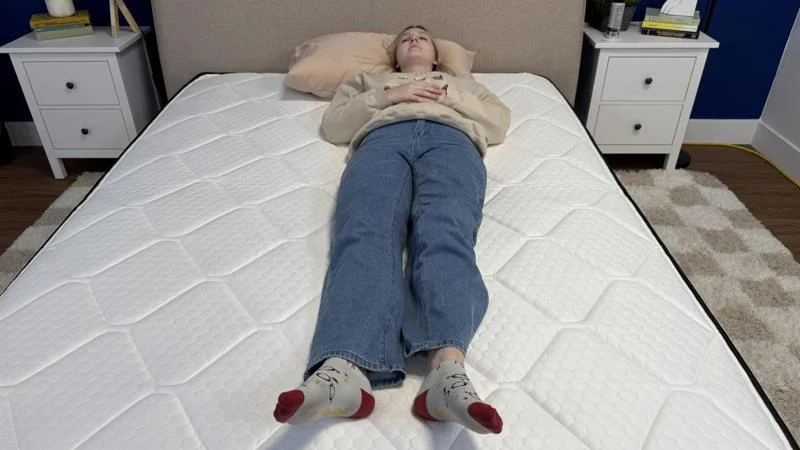
Firm mattresses are generally better for those who sleep on their back, because they provide a more stable and even surface. Stomach sleepers tend to fare better on a firmer mattress, too, as these keep their hips elevated. Most side sleepers won’t enjoy a firm mattress, as a lot of them don’t provide the necessary pressure relief around the hips and shoulders.
For those with specific back problems such as arthritis and scoliosis, a firmer mattress can actually exacerbate pain. Sleepers of a lighter weight may also experience more pressure buildup, making it difficult to feel cozy and cushioned. But this becomes a plus for plus-size sleepers, who may need the extra support a firm bed provides.
Pros and Cons of a Soft Mattress
| Soft Mattress Advantages | Soft Mattress Disadvantages |
| Better for contouring and pressure relief | Too much sinkage for some sleepers |
| Suitable for side sleepers | Unpopular for stomach sleepers |
| Great for pain relief | Could compromise alignment |
| Better for lightweight sleepers | Unsupportive for some heavyweight sleepers |
| Better motion isolation for couples | Could sag faster |
A softer mattress is usually recommended for those with sensitive joints or pain, because of their propensity to relieve pressure and cradle the body. They’re also recommended for lighter individuals, since harder mattresses often don’t compress as well.
Softer mattresses are also generally better for those who sleep on their side. They better cushion the shoulders and hips and allow for a bit of sinkage in these areas, which contributes to better spinal alignment. Side sleepers with hip pain or shoulder pain should especially love soft mattresses.
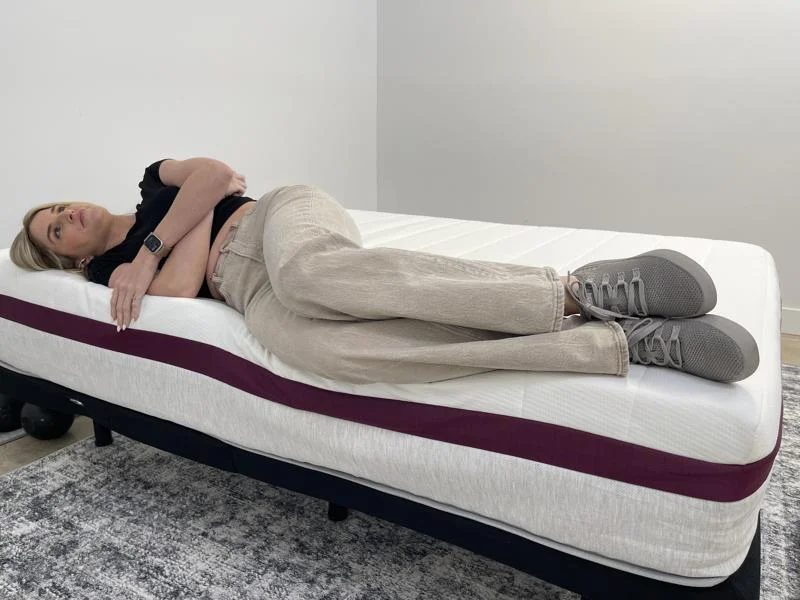
Most soft mattresses also have a slower-moving feel on top. They’re more apt to feel plush or doughy than very springy. This plushness can help absorb motion before it travels across the surface, ensuring you don’t feel your partner’s tossing and turning on the other side.
Though they can seem comfortable and luxurious, soft mattresses can actually compromise alignment for back sleepers, stomach sleepers, and those of a heavier weight. These folks will sink too far into the mattress and contort the spine’s natural S-curve, which can lead to back pain.
In some cases, soft mattresses may be less long-lasting than firm ones. All types of mattress tend to become softer over time, so starting from an already soft baseline can diminish the bed’s lifespan. But this isn’t true of all soft beds—some of the best mattresses that won’t sag are pretty soft.
How to Choose the Right Firmness for You
Focus on what’s most important to you for your nightly comfort. We always recommend thinking about your body type, most common sleeping positions, and any conditions that might require extra care.
We recommend softer beds for side sleepers and lightweight folks. Firmer beds are better for those with a larger frame who sleep on their back or stomach. While those with back pain may need the extra support from a firmer mattress, those with joint pain may need something softer. It’s important to take all these into account and find the right balance for personalized sleep hygiene.
And don’t discount what just feels good. Regardless of what firmness is more specialized for your sleeping position or body type, if you find it uncomfortable, don’t force it. Comfort is paramount—it’s ultimately what will get you sleeping soundly.
Also consider who else is sharing the bed with you, as their preference matters, too. Couples often have to compromise on a firmness that works well for the both of them. If you and your partner have extremely differing opinions, you can opt for a split-king mattress. This is two twin-XL mattresses pushed together, allowing for each to have its own firmness, feel, or even construction.
There’s no concrete answer to whether a firm or soft mattress is always the better choice. There’s a spectrum of mattress firmnesses that includes more mid-range options, like medium or medium-firm mattresses, if these sound more your speed.
You also don’t have to settle when it comes to a new mattress. Take full advantage of any sleep trials or return policies offered by manufacturers. If you end up choosing a firmness that feels slightly off or find your preferences changing over time, you can always add a mattress topper to your existing mattress.
FAQs
Is it healthier to sleep on a hard or soft mattress?
Studies vary on what’s the “healthiest” firmness, as it ultimately boils down to your individual needs. Medium-firm mattresses are generally regarded as the most comfortable. They’ve also been praised for their ability to conserve spinal alignment, which keeps back pain at bay. But a super-soft mattress could be great for a side sleeper with sensitive hips and shoulders, while an extra-firm bed could be just what a heavyweight stomach sleeper ordered.
What is better, a firm or soft mattress?
Whether a firm or soft mattress is better depends on your sleeping position, body type, preferences, and needs. A firm mattress is better for lifted support, while soft mattresses offer plenty of cushioning and pressure relief. Many folks do best on a medium or medium-firm mattress, which offers a balance of both firmness and softness.
Do doctors recommend a firm mattress?
“Firm mattresses can work better for certain sleepers, like those who weigh over 230 pounds or prefer to rest on their stomach,” says Dr. Dasgupta. “It’s important to keep pressure relief and spinal alignment in mind, as well as any conditions that might require softer or firmer sleep surfaces.”
Sources
- Hu, X., Gao, Y., Song, Y., Yang, X., Liu, K., Luo, B., Sun, Y., & Li, L. (2025). The Effect of Mattress Firmness on Sleep Architecture and PSG Characteristics. Nature and Science of Sleep, 17, 865–878. https://doi.org/10.2147/NSS.S503222
- Radwan, A., Fess, P., James, D., Murphy, J., Myers, J., Rooney, M., Taylor, J., & Torii, A. (2015). Effect of different mattress designs on promoting sleep quality, pain reduction, and spinal alignment in adults with or without back pain; systematic review of controlled trials. Sleep Health, 1(4), 257–267. https://doi.org/10.1016/j.sleh.2015.08.001