
 Mattress Reviews
 Best Mattresses
 Compare Mattresses
 Accessory Reviews
 Sleep Science
 Sleep Disorders
 Sleep Tips
 Health

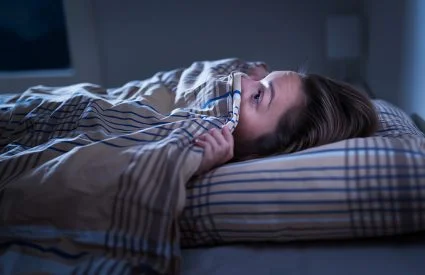
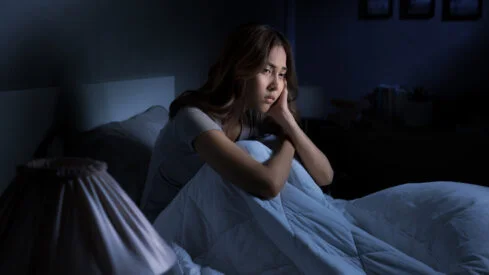



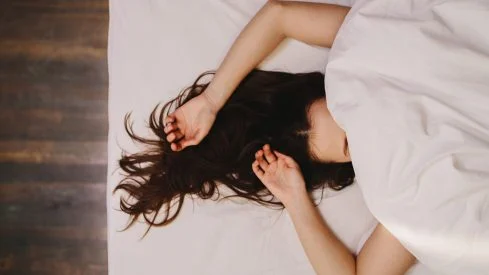













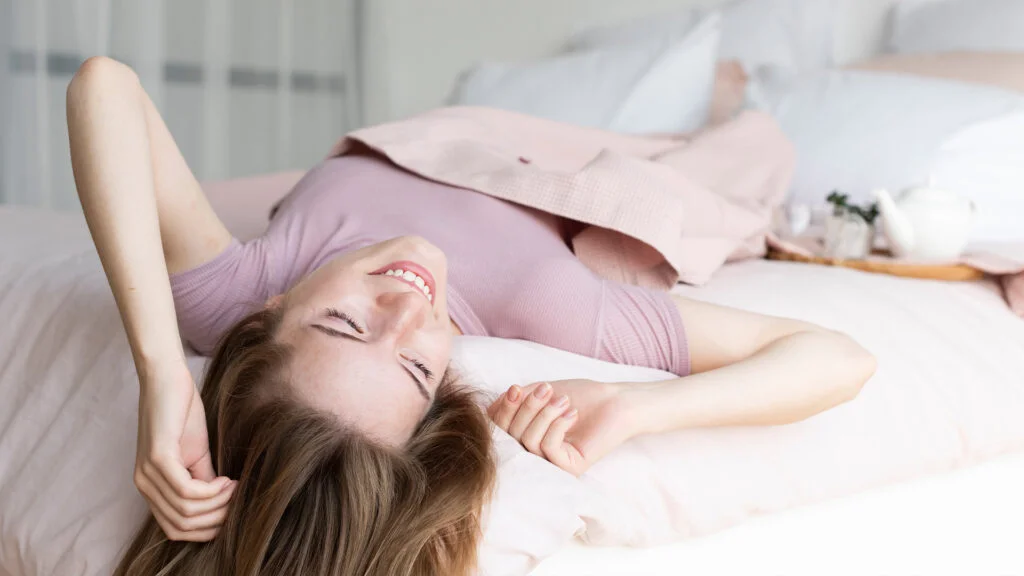
Most people relish a lazy Sunday morning spent in bed, and many would likely rather stay wrapped up in cozy covers when the alarm rings in the mornings, but a new trend taking over TikTok is something oddly called “bed rotting.” This sleep trend, with more than 300 million views, encourages people to book a day between the sheets to decompress and reset after a hectic week at work or recover from some self-inflicted post-party queasiness.
While the self-care packaging makes bed rotting seem wise, it’s worth consulting experts on anything sensational or too-good-to-be-true. In this case, laying in bed ordering your take-out favs while glued to a screen and drifting in and out of sleep is touted as a cure-all for a chaotic, nonstop lifestyle and its ill effects on mental and physical health.
Bed Rotting May Actually Harm Mental Health
“While most people enjoy a good lazy day, the new trend of “sleep rotting” seems like a way to popularize a behavior pattern that can be very harmful to many,” says Dr. Katrina Ostmeyer, Psychologist and CEO at Beyond the Individual LLC.
In fact, staying in bed and excessively napping (hypersomnolence) is a sign of depression and other mood disorders. As Ostmeyer points out, you could be overlooking signs of a mental health disorder by keeping to your bed. Worse—the practice could increase the likelihood of developing mood disorders, with research showing the more time spent in bed, the higher probability of poor mood and inflammation. Hypersomnolence has a multidirectional relationship with mood disorders, meaning it can be a cause and an effect.
Ostmeyer notes that depression rates have been steadily increasing significantly over the last decade, with a substantial increase over the COVID-19 pandemic. While many blamed social isolation, Ostmeyer believes an even more basic mechanism is likely at play.
“When we spend our days laying in bed and engaged in passive activities, we limit the opportunities to encounter reinforcement and meaning in our lives,” she says. Though sleeping in now and then is likely harmless, switching up your sleep schedule too much is not helpful for your physical or mental wellbeing and gets in the way of creating a meaningful life.
Bed Rotting Prevents Engaging in a Meaningful Life
When treating individuals for depression, one of the first things Ostemeyer tries to uncover is how patients spend their free time. “We work to help them find ways to actively engage in life to both find pleasure and meaning — sleep rotting is normalizing the very behaviors that often lead to depression and dissatisfaction,” she warns.
Pleasurable life experiences come from engaging in enjoyable activities while finding meaning occurs when you participate in activities you can be proud of, according to Ostermeyer. While these may overlap, both are crucial for breaking out of a slump. Something less likely to happen when you’re stuck in bed all day.
Bed Rotting Increases Sedentary Behavior
“Inactivity breeds inactivity—you will feel less able to perform movements the less you move,” says Dr. Theresa Marko, Board-Certified Clinical Specialist in Orthopaedic Physical Therapy and owner of Marko Physical Therapy in Manhattan. And this can cause health problems across the board.
Physical and mental wellbeing are inextricably tied; when one feels off, so can the other. Laying in bed all day is not aligned with millions of years of the human evolutionary drive to move your body. Moving every day is vital for many reasons, including circulation, digestion, appetite regulation, joint health, sleep cycles, and mood.
“Prolonged lying in bed is not good for your muscles or joints; you start to lose muscle mass after a couple of days of laying in bed–this means that you become weaker,” says Marko. When muscle mass is lost, you will have less support for your joints—knees and back. When you try to perform daily tasks, it will feel more challenging because you are weaker, and there’s a good possibility you will strain a muscle because you don’t have good joint stability, according to Marko.
And when your heart isn’t given the opportunity to get above a rested state, problems arise. “Now there is less blood being pumped out, decreased oxygen to your muscles, and generalized deconditioning of your lungs and their capacity,” warns Marko.
There Are Better Ways to Decompress
Instead of laying in bed all day “rotting,” try an activity that’s been proven to boost your physical and mental health, reduce stress, increase self-esteem, and improve daily life, such as going for a walk in nature. The movement, along with nature, will help your mind and body feel at peace. “If you can’t go outside, turn on a nature show like national geographic, or even a nice screen saver on your computer and do some jumping jacks or just jump in place,” suggests Marko. (Yes, research even shows that moving in a virtual natural space can provide positive effects).
Spending the day sleeping, binging Netflix, or scrolling through TikTok, may make you feel a little bit better for that moment because you are distracting yourself from negative emotions and experiences. The thing is, they are still there when you have to get out of bed, and avoidance generally allows them to grow.
“Avoidance is fuel for anxiety and depression, and if you are spending the day in bed to avoid your thoughts, feelings, or problems, you are truly feeding these feelings and symptoms,” says Ostmeyer. “Further, we miss out on opportunities to actively engage in life which is going to be better for our mental and physical health.”

Why TikTok Is Obsessed With Green Noise (Plus, the Best Noise for Every Sleeper)

The Benefits of Napping
5 Things to Know Before Buying a Viral TikTok “Cloud Bed”
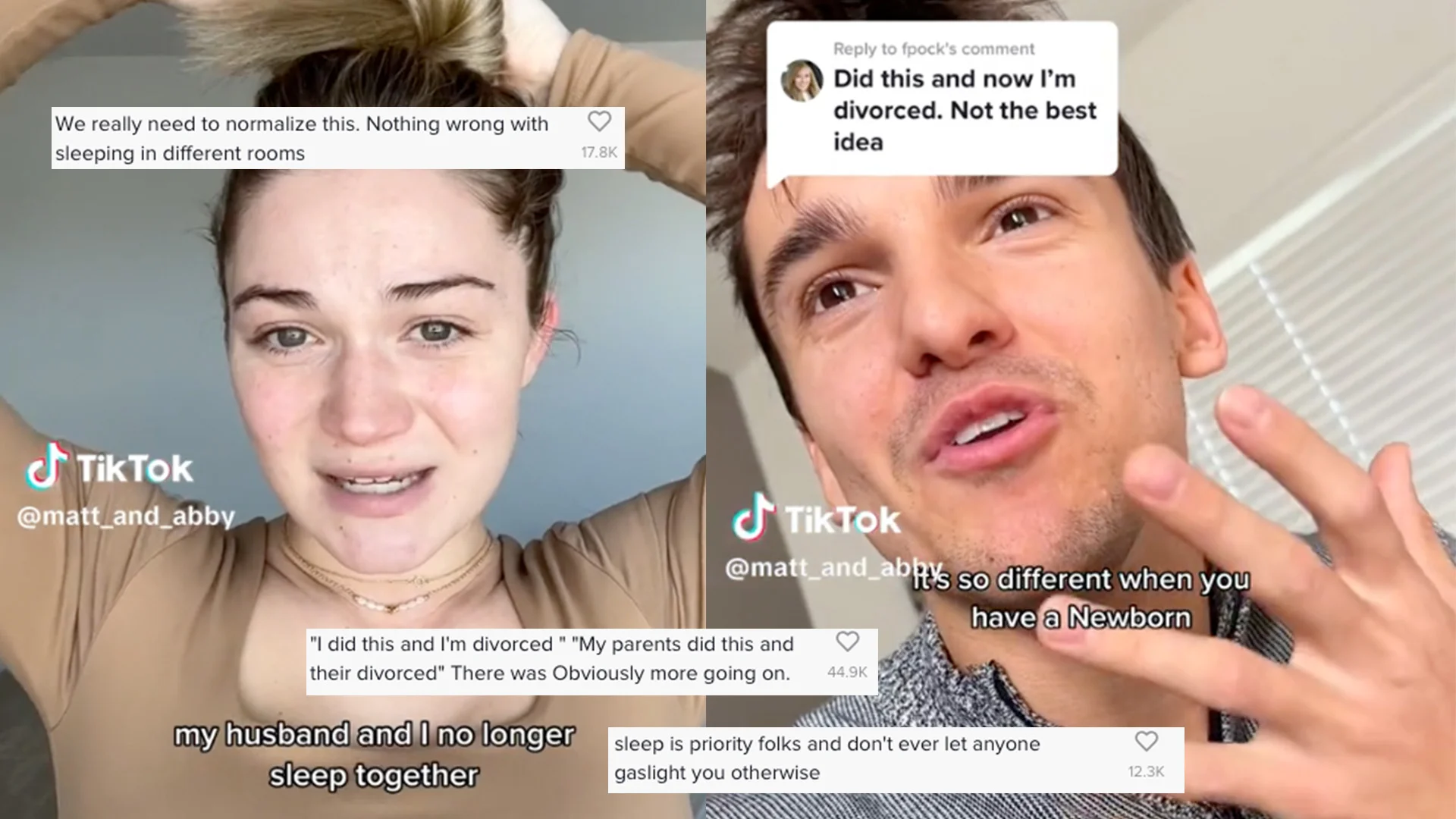
A TikTok Couple Tries a Temporary Sleep Divorce and the Internet Has Opinions
Sources
Ostmeyer, Katrina. Author interview. June 2024.
University of Colorado, Boulder; “6 signs of depression you shouldn’t ignore,” https://www.colorado.edu/health/depression.
Marko, Theresa. Author interview. June 2024.
Browning, M.H.E.M., Shin, S., Drong, G. et al. Daily exposure to virtual nature reduces symptoms of anxiety in college students. Sci Rep 13, 1239 (2023). https://doi.org/10.1038/s41598-023-28070-9