
 Mattress Reviews
 Best Mattresses
 Compare Mattresses
 Accessory Reviews
 Sleep Science
 Sleep Disorders
 Sleep Tips
 Health
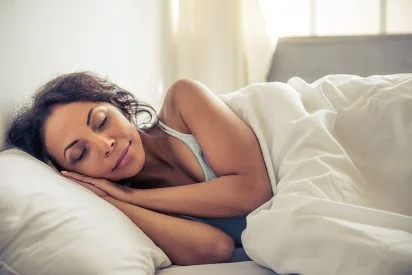









Episode 21: Sleep Tech and Wearables: What Actually Works
Show notes:
Whether you’ve slept with one or not, wearables and sleep tech have gained popularity over the last decade particularly, with a reported one in three Americans now using a ring, watch, wristband, or some other device to track their health data.
But how much can we really learn from these devices? How much can we really rely on them? And how much should we rely on them? And what should everyone know before adding a new piece of tech to their sleep routine? To learn more about the research behind this emerging technology, we’ve invited neurologist and sleep specialist, Dr. Cathy Goldstein to discuss what actually works.
Episode-related stories:
Best Sleep Trackers
Is Your Sleep Tracker Working As Well As You Think? We Have Some Answers
The Popular Oura Ring Will Now Tell You Your Sleep Chronotype
Show transcript:
Dr. Shelby Harris: How are you sleeping? Are you sleeping? I’m Dr. Shelby Harris. Licensed Clinical Psychologist and Director of Sleep Health at Sleepopolis, where we dive deep into all things sleep.
If you like Sleep Talking with Dr. Shelby, take a second right now to like this video on YouTube or give us a 5 star rating through Spotify or Apple Podcasts.
It seems simple, I know, but it helps us reach a lot more people to help them get the rest they deserve. And if you’re tired of hitting that snooze button, hit the subscribe button instead. A new episode of science-backed sleep tips is available every other Wednesday.
With a clinical practice devoted entirely to sleep medicine and professorships at Michigan Medicine and the Sleep Disorder Center, Dr. Cathy Goldstein focuses on sleep disruption and the assessment of sleep and circadian rhythms. Having contributed to the Journal of Clinical Sleep Medicine, the American Academy of Sleep Medicine, the Sleep Research Society, and the World Sleep Society, she’s firmly established herself as a sleep tracking expert and a sleep expert in general.
And she’s really a thought leader within the field of sleep medicine at large. So Dr. Cathy, we are so thrilled you’re here. Welcome to Sleep Talking with Dr. Shelby.
Dr. Cathy Goldstein: Thank you so much for having me.
DS: I’m so excited to talk about this topic with someone who like legitimately has really researched it and like, this is your thing. So, so good to talk about it.
So before we get into the specific sleep tech that’s really out there today, and it’s so interesting, I think it varies based on where you are in the country too, because I know people like notice certain trends in certain areas, could you explain more for our audience the type of research that you do in this field specifically? You’ve really studied sleep tech for a while, you’ve written about it, there was the paper that came out a few months ago. You’ve worked with patients firsthand. So walk us through the different ways that you’ve interacted with sleep tech.
CG: Yeah. So I’m actually really into the nuts and bolts of how these devices track sleep.
DS: Yeah.
CG: I kind of came into the sleep field at a perfect time to interact with this technology. I got out of my fellowship in 2010, and immediately after we started to see a boom in fitness trackers, and then they added the capacity to track sleep, and then we had smartwatches follow soon after. But the reason I really got interested in researching these devices is because I have a background in mathematics. So that’s what my college major was, and I’ve always been a math enthusiast. And so the great thing about University of Michigan, the health center is essentially on the college campus. And so when I took my job at University of Michigan, my chair of sleep medicine actually walked me down to the math building and I got introduced to our computational biologists.
DS: So cool.
CG: We have, yeah, two computational biologists at University of Michigan that use mathematics to model circadian rhythms. And one of those mathematicians also was a software developer. And so the first study that we did back in 2017, you could extract the raw acceleration, the raw movement signal out of an Apple watch.
So instead of depending on Apple, I worked with these mathematicians and we made our own algorithm to differentiate sleep from wake from that signal as well as estimate circadian rhythms. And that’s how I fell in love with the mechanisms behind these devices. And now we really work on implementation and studies.
I’m a faculty lead for the mobile technologies core through the depression center at University of Michigan, and our goal is really to increase the capacity for research using this tool and making this an equitable research tool for both investigators and for potential study subjects.
DS: So interesting. So you kind of alluded a little bit to actigraphy in a way, kind of with talking about the, the sensors. So can you talk a little bit about a term that I mean many people probably listening have no clue what actigraphy is but could you talk a little bit about what it is, the history of actigraphy, and how it might be different or similar to the sleep trackers that we see today?
CG: Absolutely. So this is a great place to start, and for your listeners there’s kind of this paradox in sleep, right? So we know that sleep disorders, sleep disturbances, you don’t have issues related to them just because you have a sleep disturbance on one night. Most of us can deal with one night of poor sleep. But it’s that repeated exposure to problems with sleep quality, sleep timing, sleep amount that really lead to problems.
But how do we measure sleep? If you go to a physician and you have a sleep problem, the first thing that you’re going to likely undergo is a polysomnogram or a sleep study. And poly- that means multiple, somnogram- we’re measuring parameters of sleep. So what that entails is you go into a sleep lab and you get all hooked up.
We monitor your brainwaves with EEG. We monitor your heart with EKG. We monitor the muscles around your eyes, your face and your legs with EMG, and we monitor your breathing with a few different sensors. And then you’re all hooked up, and despite that, we say, okay, go to sleep. And we attempt to record sleep over the course of the night.
Now, as you can imagine, this is really not something you can adapt to multiple nights. So we’re really just getting a snapshot of one night of sleep. And that’s not going to tell us the whole story for a variety of sleep disorders. It’s a great way to diagnose sleep apnea and a few other things, but with people who have insomnia, disorders of sleep wake timing, or circadian rhythm sleep wake disorders, we really need to see patterns in sleep over time.
So how do we do that? We do that with a technology called actigraphy. And actigraphy has been around since the 1950s, initially primarily used in psychiatric disorders to look at kind of movement patterns. But because we know that we move more during wakefulness and less during sleep, the premise of actigraphy is to look at that drop in motion, which the Actiwatch uses acceleration data, and that’s going to give us an idea of when people’s sleep period is.
And these devices are FDA cleared, and they’re considered the gold standard for the measurement of sleep over multiple days in the ambulatory, kind of free living environment. And the way that it works is these devices contain, or they used to contain, we’ve progressed a little bit, but many of them still do contain what’s called a solid state piezo accelerometer, which is a little mass that is attached to a crystal, and when you move, that mass hits the crystal and a voltage is generated, and then that voltage is digitized.
So we initiate these devices, we plug them into the computer, we say, okay, we’re going to give you to a patient, we give them to the patient, they wear it. They give it back to us and then we plug it in again and we download this data and a software package again using the premise that we move more during wake and less during sleep, a software package analyzes that data.
The reason that doctors and scientists love actigraphy is a few fold. So firstly, we know how actigraphy compares to our gold standard PSG sleep study, how we define sleep. We know the capacity of actigraphy to compare to PSG and actigraphy is very good at picking up PSG sleep, but often, about half the time, it’s going to misclassify non moving wakefulness as sleep.
So it’s going to overestimate your sleep. That’s what we call highly sensitive with low specificity for sleep. The other reason that we like it is we know about the algorithms. We know the math that’s used to parse that motion data into wake versus sleep. And scientists like transparency. We like, you know, understanding the mechanisms behind things. So that’s why this device has been used for a really long time in research again over gosh, 70 years now, but there’s a lot of problems with it.
Firstly, we talked about one, it overestimates sleep. It’s going to misclassify non moving wakefulness as sleep. And who’s that a problem in? Our patients that we care about most, patients with insomnia, night shift workers trying to sleep during the day.
It’s just really not that great. The other thing is it’s owned by the researcher or the doctor. People don’t own FDA cleared actigraphs, right? So it’s really kind of we, we monitor people and we call it longitudinal, but it’s really cross sectional, right? Because you’re not gonna wear this medical device for more than like seven days and there’s the data transmission problem.
This isn’t sophisticated like the personal technology we would use at home. And because of these limitations, that’s why, as a field, we really started to explore these wearable technologies. Because we said, hey, a Fitbit, it also measures triaxial acceleration. Maybe we can use that instead of this FDA cleared ActiGraph.
DS: So the ActiGraphs, correct me if I’m wrong, I mean, they’re used in like young children, babies, even sometimes, we put them on their feet. So it’s really, it’s been around for a long time. We use them at all different ages, but it is hard, like even as someone in private practice to get my hands on an ActiGraph.
I mean, I used to use one all the time at Montefiore. So it’s trying, like you said, to figure out how we can use this newer technology because people are- have their hands on it already and don’t really know how to use it appropriately all the time.
CG: Exactly.
DS: So can you give us a rundown of what the different types of devices are that are on the market that you’re seeing?
CG: Yeah, so we divide things into wearables versus nearables primarily. And so a wearable is obviously anything you’re gonna wear on your person. The main one that we see are wrist worn wearable devices that measure sleep via activity trackers or advanced smartwatches. So those are all over the place. They have the biggest market share. This is what most of my patients are coming in with.
Probably the next most used are the rings. And these are great as well. So again, you have something that’s circumferential and it’s measuring acceleration, but what the rings and watches also measure, and this is what gives us additional capacity over actigraphy, is in addition to measuring motion, they measure your pulse.
That is what that little light at the back of your watch or at the back of your watch smart ring does is it has a light source and a photo detector. And we know that the capillaries after your heartbeat, they fill with blood, blood absorbs light. So after your heart pumps, your capillaries fill with blood, more light is absorbed. Less light is reflected when your heart relaxes, your capillaries kind of shrink down, less light is absorbed, and more is reflected, and those differences in the light reflection allow us to determine pulse rate. And also something called pulse rate variability, how the beats change beat to beat. And we know that in different stages of sleep, we see characteristic changes in the pulse and pulse rate variability.
And that’s how the wrist and the ring worn devices measure sleep, that cardiac activity plus the motion activity.
DS: Now, a lot of them will talk about sleep staging, so how are they figuring that out, and is it accurate?
CG: So, we know there’s different characteristics of that pulse rate variability when we look between wake and sleep, but when we also look between light non REM, deep non REM, and stage REM sleep, they have different, what we call, cardiac autonomic characteristics, and that can be reflected by pulse rate and pulse rate variability measured by a watch or ring.
Now, that being said, how do we define, you and I have both been doing this for a long time, how do we define REM sleep, light sleep and deep sleep? EEG, brainwave, constructs. It wasn’t something we knew about and we decided, hey, how are we going to measure this?
We saw it on EEG and then we named them based on the EEG characteristics. So it’s really a proxy. So when you get sleep stages from a wearable device, you’re really looking at a proxy because we’re looking at something that’s so distal to EEG. Now, is it valuable? I think absolutely. And I think we’re at the tip of the iceberg, right?
Cardiac autonomic changes during sleep probably are going to end up telling us a lot about our health. However, what we’re using them for now is to predict something that’s monitored in a completely different way in a completely different body part. Which I find fascinating. And I think we all need to talk about that more as a field.
When we think about other devices that are on the market, we can move into, I mean, there are some kind of atypical wearables, like there’s earables that can measure your oxygen, your sleep in your ear. There’s headbands.
So when we put EEG on people, for your listeners, if anyone’s in this space, you know, it requires glue. It requires a skilled technician. So there’s headbands that allow a subject or a patient to just use a dry EEG on their forehead. So this can be helpful, a little bit uncomfortable, and I think that’s why we haven’t seen these really explode.
There’s even eye masks that are monitoring your motion and your heart rate. So those are some different wearables. And then when you move to the nearables, we have under the bed sensors, or under the mattress sensors. Within mattress sensors, so smart beds.
These use something called ballistocardiography, and this is a super old technology, but we know when blood is expelled from the heart, the body moves. And so these sensors pick up that movement and then that signal is modeled to predict respiration, heart rate, and sleep. It’s pretty unbelievable. There’s a great paper back from 1981 in the American Journal of Physiology where they talked about how inconvenient sleep studies were and that we needed another method. And they used a smart bed that used ballistocardiography but with steel plates. Now they’re just in sensors. So we’ve been looking for an alternative for the sleep study for almost 50 years now.
DS: That’s unbelievable. I don’t know about that older research. That’s, I’m gonna have to look that up. That’s really cool.
CG: Yeah. So it’s always been considered an inconvenience.
DS: Is there one type of sleep tech that you tend to like more than another, or you find one more useful than another?
CG: So, the, under the mattress and in bed mattresses, I, I really think the key to choosing your sleep tech is, what do you want to get from it, right?
DS: Great question.
CG: So, if you’re really interested in your sleep disorder breathing, you’re, somebody who’s maybe a snorer, of course, if you have signs or symptoms of actual obstructive sleep apnea, you really do need to present for medical care and get a sleep study. But what if you’re a snorer? Maybe you’re somebody who’s had sleep apnea in the past, you resolved it with weight loss, you want to keep track of things?
One thing you could do is do one of these under the bed sensors. or smart beds. So these are now starting to monitor respiratory parameters. And because you’re in bed and it’s under your chest, I think this shows a lot of promise in the area of respiration during sleep.
Now, if you’re somebody that wants a more holistic, comprehensive sense of your activities and sleep and how kind of your activities during the day are impacting your sleep, that’s when I recommend a wearable that you can wear 24/7, a ring or a watch.
I also get concerned with some of the inequities regarding smart beds, under the mattress sensors, and bedside sensors, which use sonars. And that inequity is, is some of our most vulnerable populations don’t sleep in the bed, right? They’re sleeping in different places. They’re sleeping out of the bedroom. They might be sleeping in front of a TV somewhere. And I really worry about leaving those patients out of the mix. And that would be a criticism I have about the nearable devices.
DS: What about with the wearables? I mean, I think back to ActiGraph and a number of them, at least the ones that we were using, had light sensors and you could figure out just that sort of aspect. How much light is someone getting during the day? Do any of them now look at that aspect?
CG: Yeah, they haven’t integrated light measurement, or they haven’t integrated it well, but I think that’s going to be a huge thing that we should monitor. The problem with wrist worn light is that you have to make sure it’s uncovered. We know that the way light affects the circadian system is through the eye. Right? So when I think about, I mean, it’s going to like, get you big boluses of light, whether you’re outside or not. But when I think of my patient that their sleep is being delayed, their circadian rhythm is being delayed by sitting in front of like dual monitors at night.
If you have your wrists down, we might not pick up on that light so well. So we really need to measure, you know, light monitors almost should be embedded in glasses frames would be key because then you can get close to that retinal light exposure.
One good thing though that you just reminded me of is this is a place for the nearables, if you’re really interested in your sleep environment. I know you’re such a champion of sleep during the perimenopausal and menopausal state, and we get so temperature sensitive during that time. And so a lot of these devices are measuring your temperature and that can be a nice way of seeing how your sleep trends with changes in your environment.
DS: I love that. I mean, there’s really so many different ways that you could go with a lot of this technology. I don’t think a lot of people think about the nearables as much. Do you notice like different parts of the country? I mean, here in New York, it seems like almost everyone I know has got one of those rings. So, do you notice, like, different parts of the country, like, certain different devices?
CG: In Michigan, we are Apple Watch and Fitbit. So that’s our primary- I still haven’t seen a patient that came to me wearing an Oura ring, even though I think Oura’s done a really nice job working with the scientific community, publishing information about algorithms and performance, but we just haven’t had that much uptick here.
The fascinating thing I’ve seen is there was a big concern when we said, oh, maybe we can use these for sleep. People said no. Older individuals won’t wear these. My older individuals are the ones who are wearing them more than anyone and are wearing their wrist worn device during sleep and bringing me the data.
My 30 year olds aren’t doing it. It’s definitely my 60 and over.
DS: Interesting. Why do you think that is?
CG: I think they’re more in tune with their sleep and I think as they age and maybe they are developing some chronic health conditions, they feel very empowered to do this, and it gives them a lot of agency in their health care, right?
They want to be part of the process, and this helps them. And so every day I’m getting oximetry reports from devices overnight, I’m getting information that sleep has changed, and it’s, it’s really fascinating, and oftentimes, not always, oftentimes helpful, and at least opens up conversation and dialogue between my patients and I.
DS: So what are some of the limitations? So other than it misclassifying sleep when they’re actually lying in bed awake, which I see a lot with my insomnia patients, are there other big limitations? So we were talking about like light sleep, deep sleep, REM. Do you think that there’s some problems that could come from using all this technology?
CG: Yes, and my biggest concern, and I’ll just back up from the sleep stage and go a little bit back towards the misclassification of wakefulness as sleep. And so this is why, and you know, as somebody who focuses on insomnia, we always took actigraphy data in insomniacs with a grain of salt, right? And you don’t want to diminish somebody’s experience. by saying, oh, this watch that measures motion says you’re sleeping. Great. Right? When they’re laying in bed awake with cognitive hyper arousal, can’t turn off their thoughts. They’re laying still. I feel like that’s just not a way to engage with the patient.
The other problem that I’m so scared of with these devices. What flanks the sleep period? What do we all do particularly before the sleep period? We have resting, non moving, intentional wakefulness.
So, many people, especially depending on your, kind of the generation you are, Are going to spend, I mean, up to two hours prior to even trying to attempting sleep- you’re not even trying to sleep at this point- doing something that is very minimal movement, like scrolling or watching Netflix. And the problem is, is because these devices are used completely passively, right? A lot of times people are not using the capabilities of the device that say, I’m trying to sleep now, right? They’re just wearing them 24/7.
What we’ve seen in research is that the device thinks the sleep period is starting when somebody is watching Netflix or scrolling through their phone. And this is a big problem for numerous reasons. This is a problem clinically, right? Because somebody may be sleeping. And we’re saying, you know, you’re sleeping a ton. I don’t know why you’re so sleepy. Maybe you have narcolepsy.
And in reality, they’re spending a lot of time scrolling and not sleeping. Then the opposite can be true. We can see someone. We can say, you know, it looks like you have insomnia You have a lot of movement at the beginning of the night. And it’s because they haven’t started their sleep period yet, right?
DS: Yeah.
CG: I get really concerned when it comes to research. So what if we have a bunch of research findings that are showing long sleep is associated with this negative health outcome and it’s actually not long sleep, it’s scrolling.
DS: What are we measuring? Yeah.
CG: So, these devices need to be used with rigor, and one of the most important things in sleep, whether it’s FDA cleared actigraphy or a wearable device, is patient self report.
We have to know when a patient, it’s not just when you are sleeping, when you are awake but non-moving, it’s the intent to sleep that matters. Especially when we’re looking at our patients with insomnia.
DS: Yeah, I think there’s something to be said about like the old, I keep hearkening back to it, but like the old school actographs, like there was a button on the ones that we use that would say, this is when I’m actually planning to sleep so that we can see what’s an actual intentional sleep period versus a doze versus not even- and always, we were always doing it along with a sleep diary to make sure that you’re getting both sets of data.
So if someone came to you in your office, and I mean, I see this more and more in my practice. I always am writing in my like, intake notes, like, please do the sleep diary that I give you. Like, please.
CG: Yeah.
DS: And there are a lot of people who are just like, eh, I have my data. So they send me screenshots of like the Oura ring or whatever. If someone came to you with all that, like, how do you approach a patient like that?
CG: We discuss it, and I talk to my patients exactly like we’re chatting now. I say, remember, we measure sleep with brainwaves. This is heart rate and motion. This is, you know, not going to be the ultimate differentiator between sleep and resting wakefulness. So I let them know that. I say, this is a good marker of when you’re resting, but it’s not necessarily a great marker of when you’re asleep. Particularly if you have insomnia, right?
So, we start with that caveat. One of the biggest things that I get in clinic, and this brings us back to something I didn’t answer a few moments ago, is, Doctor, I’m not getting any REM sleep. And that’s when we really have that discussion about REM being a construct based on eye muscle movement, brain waves, and that I have no idea what a peripheral proxy for REM means.
And so I really take that, we’re just not, again, I think this data is valuable and can be in the future, but I take that off the table for my patients. So I say, let’s take the REM light deep off the table. So that’s usually subtracted.
What we do talk about is we kind of use them for an end of one study is what I tell people. What I want to know isn’t how you compare to the rest of the world. I want to know how you compare to you. And when people see big differences, like all of a sudden they went from having pretty sound sleep to having a lot of activity at night or a lot of restless sleep at night, that’s when we start digging into symptoms that might indicate, hey, is your CPAP machine failing? Or are you moving around because you have periodic limb movements at night that have developed? That’s when we really start looking into things when there’s been a change.
The other thing I recommend my patients to do with these devices is look at your other activities. So, anyone who has one of these, that gives measures of heart rate variability and got a COVID vaccine. They’ve seen those changes. It’s, it’s unbelievable. Or when you drink alcohol or when you’re over trained, you’re a runner, you’ve probably seen changes when you’ve been trained for the marathon. And so I really want people to find trends like that, that are intervenable. Right?
Like it’s the same thing with the scale. If you’re going to weigh yourself every single day, but not take action, then stop weighing yourself. If you’re not going to take action. Stop tracking your sleep. So that’s a great way to use it.
The other thing that I think is really important- we’re a sleep deprived society. We see a lot of patients here at University of Michigan who come in, they say, I’m so sleepy. I was checked. I don’t have sleep apnea. Do I have narcolepsy? And then they fill out a sleep diary or they show me their wearable data. And again, even knowing that it’s not perfectly accurate, people are asleep for six hours, and we know these devices tend to overestimate sleep and they’re a better marker of kind of time resting. So if you’re devoting six, seven, even eight hours just to time resting, your sleep efficiency, the time that you spend in bed that’s actual sleep, even in healthy individuals, it’s not 100%, right? It’s like 90%, even 85%. So we know if you’re getting readouts of seven hours a night, that’s probably not enough. You need to extend your time in bed, if you’re sleepy.
And then in insomnia, we obviously the opposite problem where people are spending too much time in bed and they’re lying there still in a way trying to sleep.
DS: And do you find that a lot of people are getting more and more anxious? Like you were saying, people are coming and saying, I’m not getting REM sleep. Do you think that like, are there certain people that you think might do better with tech versus people that it might make more anxious?
CG: So I actually, I don’t love these devices for patients with insomnia. I think
DS: -thank you.
CG: Yeah, I think they provoke anxiety. The perception of sleep is what the most important thing is and in insomnia we want people to be comfortable with their perception of their sleep quality, where they’re at. And then we’re giving them an inaccurate measure, that’s probably even more inaccurate in somebody who has a tendency for non moving wakefulness. So I really don’t like this in my insomnia patients.
I like them in my patients who don’t devote enough time to sleep, and they’re working on changing that habit.
DS: Yeah. And I like them for circadian timing too, that I’m using it more and more with my teenagers that I’m trying to get some sense as to how delayed they actually are. So I do think that that can be a really useful piece as well.
CG: Really really helpful. Yeah.
DS: Do you think that there’s any other areas moving forward that you think that you would love to see added in or things that you would love to see more standard in the tech?
CG: Yeah, so I would like to see an improvement, and also some regulation around the oxygen measurement capabilities of these devices. So, that light we talked about is something called photoplasmography, or PPG. That’s the same technology used in a medical grade pulse oximeter. It’s just in a different location, and the light is reflecting, as opposed to being transmitted through the finger bed.
If we could know what people’s oxygen was doing relatively accurately on a night to night basis, because we think that’s a lot of how obstructive sleep apnea kind of mediates some of the health risks, I think that could be really, really helpful. But the problem now is these are not the most accurate.
If you look at an FDA cleared pulse oximeter and it reads 90%, your actual blood oxygen levels are going to be between 86 and 94. So the difference between like an ICU admission and sending you home from the ER. So I’d really like to see that regulated.
The beauty of these devices is even without FDA clearance of the physical device itself, you can get FDA clearance of the software that makes these health parameter predictions. So I would love to see these manufacturers pursue FDA regulation of the oximetry measurement option of these devices. And I think that that would have a lot of benefits for us in healthcare.
DS: I think that’s definitely an area we need to move in.
Is there a specific sleep myth that you really want people to wake up to that, like sleep apnea or anything like that with the wearables?
CG: Oh, so can your wearable device diagnose or rule out obstructive sleep apnea? So, as far as ruling out obstructive sleep apnea, I would say no and here’s why. So obstructive sleep apnea is due to a closure or obstructive as the name says of the upper airway repetitively during sleep. When the airway obstructs, your lungs don’t fill with air completely, your oxygen levels may drop. And your brain wakes up to resume ventilation.
Some people, we see very severe drops in their oxygen with every single obstruction of their airway. Other people, particularly women, the young, lean people, their obstructive sleep apnea is manifested by awakenings. And those awakenings are short. They’re too short for your brain to even realize you’re awake, right?
We see these when we’re monitoring EEG, when we’re monitoring brainwaves, they’re 15 seconds or less. And this is not something that a wearable device has the granularity to pick up.
However, if you’re somebody who maybe stays away from doctors, is not going to get any health care, and you look at your watch and your watch is saying, hey, you have oxygen drops at night and the math on the watch is saying, you know, we’ve modeled your heart rate changes and your oxygen, and we think you have sleep apnea. That’s a rational concern.
So if you are seeing that on your device, I would seek medical attention immediately, right? So it goes in one direction and not the other. It can suggest if you need help, but if it’s not suggesting that you need help, that doesn’t mean you’re free of sleep apnea.
DS: You heard it here first, listeners. It will not necessarily diagnose apnea, but if it’s telling you, you might want to look into it more, definitely look into it.
So we like to end every episode with a segment called Something to Sleep On. So it’s one last piece of advice for anyone looking to change their sleep habits.
So thinking over all the really interesting things that we talked about today, do you have one final thought for our listeners? Maybe something to sleep on?
CG: So my advice to sleep on is that the best sleep tech is often low sleep tech. And when I talk about my favorite sleep technologies, it’s two things. My alarm clock on my phone, because if you have to make one change to your sleep, I would recommend waking up at the same exact time every single day. That has such an impact. It’s what human beings are designed to do. That’s how our clock is adapted, is to wake up at the same or a similar time every day.
And the other thing is everyone expects to go from 60 miles an hour to zero. And the second you turn off the lights, that’s when every thought, every emotion, every issue, planning is what comes into your brain. So my other favorite sleep tech is actually either Evernote or the note section of your iPhone.
I think people really need to leverage the amazing productivity and journaling tools that we have, that we carry in our pocket and do a little bit of self reflection, a little bit of planning outside the bedroom before bed. Get it out of here and onto paper even, or, if you want to use tech, into a notes function.
And so I think those are two changes people can make. And I think that’s really rational use of sleep technology.
DS: I could not agree more. The best sleep tech is low tech.
CG, thank you so, so incredibly much for being here. I think your topic is completely fascinating, and I love digging into it with you. And I really, I hope that we get more people who are really knowledgeable about this area to speak more about it publicly, because I feel like the voices, the tech voices, the people who don’t necessarily study sleep as much are the louder voices. And when we see it, how it actually impacts sleep patients, it’s a very different story. So thank you so much for clearing up a lot about that.
CG: Thank you so much for having me, Shelby.
DS: Thanks for listening to Sleep Talkin with Dr. Shelby, a Sleepopolis original podcast. Remember, if you’re tired of hitting that snooze button, make sure to hit that subscribe button right now in YouTube, Apple Podcasts, Spotify, or wherever you’re listening. And for even more sleep tips, visit sleepopolis.com and don’t forget my Instagram page @sleepdocshelby.
Today’s episode was produced by Ready Freddie Media. Our Senior Director of Content is Alanna Nuñez. Our Head of Content is Molly Stout and I’m Dr. Shelby Harris. Until next time, sleep well.