
 Mattress Reviews
 Best Mattresses
 Compare Mattresses
 Accessory Reviews
 Sleep Science
 Sleep Disorders
 Sleep Tips
 Health












Episode 24: What Is Narcolepsy, Really?
Show notes:
Every year on September 22nd, scores of people come together to exchange stories, share research, and build awareness for narcolepsy during World Narcolepsy Day. As part of our commitment to sleep health here at Sleepopolis, we’re honored to share this special episode this September in the hopes that more people will learn about and diagnose their own narcolepsy, the chronic sleep disorder experienced by one in every 2,000 Americans. It’s not so rare.
But what is narcolepsy? How can you recognize it? And most importantly, how can you prioritize your health if you have it? To unpack these questions, we’ve invited leading narcolepsy spokesperson and award winning author, Julie Flygare.
Episode-related links:
A Comprehensive Guide to Narcolepsy
It’s World Narcolepsy Day. Here’s Everything You Need to Know
This New Medication Battles Narcolepsy and Also Causes Weight Loss
Transcript:
Dr. Shelby Harris: How are you sleeping? Are you sleeping? I’m Dr. Shelby Harris, Director of Sleep Health at Sleepopolis, and this is Sleep Talking with Dr. Shelby. Today, we’re talking about narcolepsy with the Founder and CEO of Project Sleep, Julie Flygare. But first… does yawning mean you’re sleepy? After centuries of debate, scientists really still can’t confirm just exactly why we yawn, which is crazy to me.
And many take it as a sign of drowsiness. Some take it as a sign of boredom. But is it? One theory is that yawning increases oxygen intake. Another is that it cools the brain. Both would boost alertness, I would think, during boredom or fatigue. But there’s also the phenomenon of contagious yawning. I get stuck with it all the time.
How many listeners, I wonder, have yawned in the last minute since we started talking about it? Could this mean we yawn in order to communicate or show social empathy? Potentially. So, while you should still keep from yawning at the wrong times, let’s say like a Zoom meeting, it doesn’t necessarily mean you’re tired.
Julie, what do you think about that? When you see someone yawning, do you ever think they’re tired, bored, not interested? Where do you go with it when you see it?
Julie Flygare: I think that yawning probably shouldn’t be judged, right? But I imagine that I still do see it as a sign that someone is disengaged.
DS: Yeah.
JF: I think even a lot of images that people use to indicate that someone is tired shows them yawning.
DS: It’s interesting how much negative meaning we put on it a lot of times when we should really just normalize it a lot of times.
JF: Yeah.
DS: If you like Sleep Talking with Dr. Shelby, take a second right now to write us a review on Apple Podcasts. It seems simple, but it helps reach a lot more people to get them the rest that they deserve.
And if you’re tired of hitting snooze, hit subscribe instead. A new episode of science-backed sleep tips is available every other Wednesday on YouTube and everywhere you listen to podcasts.
Every year on September 22nd, scores of people come together to exchange stories, share research, and build awareness for narcolepsy during World Narcolepsy Day. As part of our commitment to sleep health here at Sleepopolis, we’re honored to share this special episode this September in the hopes that more people will learn about and diagnose their own narcolepsy, the chronic sleep disorder experienced by one in every 2,000 Americans. It’s not so rare.
But what is narcolepsy? How can you recognize it? And most importantly, how can you prioritize your health if you have it? To unpack these questions, we’ve invited leading narcolepsy spokesperson and award winning author, Julie Flygare.
Diagnosed with narcolepsy with cataplexy in 2007, Julie’s gone on to become a top voice in the field, and in 2013, founded Project Sleep, a nonprofit raising awareness about sleep health and disorders.
And on a personal note, I’ve known Julie for at least 20 years now. We both share the same alma mater, Go Brown. And although we didn’t cross paths while there, I’m a little bit older, we share a good friend who introduced us decades ago when Julie was in the process of writing her book. I’ve watched her grow over the years to do so many impactful things in the world of sleep: helping doctors to better understand their patients with narcolepsy, to advocacy efforts, to founding Project Sleep. And that has helped so many people with sleep disorders,
Julie, we are so glad you’re here to raise awareness in honor of World Narcolepsy Day. Welcome to Sleep Talking with Dr. Shelby.
JF: Thank you, Shelby. So excited to be here.
DS: I am really glad to have you here. So let’s educate listeners, because there are probably a lot of people listening who don’t know as much about narcolepsy. Tell me the symptoms and what people might want to be looking out for.
JF: Yeah, initially I think most people want to know if I’m going to fall asleep while I’m standing or in the middle of this conversation. They think of it, probably from movie and TV portrayals, that it’s like an attack of sleep. You know, like that I would just be fully conscious and then just fall over asleep. And that wasn’t what happened to me.
I was in law school and initially I really just thought I’d somehow lost my willpower or I just wasn’t meant for law school. I was having trouble remembering what I was reading. So my eyes were open and I was reading a case, a legal case, and it was probably pretty boring, but I just couldn’t remember what I’d read.
And so that was just really invisible and hard for me to understand that it was connected to my sleep, because I actually thought I was a great sleeper. I could sleep well at night. I knew I needed a good amount of sleep, so I was probably sleeping like eight to ten hours a night. But then I had other strange things.
So my knees started buckling when I laughed. And I knew that was strange right away. And that was about when I was 21 years old. I just graduated from college. And, you know, just little jokes with friends, I would feel my knees slightly give out. And that started to affect other parts of my body. Like, if I was holding a glass at a party and someone made a joke, I almost, like, fumbled my glass for a second.
And then I was actually kind of actually falling forward. You know, as it got worse, I’d actually kind of stumble or collapse forward a little bit.
DS: Yeah.
JF: So that was strange. I didn’t think that had anything to do with my sleep. I didn’t feel sleepy. I just felt like my body wasn’t cooperating.
DS: Right.
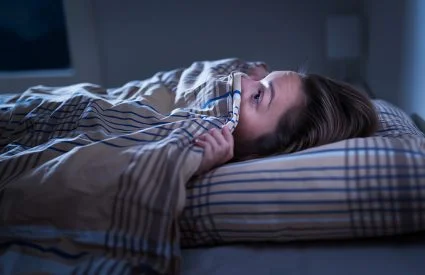
JF: And it was always when I laughed. And then another strange thing, which I didn’t connect at all either, was I often thought , starting especially when I was around 21 and I’d just graduated from college, thinking that a burglar was breaking into my apartment and coming in to attack me in my bedroom and then not being able to move or get away from him and feeling very scared.
And then realizing there hadn’t been a burglar. And I’d had plenty of dreams before and nightmares, but this felt different. It felt like it was something that was happening in the actual room where I was sleeping.
DS: Yeah.
JF: I didn’t really know what to make of these things. And I honestly did not connect the dots between them. I thought they were all like separate issues. And it was eventually actually, I was a big runner at the time and I had runner’s knee. And it was a sports therapist at Boston College who I was seeing about my runner’s knee. She was asking me lots of questions about my knees and she said, do your knees ever buckle? And I said, well, this thing happens when I laugh. My knees buckle, but it has nothing to do with my running. And she thought she’d heard of that and that it was called cataplexy.
DS: Unbelievable.
JF: Yeah, right? And I’d actually- two primary care doctors already I’d kind of, like, tried to bring this up to you and they had missed it. And so I went home and I googled the word cataplexy and saw it was this form of muscle weakness, you know, triggered by emotions, like laughter. And I was like, Oh my god, that’s exactly it. And then that I found out that it was something that, you know, for the most part only happens with narcolepsy.
DS: Yeah.
JF: I thought I can’t have narcolepsy. That’s a joke about someone falling asleep while they’re standing. But then when I read the real symptoms of narcolepsy and saw, oh, excessive daytime sleepiness. Oh my gosh. Like, you know, I’m having trouble getting through law school. I was having trouble driving in the morning, just 15 minutes to school in the morning. I started to like, feel like I couldn’t make that short drive.
DS: Yeah.
JF: And then hypnagogic hallucinations and sleep paralysis, this feeling like, you know, something’s happening that feels very real.
DS: Not being able to move your body.
JF: Yeah. Yeah. So, pretty quickly, once I found the right terms, I knew that’s what I was experiencing.
DS: Yeah.
JF: But, yeah. It’s just, it’s been so striking because I think most people are just so surprised to learn about the real symptoms and how different it is than what we kind of perceive it to be in our culture.
DS: What percent of patients with narcolepsy have cataplexy, would you say? Because it’s not everyone.
JF: I think at one point I saw something that said 60 percent of people have narcolepsy with cataplexy, and then there’s also narcolepsy without cataplexy. I’m not sure exactly what percentage now people are saying.
DS: Yeah.
JF: And then of course there’s idiopathic hypersomnia as well, which, you know, is, I’d say we’re all kind of part of this hypersomnia family.
DS: This excessive sleepiness, right. And when it comes to cataplexy too, I think it gets missed a lot of times, like you were saying, because it can be very subtle. So I’ve had patients with just like a little bit of drooping in the mouth. Laughter is the most sensitive and specific of things. So I will always say to someone when I’m asking like, do you ever notice if you tell a joke or hear something really funny you have any weakness in your body?
But it can be a strong emotion, whatever- it can be negative or positive, but the laughter is a really common one, but yeah, it can get missed so often and we see it mostly in narcolepsy.
So once you figured out what was going on, then what were like the next steps? How did you end up finding an actual doctor and what did you do for treatment? And testing.
JF: Yeah. I got really lucky. Looking back. I didn’t realize at the time how lucky I was, but I had a friend in – one of my best friends in law school and still one of my best friends. I said, I think I might have narcolepsy. And she said, oh, you know, my mom’s best friend is a sleep researcher. And maybe you could talk to her. And so that turns out that was Sonia Ancoli-Israel.
DS: Major person in the sleep field, just for anyone listening.
JF: Yeah, yeah. I had no idea I was, you know, talking to like the, you know, shero of sleep research. And so-
DS: I must have quoted her like a billion times in my dissertation. So, very lucky you had that connection.
JF: Yeah. And so I was able to talk to Sonia and she put me in touch with Dr Thomas Scammell at Harvard, you know, at Beth Israel, which was literally like three blocks from my apartment. You know, so I was able to see him really quickly. And, I still had to wait a few months for the sleep study, the 24 hour sleep study. At the time, I thought that was way too long to have to wait because I was going to take care of this whole narcolepsy thing over the summer. This was going to be like my summer problem I was going to deal with and by the time I started my second year of law school, I’d be like all better.
DS: Yeah.
JF: That was my plan in my head. So I was diagnosed just about three weeks after that. I just turned 24 years old and, you know, in the first few weeks of my second year of law school, I returned to get the official diagnosis from Dr. Scammell.
DS: Yeah.
JF: And he was just so excited by the results of my sleep study that I’d gone into REM sleep so quickly and all of my naps, that this was narcolepsy on paper.
DS: Because it was so conclusive. Yeah.
JF: Yeah.
DS: And medications, do you find that they’re helpful for you?
JF: Yeah. I mean, I think, you know, at first when Dr. Scammell described the different treatment options, I was waiting for the good one, you know, the easy one.
DS: Mmm-hmm.
JF: And it was just surprising to me how I realized, like, the low for me really came a few months after my diagnosis of realizing there wasn’t really a cure and it wasn’t going to be easy. To manage the medications is a lot of work and especially the first few years as I was getting used to them.
So I am lucky that I do respond well to some of the current treatments that are available. So you know, my level of functioning and my ability to do things like play a lot of tennis and I’ve run four marathons. Like, you know, I know that that’s, that I’ve been very lucky to respond well to the treatments and not to have any other conditions as well, because a lot of people have other conditions that they have to take into consideration.
So, but there are, it’s important for people to know that treatments are out there because there’s hope, you know, so, you know, getting a narcolepsy diagnosis doesn’t just mean that, you know, that you’re going to have something, you know, negative on your record. It’s important to take that step because you can find some improvements with treatments.
DS: You’re the CEO and founder of Project Sleep, which I love and we’ll dive into more in a minute. And in 2019, you also founded World Narcolepsy Day through Project Sleep. I’d like to dive into that. How has your experience meeting and working with hundreds of patients and organizations around the world led to this Awareness Day on September 22nd?
JF: You know, after I wrote my book, I was really surprised by how many people were interested in the book around the world. So, I would be getting messages from people with narcolepsy, from places like South Korea, Germany, the Netherlands. And so, this led to some opportunities to go visit some of these places.
DS: Okay.
JF: Australia. And as I started to get to know the organizations and the individuals around the world, you realize that narcolepsy is so similar no matter where you are. The amount of connection, and the sense of community just by being around another person is so unbelievable. Even if you don’t share the same language you, like, understand each other.
DS: Yeah.
JF: And so when I transitioned to be the first staff member of Project Sleep, one of my first goals was creating this World Narcolepsy Day, in order to have just like a central opportunity to be raising awareness about this condition around the world. So I worked with all the different nonprofits internationally. I didn’t want it to be like JF Flygare’s day, or even just Project Sleep’s event. I want it to be owned by the community. And so it’s co led now by I think about 32 different non profits internationally.
DS: Oh, I didn’t realize that many.
JF: Yeah. Yeah.
DS: Wow.
JF: New ones all the time that are coming up in different countries, which is really important for people to get organized and to meet people in their own country. And then we have this central opportunity to raise awareness.
DS: So talk to us just about World Narcolepsy Day 2024. Like, are there- what kind of events, initiatives are you most excited about? What things are going to happen? And I know it’s like, there’s so much stuff that goes on online.
JF: Yeah. So for Project Sleep, we have three different events over September. We’ll have two story sharing sessions from rising voices speakers. One that’s from Ireland, another one from New Zealand. And then we will have another event about raising your voice. And we’ll be talking a lot about our Scientific American article that’s going to be coming out mid September. So definitely check out the article in Scientific American.
And then that broadcast, you know, featuring Josh Andrews, who’s a NFL veteran living with narcolepsy and myself, we’re both featured in the article. So we’re going to have a really great discussion on World Narcolepsy Day.
DS: That’s awesome. What’s the article, like, what should we be looking out for? Is it mostly about narcolepsy, just about narcolepsy day? Like what’s the article about in general?
JF: Yeah, it features my story and Josh’s story and a research project in the narcolepsy space and about, a little bit about World Narcolepsy Day.
DS: Okay, I’m gonna keep an eye out.
As we mentioned in the introduction, you’re also the founder of Project Sleep, one of the leading patient advocacy organizations in the sleep space. So can you talk to us about why did you found Project Sleep? What was that journey like? I can’t even imagine, like just starting a nonprofit, I’ve never done anything like that. How did you do that? And where did that idea come from?
JF: It was pretty organic to start. I think we were doing these sleep walks on the National Mall. And at first I just did it like, you know, inviting my friends to go for a walk around the National Mall.
DS: I remember.
JF: And then started to realize as I was filling out paperwork to get permits to do that. They said, are you a nonprofit? That would be, you know, deemed more official.
DS: Yeah.
JF: And so I thought, oh geez, I guess that would be a good idea. And then, you know, I think though in a way what I’d seen in the sleep space was a little bit of a divide between sleep health and sleep disorders. That people were either talking about sleep health as if sleep disorders didn’t exist, or they were talking about very specific sleep disorders. And for me, one of the biggest burning issues is the many, many, many millions of Americans who are undiagnosed with sleep disorders out there, you know, living, maybe not to their full potential, driving drowsy, all sorts of, you know, hard things. And for those people. I really wanted to help them get a diagnosis. So I think, you know, that’s how Project Sleep is. To try to make sleep cool, but also to try to bridge that gap between sleep health and sleep equity and sleep disorders, and make sure that, you know, if you talk about one, that the other one’s not entirely missed either.
DS: I love that you say that because that’s been my biggest complaint about just being on the sleep medicine side for all these years is that you go, as you see, you go to the sleep medicine conference, the APSS, you know, it’s just very sleep disorder heavy, which is fine. But at the same point, we’re leaving out the whole sleep wellness side.
And then when you go to sleep wellness, they leave out the sleep disorder side. And all of it is important. And we want to make sure that if someone is struggling with their sleep that, you know, they’re not going to be pushed to just keep a good sleep schedule and avoid caffeine because that’s not going to fix it for someone who has a chronic sleep disorder.
So now within Project Sleep, I know you’ve been doing a lot of work trying to start a sleep program within the CDC. So talk to me more about that initiative because I’ve seen how active you’ve been. It seems really amazing.
JF: Yeah. I mean, that was when I founded Project Sleep and you have to fill out paperwork and say, where do you think you’re going to get money to do your work? And one of the foundational structures usually of a, you know, nonprofit in the healthcare space would be getting government grants to be able to do some of the work we’d like to do. And that just really doesn’t exist for sleep. And so it kind of just has always been on my radar. And eventually, you know, about five or six years ago, we really launched a sophisticated advocacy program, started getting more involved on Capitol Hill, and we run the Sleep Advocacy Forum now bringing the different sleep organizations together.
And after building up all of this, it’s finally time that we are trying to make real progress on this issue that I’d seen since, you know, I’d founded Project Sleep, which is to try to create a home for sleep education and awareness. Public education, but also health care provider education at the CDC.
And so I think it’s a huge missing link. Often people say, you know, what would you do if you could have some big sleep health campaign or sleep disorder campaign? But a lot of these things take resources.
DS: Yeah.
JF: And in other areas, the CDC is funding. Even for epilepsy awareness. It has a line item for, I believe, 11 million dollars at the CDC.
DS: Yeah.
JF: To fund epilepsy awareness. And there’s nothing for sleep health or sleep disorders.
DS: The thing that we all do or should do is the thing that we don’t really talk about all that much. I love that you’re doing this work. What is your overarching kind of goal with it? Where do you see it going?
JF: Well, so right now we have one co-lead on the bill to create that program at the CDC and we’re looking for a co-lead and then we’re hoping to introduce the bill this fall.
And then we’ll have other members of Congress join it. And then pass it. Pass it through Congress and that will help to establish that program with the CDC. The CDC works differently than NIH, like Congress for the NIH gives NIH a bunch of money and then NIH kind of gets to decide how they, you know, you apply for grants.
DS: Okay.
JF: But the CDC is a little bit more on a line item budget. And so if you don’t have that program, they don’t spend money on it. So that’s why Congress has to establish a line item for sleep health and sleep disorders awareness at the CDC.
DS: Something that differentiates Project Sleep from some of the other groups is its approach and focus on storytelling. I mean, I have so many patients that I’ve seen over the years who just feel very alone, and they don’t feel like anybody else really can relate to their experience, which is why I love your book so much and recommend it to every single patient that I’m seeing when they’re diagnosed or about to be diagnosed. I love the idea of storytelling. Tell me about the storytelling program within Project Sleep, why you started it, what benefits you see it doing for other people.
JF: Yeah. So when I decided to write my book, I knew I had a creative nonfiction background. I thought I could, you know, write a pretty good book, but it’s not like I had what I thought was like the most compelling or most interesting story. It’s just the story I had.
DS: Yeah.
JF: You know, so I’ve been really grateful after the book to be able to speak and gain a lot of experience working with the media, but I knew that other people’s stories were so interesting and different and the importance of different stories. So I didn’t need everyone to hear my story.
We needed to hear many more different stories. That was one of our first really sophisticated programs that we developed at Project Sleep was the rising voices program. We modeled it after a lot of different other storytelling programs, like NAMI’s In Our Own Voice program. It shows that, you know, someone’s opinion would change before and after hearing the presentation about someone in that case with a mental illness.
So for this, you know, we first started with just narcolepsy and now we’ve expanded to all sleep disorders. And we’re always looking for new advocates. It’s a summer training program. It’s online and people attend like a month long training and they get feedback from Lauren, who’s our program manager. And then, they end up with like a 25 to 30 minute presentation about their story, that then they can go and, you know, share with, you know, high schools or nursing schools or many different places.
So, you know, I think we kind of forget the importance of story sometimes in the medical field and how much more memorable it is when you see a face and you hear people’s in particular stories is the way that we often learn, so yeah, I’m really, really proud of that program. Now we have over 160 Rising Voices trained speakers and storytellers around the world. So there’s just, you know, so many of them that are out there doing great work.
DS: Are there certain sleep disorders, areas of sleep that you need more people to be talking about?
JF: Yes, definitely. We really need more people. We don’t have anyone yet with insomnia-
DS: Right?
JF: – that would like to participate. We do have a few people with sleep apnea. We’ve had one person with REM sleep behavior disorder and idiopathic hypersomnia and narcolepsy, of course.
DS: Okay.
JF: But, you know, I think we’d love to have someone with insomnia and any other sleep disorder.
DS: So to my listeners, and I know I have a lot of insomnia listeners because of my specialty, there really aren’t even any outreach groups really for insomnia. It’s so interesting, like, and it’s such a huge issue. So consider it, we really need to be doing more about insomnia when it comes to awareness. And I think also with the storytelling, at least as a psychologist, even if your story is not the same, there’s some sort of relating that goes onto it that helps someone feel, like Narcolepsy: Not Alone. People don’t feel as alone when they hear other stories.
Can you talk to me just briefly about the media? Because I know we did a project together on that. So tell me about how narcolepsy is depicted in the media and like what we’re doing with that project.
JF: Yeah. You know, we’ve done a few things together. We’ve done a project about helping journalists make that connection. Cause there’s seemed to be like a lot more sleep health articles in the media, but often they don’t even mention sleep disorders. And I truly believe that a lot of people that are attracted to reading the sleep tips and what can I do better about my sleep or what kind of mattress do I need, those people might actually have a diagnosable condition. And if it’s not even mentioned that sleep disorders exist and that that could be something that, you know, someone should like, I think in every kind of sleep listicle or, you know, 10 tips about sleep, they should always, one line at the very least, should be about sleep disorders existing and that you should see a sleep specialist to find out if you could have one.
DS: A hundred percent.
JF: Because you don’t know, like, I didn’t know that my brain didn’t go into the right form of sleep at night. Like there was no way for me to know that, like without, you know, going to a sleep specialist. So, yeah, so, you know, we’ve been, we’ve had some really good results from that of seeing some articles come out from journalists.
DS: I’ve gotten some requests. It’s great.
JF: Yeah. Yeah. And then now, next step for us is to really work with Hollywood, you know, that’s our latest and greatest. We’re so excited to be launching an initiative with USC’s Norman Lear Center, and they are doing a project with Project Sleep to get accurate storylines about sleep disorders into TV shows. So we’re really excited. We’re just at the very beginning of this two year project, and we’re just so excited.
Not only to have more accurate portrayals out there so that people can say, oh my gosh, I guess maybe I could have narcolepsy or I could have sleep apnea, but also just like for those of us that live with these conditions. They’re often used as punchlines or as disparaging, you know, put downs. And so imagine just how we walk through our lives as people with narcolepsy. I think that this work will also help to reduce stigma for people that live with these conditions. So we’re really excited.
DS: Awesome. So what kind of lifestyle changes or resources do you want to recommend to people who are living with narcolepsy that might help either improve their sleep or manage their symptoms? Because that’s really what a lot of it’s about. So to manage their symptoms more effectively.
JF: Yeah. I mean, I think that’s a really individualized question because you know, energy in and of itself and what gives you energy and what takes away energy. So for me, I really focus on helping people find support, finding social support and finding other people that live with the condition.
That isolation is something that I think is worse than any of the actual symptoms of the condition. When people feel alone, like imagine going to medical school alone. Or imagine going into undergrad alone, like how do you… how do you learn? How do you become, you know, empowered to know that there’s role models, that people are doing well out there? You know, connecting people with other people that live with the condition or, you know, finding that community through nonprofits like Project Sleep, but there are other great nonprofits.
In the U.S. There’s Narcolepsy Network, Wake Up Narcolepsy, the Hypersomnia Foundation. And then, as I mentioned, there’s organizations around the world. So I really would focus on trying to help people find those social connections. So they don’t feel alone as an important first step.
DS: Yeah, and if you’re trying to find a doctor who is well versed in narcolepsy, that can be hard as well. So those foundations and those organizations I would think have, I mean, I know I work with a lot of them. I work with you guys as well. So do you think that they would be good resources to find physicians who would be better suited to treat narcolepsy?
JF: Yeah, in some cases, you know, we have the sleep helpline, which is a navigational support. We don’t actually recommend specific doctors right now. We’d love to in the future. But right now what we do is we do have resources for people to kind of like interview their doctors and to see what their experience is.
And you know, what kind of questions that you should ask them about their experience, but also what kind of questions you should ask about at any stage.
DS: Yeah.
JF: I didn’t even know the right questions to ask my doctor, you know, questions around like, will my medication have any issues with birth control?
Like these are very practical questions. So we have those kinds of resources on our website and through the sleep helpline to help people navigate their appointments better, hopefully.
DS: Awesome. I always say you’re the consumer, so don’t be scared to ask your physician specific questions, and if they are offended by it, that is not the physician that you should be seeing, for sure.
So Julie, we always like to end with Something to Sleep On. When it comes to narcolepsy, do you have a final thought for the audience, given everything we’ve discussed, like, something for them to sleep on?
JF: I just say, you know, thank you for taking an interest in narcolepsy. It’s not all that rare.
DS: Yeah.
JF: And if you say that, you know, I’m the first person you’ve ever heard of that lives with narcolepsy, I guess my thought would be, I’m probably not. It’s just a very invisible condition. And people with narcolepsy are your friends, they’re in your schools, they’re at your work, and you may not know it. And so by sharing what we’re posting, you can actually, you know, help to reach a lot of people. And thank you for this opportunity.
DS: Thank you so much for being here, Julie. This is such an important thing to be talking about. And with World Narcolepsy Day on September 22nd, it’s just the perfect time to put all these important points and possible sleep solutions out into the world.
So thank you again, Julie. I really do appreciate it. You are truly changing the face of sleep medicine, whether you realize it or not.
JF: Thank you, Shelby. Always appreciate you and everything you do.
DS: Thanks for listening to Sleep Talking with Dr. Shelby, a Sleepopolis original podcast. Remember, if you’re tired of hitting snooze, hit the subscribe button or follow right now in YouTube, Apple podcasts, Spotify, or wherever you’re listening. And for even more sleep tips. Visit sleepopolis.com and my Instagram page @sleepdocshelby. Today’s episode was produced by Ready Freddie Media. Our Senior Director of Content is Alanna Nuñez. Our Head of Content is Molly Stout. And I’m Dr. Shelby Harris. Until next time, sleep well.