
 Mattress Reviews
 Best Mattresses
 Compare Mattresses
 Accessory Reviews
 Sleep Science
 Sleep Disorders
 Sleep Tips
 Health

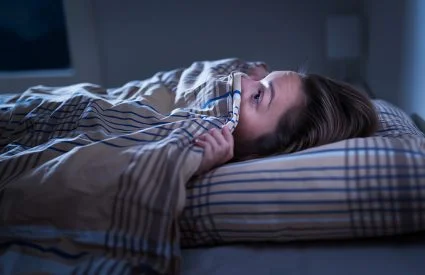

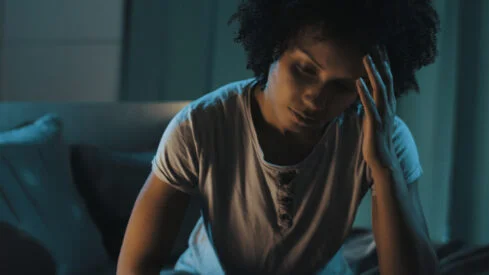


















If your scoliosis is preventing you from getting quality sleep, a new mattress may help provide some relief. While a bed isn’t a substitute for professional medical care, it can help reduce symptoms by promoting proper spinal alignment and preventing pressure from building on the joints and nerves.
According to sleep science expert and pulmonologist Dr. Raj Dasgupta, “the S-curvature of the spine caused by scoliosis can make it difficult to find a comfortable sleeping position, as you may experience stiffness, pressure, or muscle tension.” He recommends finding a supportive mattress that contours to the body’s curves and has a medium-firm feel, providing balanced support and pressure relief.
To combat these symptoms, I’ve rounded up the best nine mattresses to help sleepers with scoliosis. I’m a certified sleep science coach and have been testing mattresses for three years using our medically approved testing methodology, so I know a thing or two about what makes a good mattress. In total, my fellow testers and I have evaluated over 330 mattresses for key factors, such as pressure relief, edge support, cooling, and more.
But don’t just take it from me — every mattress on this roundup has been tested by our Chief Medical Product Tester, Dr. Joe Tedesco, who approved these beds for patients with scoliosis. He gave each one a rating of 4 stars or higher for scoliosis, also providing insight into which sleeping positions are most compatible with each bed.
Sleepopolis’ Best In Rest — Scoliosis
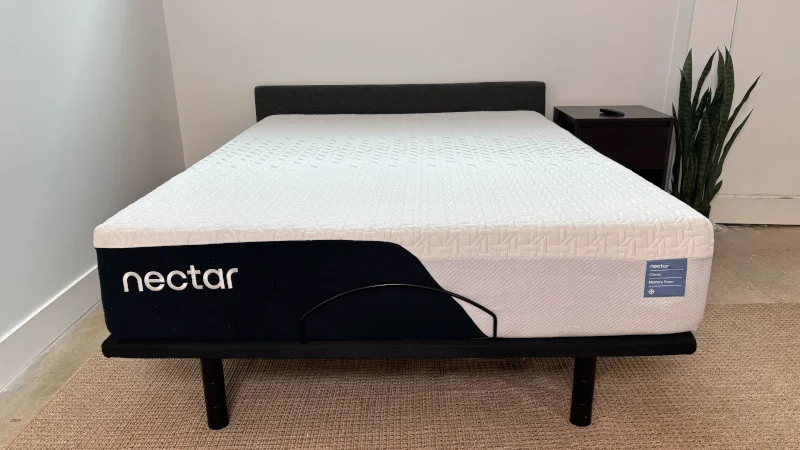
The Nectar Classic Memory Foam mattress is the best bed for scoliosis because it strikes a great balance between support, which lifts the spine into a neutral alignment, and contouring that eases tension at the joints. The mattress was also approved by our chief medical advisor, Dr. Tedesco, who thinks scoliosis patients will find the necessary spinal support.
Best Mattresses for Scoliosis
- Nectar Classic Memory Foam Mattress – Best Overall Mattress for Scoliosis
- Leesa Natural Luxe Hybrid – Best Organic Mattress for Scoliosis
- Saatva Classic – Best Mattress for Side Sleepers with Scoliosis
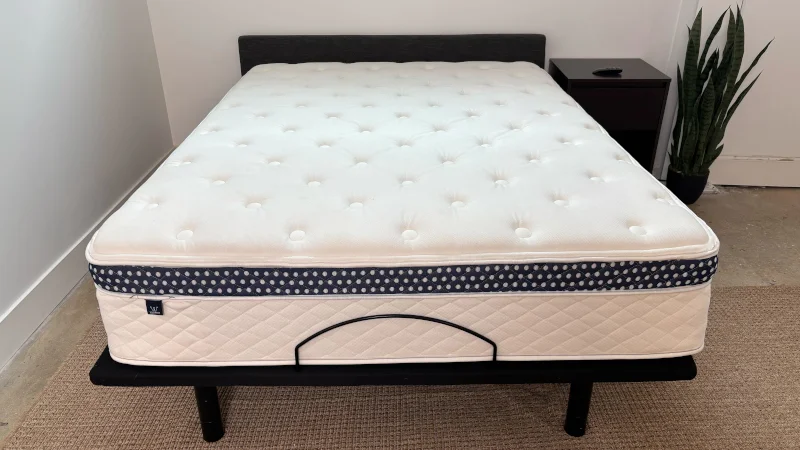
- WinkBed Mattress – Best Hybrid Mattress for Scoliosis
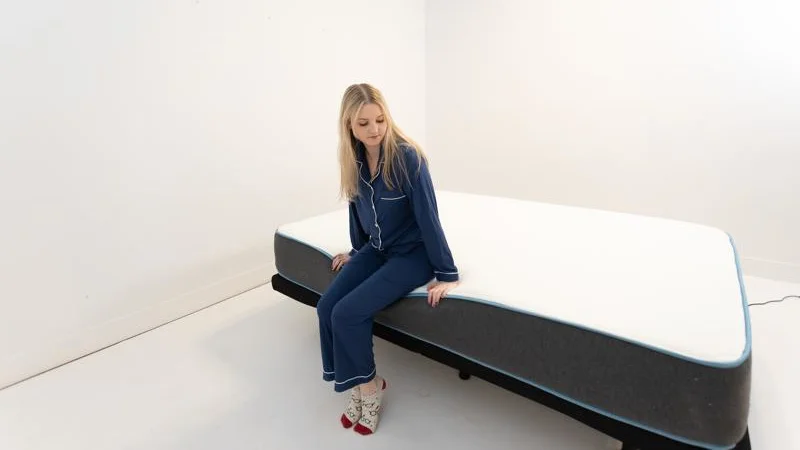
- Bear Original Mattress – Best Memory Foam Mattress for Scoliosis
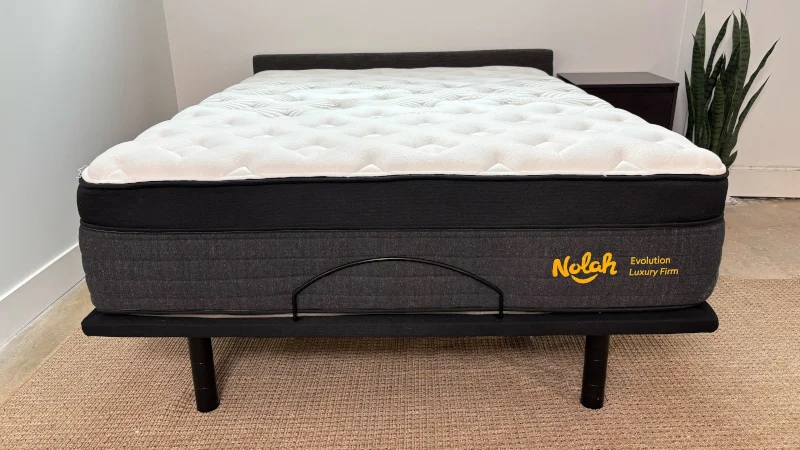
- Nolah Evolution Hybrid Mattress – Best Mattress for Couples with Scoliosis
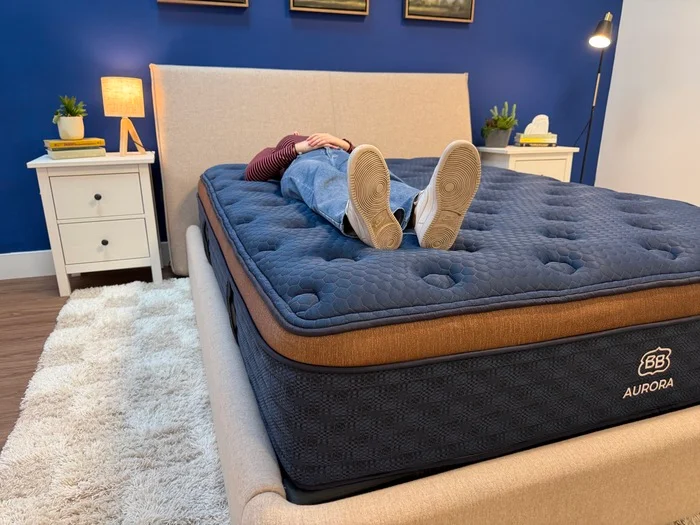
- Brooklyn Bedding Aurora Luxe Mattress – Best Mattress for Back Sleepers with Scoliosis
- Titan Plus Core – Best Mattress for Heavy Sleepers with Scoliosis
Top Deals
- Nectar Classic Memory Foam Mattress – Save Up to 50% on Mattresses + 66% on Bundles
- Leesa Natural Luxe Hybrid – Up to 30% Off Mattresses and 31% Off Mattress + Adjustable Base Bundle; 25% Off Bedding & Furniture
- Saatva Classic – 15% Off Orders of $1,000+
- WinkBed Mattress – 30% Off All Mattresses
- Bear Original Mattress – 40% Off Sitewide with Code SLEEPOPOLIS40
Disclaimer: Please note that the content in this article is meant for informational purposes only and should not be construed as medical advice or serve as a substitute for seeing a medical professional regarding any sleep problems you may have. Please see your doctor regarding any urgent medical issues.
How We Picked the Best Mattresses for Scoliosis
For those with scoliosis, the positioning of your spine on a mattress is crucial for relieving pain. We looked for beds that are supportive enough to promote proper spinal alignment, following its natural S-curve. This helps prevent preexisting pain from becoming aggravated and worsening
Some beds may perform better in this area for certain sleeping positions or body types, so we made sure to include a wide range of options. On this list, you’ll find beds that can work for side sleepers, back sleepers, and stomach sleepers of all sizes.
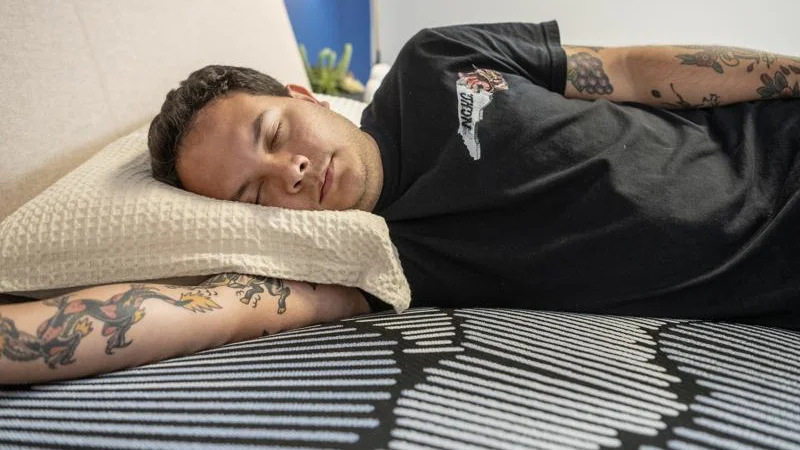
To enhance comfort while sleeping with scoliosis, I looked for mattresses that excelled in pressure relief. Pressure relief helps cushion the joints to prevent unwanted pressure from building at the back, neck, and hips as your body sinks into the mattress surface.
We had sleepers of various body types test these beds while resting on their back and side, which helped us determine the type of sleeper each bed is best suited for. For this list, we aimed to include mattresses that earned at least a 4 out of 5 pressure relief score for one — or both — positions.
When choosing these beds, I looked for medium-firm to firm beds that fall between 6.5 and 7.5 out of 10 on our firmness scale. This balanced feel ensures that people with scoliosis can find enough sinkage to be comfortable without sacrificing spinal support.
Some sleepers may need something a touch firmer or softer depending on individual needs like weight, pain concerns, or preferred sleeping positions. Luckily, many of these beds are also available in multiple firmness levels, so you can tailor your mattress to your individual needs.
We’ve developed a rigorous 13-point testing methodology that tells us how each mattress performs and who it might be a good fit for. All of the beds on this list have been evaluated for pressure relief, cooling abilities, responsiveness, edge support, and much more.
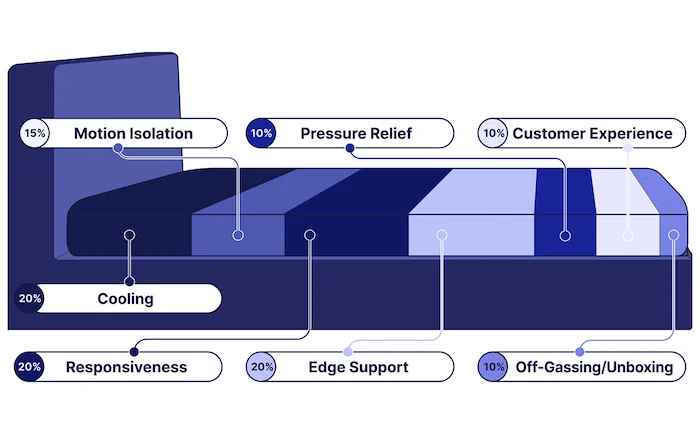
Our team of Certified Sleep Science Coaches has tested more than 500 mattresses over the last decade, allowing us to guide more than 145,000 people to the best mattress for them. Not only do we use and evaluate these products ourselves, but we also consult with Dr. Raj Dasgupta, MD, FACP, FCCP, FAASM, who’s quadruple-board certified in pulmonary, sleep, internal, and critical care medicine, to ensure we keep up to date with the latest in sleep science and medicine.
Additionally, Dr. Joe Tedesco, DPT, OCS, ATC, CSCS, comes into our studio to personally test mattresses and give a medical perspective on each product, and sleep and nutrition experts such as Lauren Panoff, MPH, RD, regularly verify our articles.

Compare the Best Beds for Scoliosis
 |  |  |  |  |  |  |  | |
| Nectar Classic Memory Foam Mattress | Leesa Natural Luxe Hybrid | Saatva Classic | WinkBed Mattress | Bear Original Mattress | Nolah Evolution Hybrid Mattress | Brooklyn Bedding Aurora Luxe Mattress | Titan Plus Core | |
| Rating | ||||||||
| Firmness | Medium-Firm: 6.5/10 | Medium-Firm: 6.5/10 | Multiple Firmness Options | Multiple Firmness Options: 6.5/10 | Firm: 7/10 | Multiple Firmness Options: 7/10 | Multiple Firmness Options: 7/10 | Firm: 7.5/10 |
| Material | Foam | Hybrid | Innerspring | Hybrid | Foam | Hybrid | Hybrid | Hybrid |
| Cooling | — | — | — | — | — | — | — | |
| Best For | Side Sleepers, Back Sleepers, Back Pain, Couples | Side Sleepers, Back Sleepers | Back Sleepers, Stomach Sleepers, Hot Sleepers, Back Pain, Seniors | Side Sleepers, Back Sleepers, Back Pain | Back Sleepers, Couples | Side Sleepers, Back Sleepers, Hip Pain, Seniors | Back Sleepers, Back Pain, Couples | Back Sleepers, Stomach Sleepers, Back Pain, Hip Pain, Seniors |
Need help finding the right mattress?
Best Mattress for Scoliosis Video Review
Nectar – Best Overall Mattress for Scoliosis
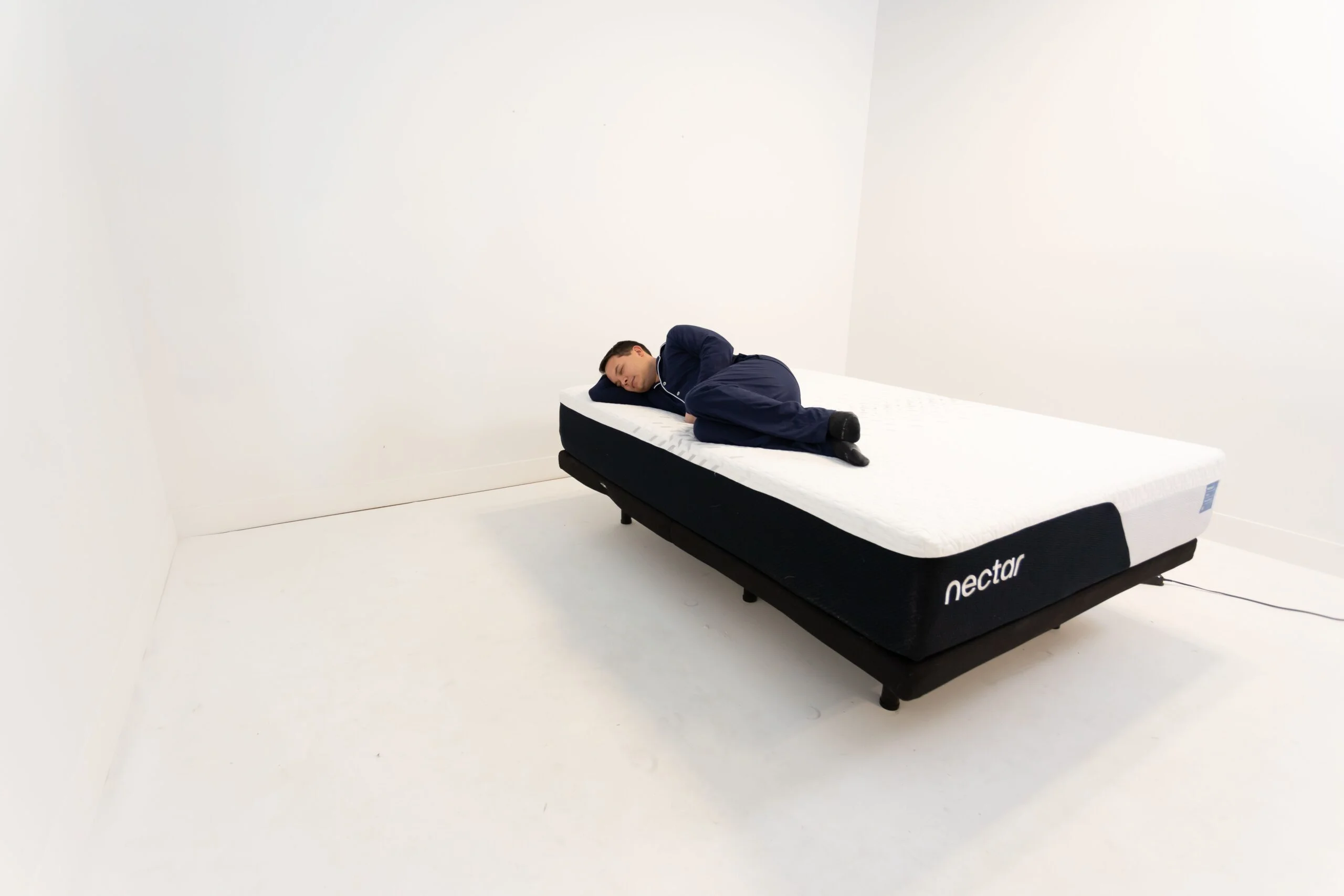
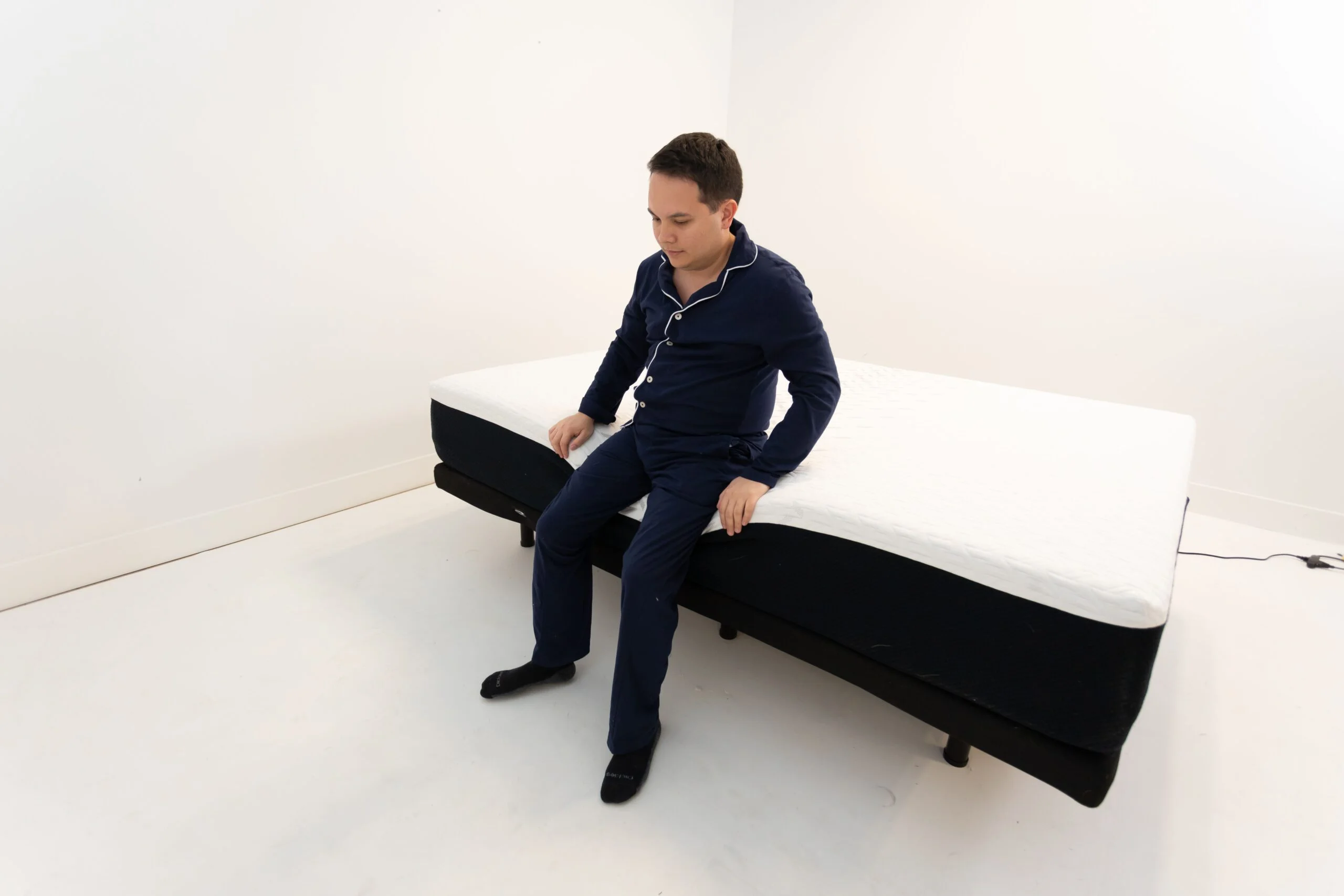
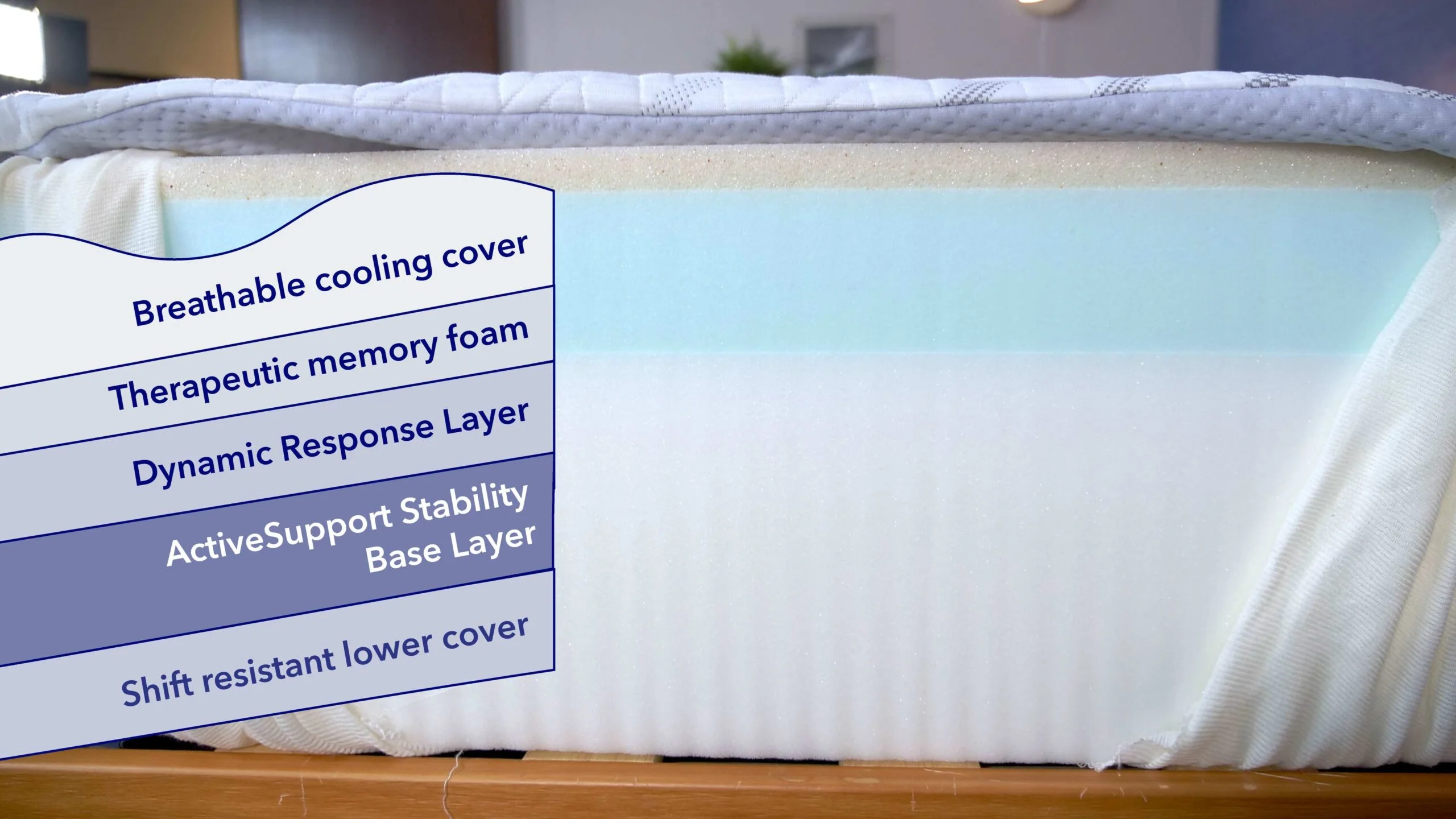
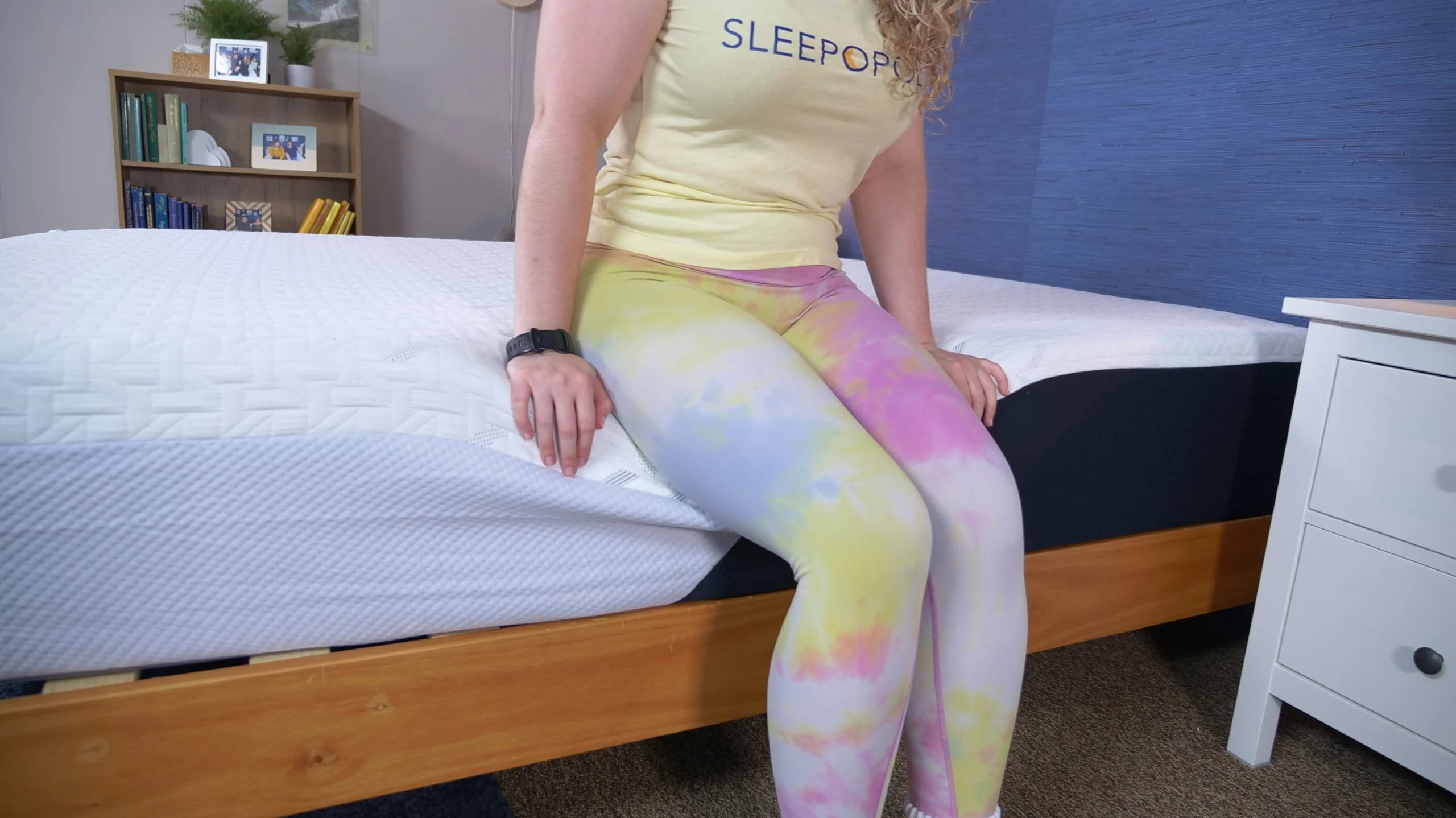
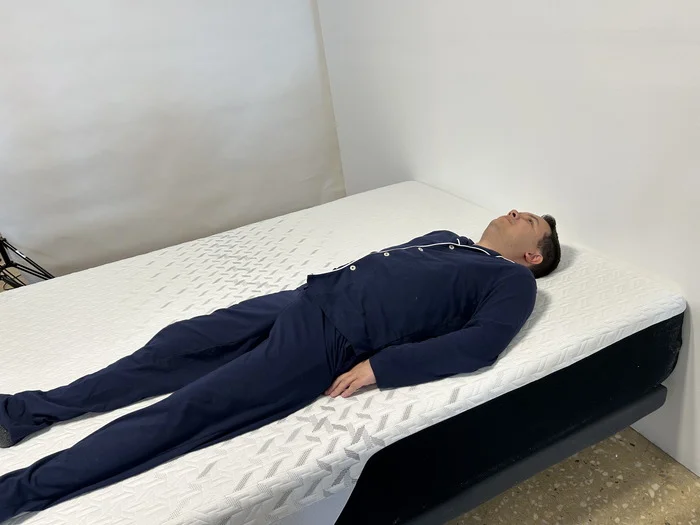


The Nectar delivers a balance of comfort and support: it’s definitely contouring, but still provides a firm enough foundation for most light to average weight sleepers, especially if they sleep on their back or stomach. Plus, a lengthy trial period, lifetime warranty, and affordable price make the Nectar a reassuring choice for many. Watch our video review to learn more.
What our tester says:
“I think back sleepers are going to love the Nectar Classic. These sleepers will get plenty of support from the firm memory foam in the Nectar Classic, which should translate to great pressure relief and a good night’s sleep. Similarly, lightweight and average-weight stomach sleepers should find that they get enough support around their hips to sleep comfortably on this mattress. The Nectar Classic is firm enough to keep these sleepers’ spines in a healthy position.” – Kenny Timper, staff writer and certified sleep science coach
Why is the Nectar the Best for Scoliosis Overall?
To prevent exacerbating scoliosis pain, it’s essential to find a mattress that maintains the spine’s natural alignment while providing adequate cushioning for the lower back and joints. Proper spinal alignment starts with a strong support system, such as the high-density foam base in the Nectar Classic Memory Foam mattress.
This mattress ranks number one on this list because the combination of sturdy support and plush layers helped keep our testers comfortable when sleeping on their back and side, with the bed earning an average of 4 stars for pressure relief in each position. We were also impressed by the 4-star responsiveness score, as well as Dr. Joe Tedesco’s 4-star evaluation for sleepers with scoliosis.
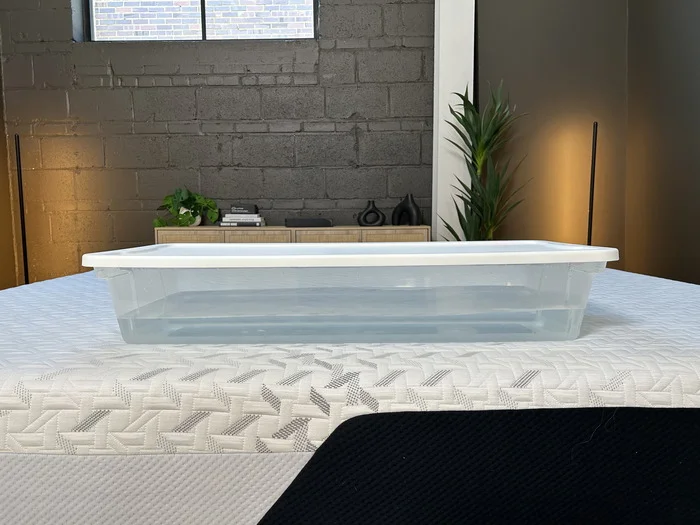
Motion Isolation: 4.7/5
The memory foam version of the Nectar does a great job of dampening motion.
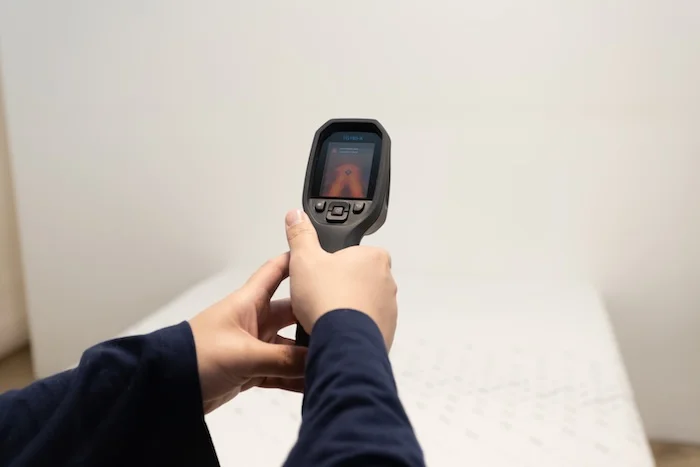
Cooling: 4.5/5
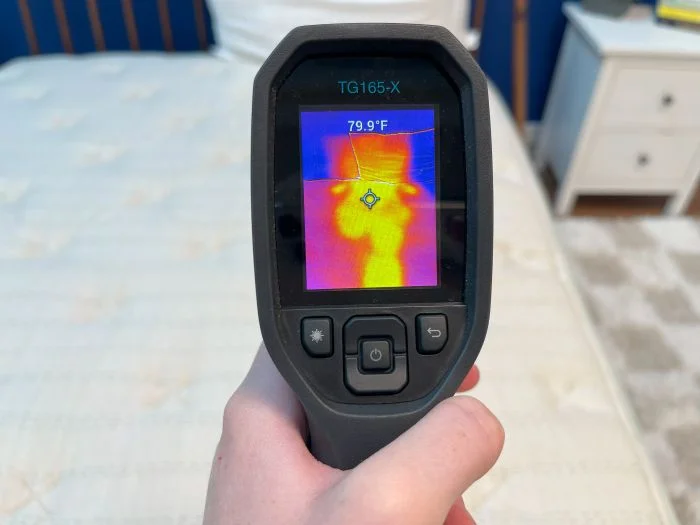
After lying on it for 5 minutes, the temperature of the Nectar only increased by 5.4 degrees.
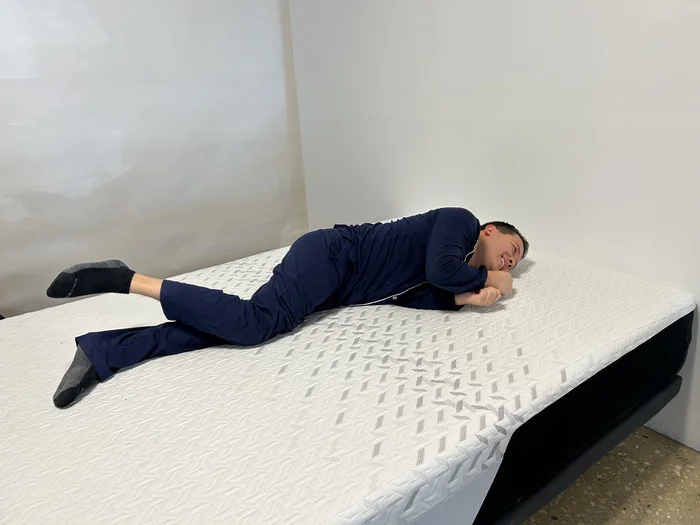
Response: 4/5
Despite being an all-foam bed, the Nectar is surprisingly easy to change positions on.
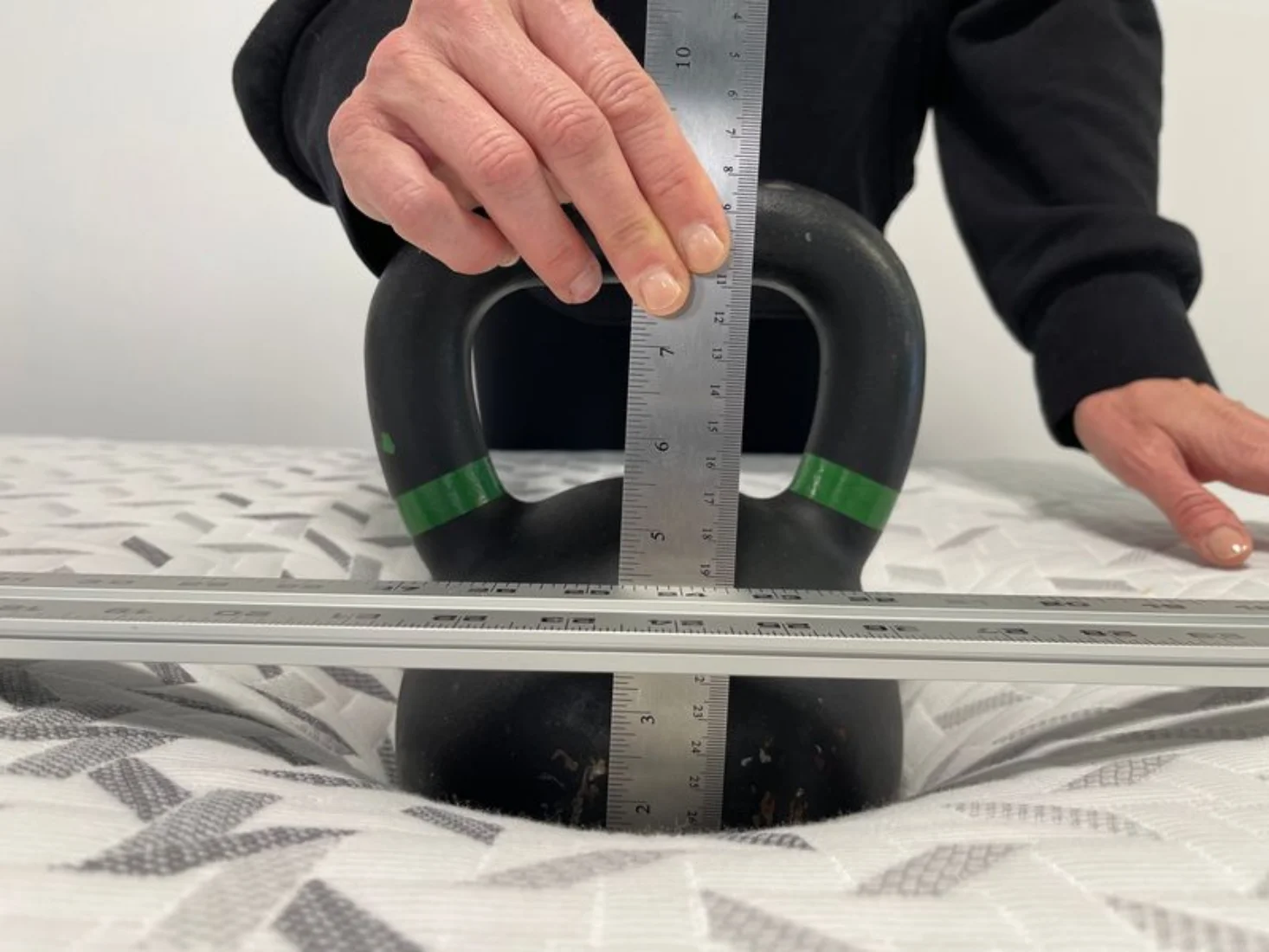
Edge Support: 4/5
There was more sinkage along the edge while sitting on it, but one could lie on it without falling off.
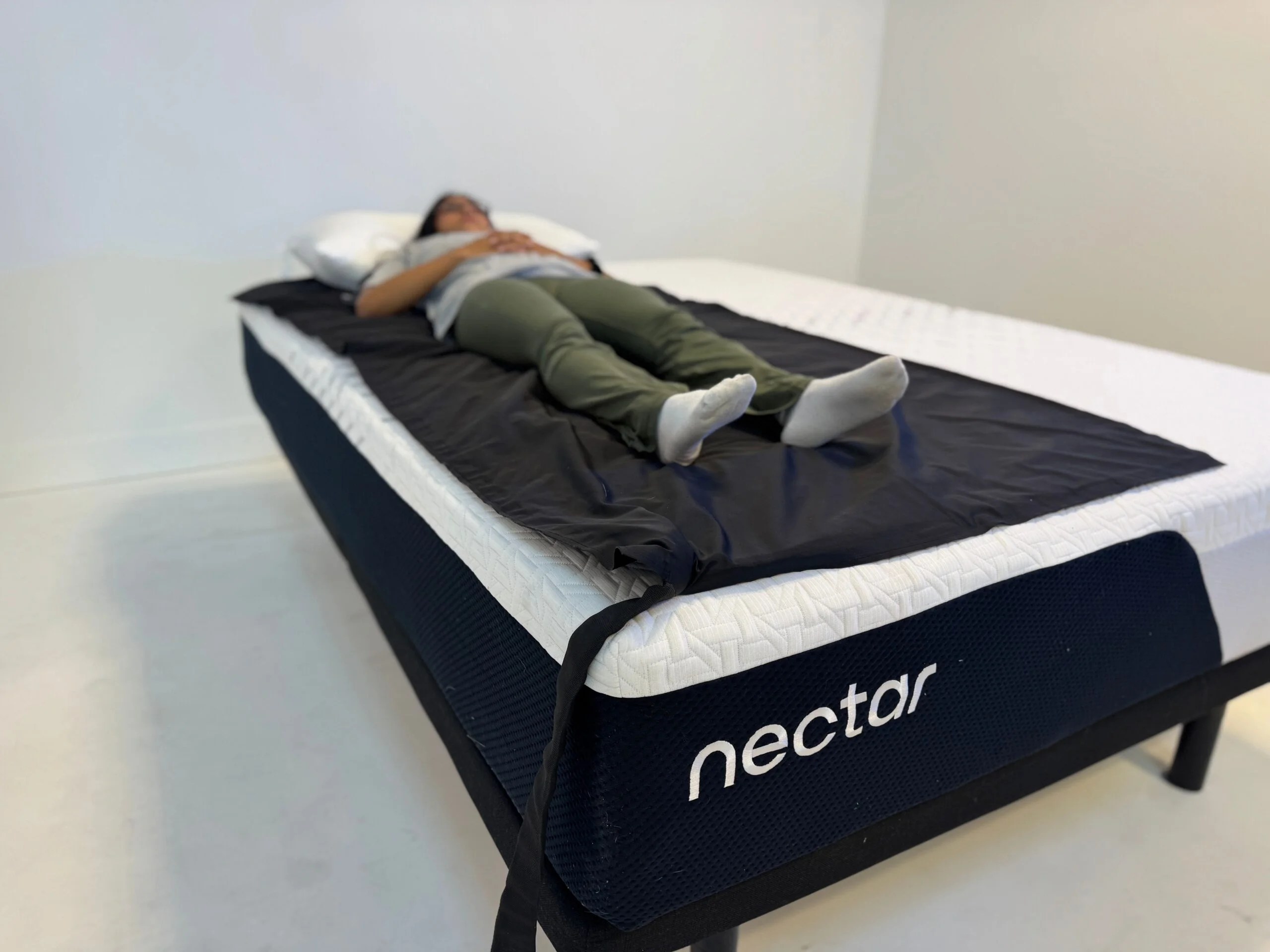
Pressure Relief: 3.8/5
The Nectar Classic felt great on our testers’ backs, but they noticed some pressure buildup on their sides.
Firmness: 6.5/10
The Nectar Classic is a medium-firm memory foam mattress.
How the Nectar Performed
After testing the Nectar for himself, Dr. Tedesco said, “This medium-firm mattress would be a good pick for those with scoliosis. You’ll be in a neutral position on your back and your side.” He went on to explain that once you get into a good position, the bed should keep you stable and aligned. Since he considers it a good mattress for scoliosis, he awarded it 4 stars.
On the Nectar, our testers felt comfortable in the back-sleeping position, regardless of their body type. In this position, certified sleep science coach Sosha Lewis said, “I don’t feel a ton of pressure building anywhere, and there’s a good lift at my hips that keeps them in line with my shoulders.” While every tester rated pressure relief in this position 4 stars, there was more discourse in the side-sleeping position.
On their sides, our average-weight tester, and heavyweight tester experienced enough cushioning to relieve tension at the joints, so they rated the position 4 stars and 5 stars, respectively. However, our lightweight tester didn’t find quite enough sinkage in this position, which led to some pressure building at her shoulders, so she rated it 3 stars.
As a memory foam mattress, the Nectar also features some top-notch motion isolation. This should appeal to sleepers who share the bed with a restless partner. “In our partner test, I only felt my fellow partner get in and out of bed, and only barely,” said my colleague Kenny Timper.
What to Keep in Mind About the Nectar
While our testers found this bed easy to move around on, the lack of an innerspring coil layer means it provides minimal bounce. Therefore, if you’re hoping to spring from one position to the next, you may prefer a hybrid mattress.
Likewise, although this bed is great for supporting those with scoliosis, individuals who weigh less than 130 pounds will likely find it firmer than average. This means they won’t experience as much sinkage and may feel more pressure at the joints, especially when sleeping on their side.
If you’re interested in learning more about this bed, head over to our full Nectar Classic Memory Foam mattress review. For a bouncier hybrid alternative, consider the Nectar Classic Hybrid mattress.
Leesa Natural – Best Organic Mattress for Scoliosis
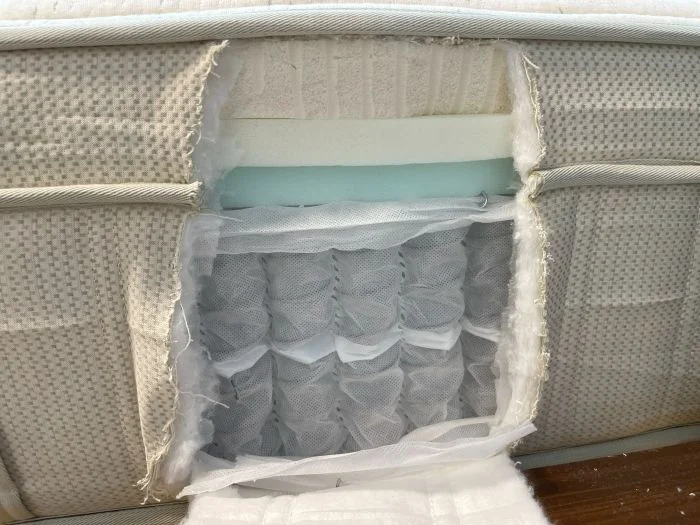
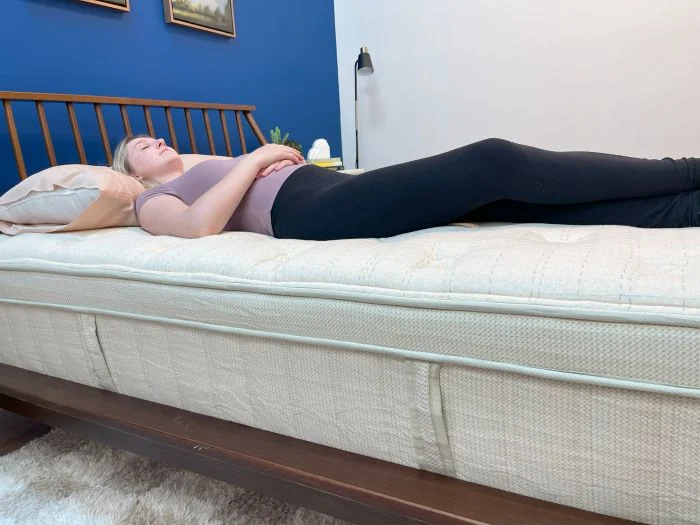
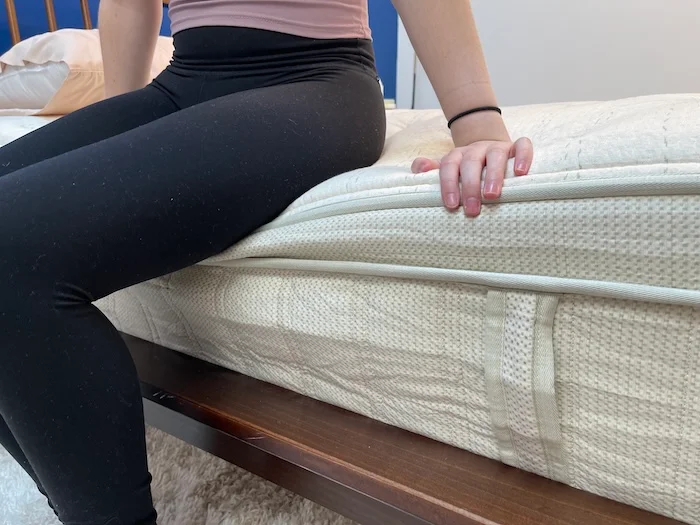
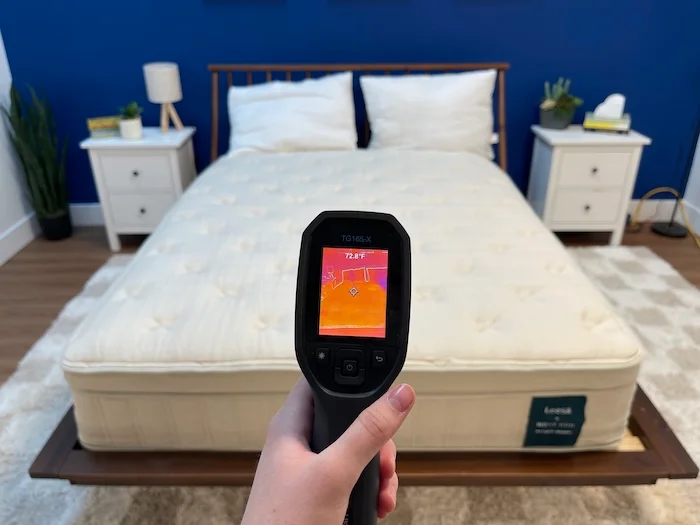


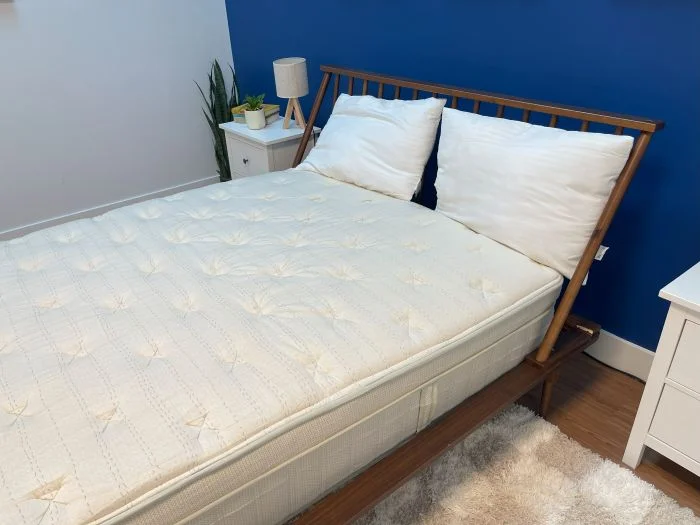
The Leesa Natural mattress should feel medium firm to most sleepers, offering them a balanced feel. We think side sleepers and back sleepers will be most comfortable on this sturdy hybrid mattress due to the combination of plush cushioning and firm support.
What our tester says:
“I really like this mattress in the side-sleeping position. While I’m more ‘on’ the bed than ‘in’ the bed, there’s still a nice amount of cushioning from the mini pillow top that’s relieving pressure at my hips and shoulders. My spine feels perfectly aligned in this position, and I feel like I could sleep all night without feeling pain” – Riley Otis, staff writer and certified sleep science coach
Why is the Leesa Natural the Best Organic Bed for Scoliosis?
Eco-conscious shoppers with scoliosis will love the buoyant, pressure-relieving feel of latex, as well as its earth-friendly nature. If that sounds appealing, I recommend the Leesa Natural mattress for its sustainable and natural materials, as well as its soft yet supportive latex hybrid construction, for which it earned a 4.5 overall pressure relief score.
A certified organic mattress is also always fiberglass free. The Leesa Natural also features a number of third-party verifications: GREENGUARD Gold certification ensures the absence of harmful chemicals and heavy metals. Additionally, the New Zealand wool and latex foam are GOTS and GOLS certified, respectively, which means they’re in compliance with strict ethical and sustainability standards.
Motion Isolation: 4/5
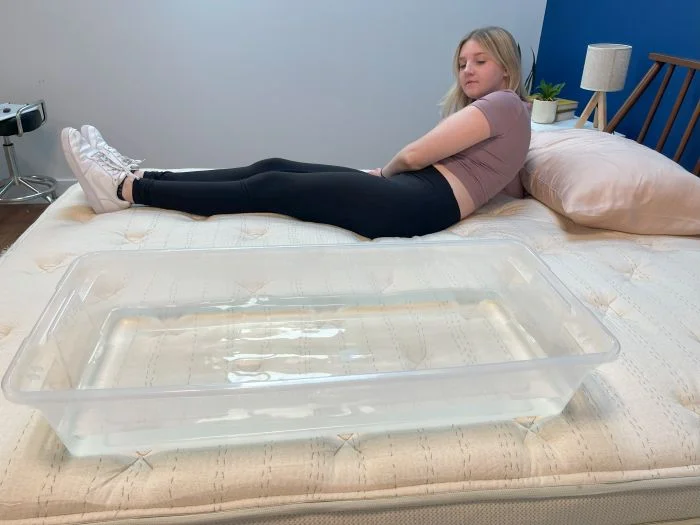
For a mattress with latex, the Leesa Natural absorbs motion quite well.
Cooling: 4/5
Its organic cover may hold onto heat, but our testers found this mattress relatively breathable and cool.
Response: 5/5
Since it’s a latex hybrid, the Leesa Natural is extremely responsive.
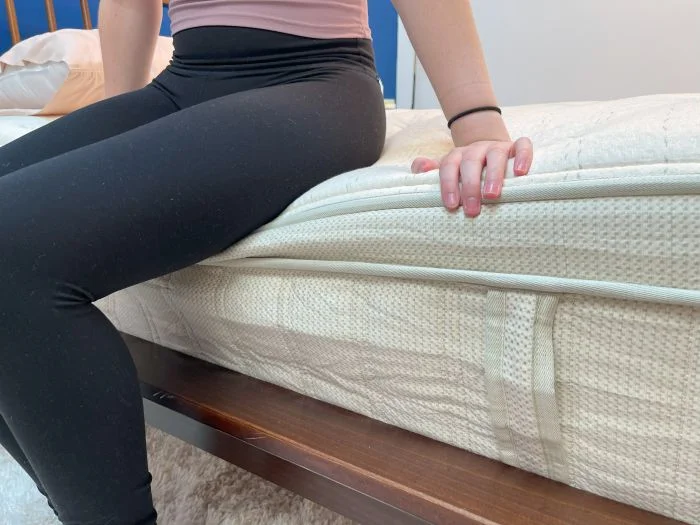
Edge Support: 3.2/5
We noticed a bit of sinkage that made us feel unstable while sitting or lying down on the edge of the mattress.
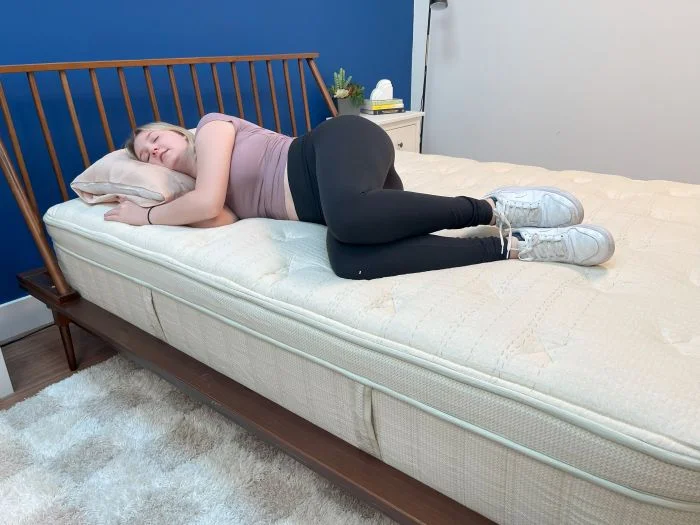
Pressure Relief: 4.5/5
While both back and side sleepers should be comfortable on the mattress, the latter will enjoy even more pressure relief.
Firmness: 6.5/10
The Leesa Natural has a medium-firm feel.
How the Leesa Natural Performed
The primary support system of the Leesa Natural is a tall layer of individually wrapped coils made from reclaimed steel, helping prop the hips up and in line with the shoulders to achieve a neutral spinal position. Yet, cushiony latex and foam balance the firmer support and relieve pressure along the body to create a true medium-firm feel.
We asked Dr. Tedesco to lie on the Leesa Natural and evaluate it specifically for sleepers with scoliosis, and he rated it 4.5 stars. He said, “The mattress seems especially well-suited for people who need consistent spinal alignment, like those with scoliosis. It has just enough give to let me ‘float’ on top rather than sink in, which keeps my spine, pelvis, and shoulders in a neutral position.”
I also personally tried this mattress and thought it was a great match for both side and back sleepers. Alongside my fellow tester, Sosha Lewis, we rated the Leesa Natural 4.7 stars for pressure relief when side sleeping. Sosha said, “The foam contours around my hips and ribs while the coils keep me elevated.” I experienced the same feelings in this position.
Sosha and I also felt comfortable sleeping on our backs. When I lay in this position, the coils propped my spine into the ideal position while still slightly contouring my lumbar spine and relieving pressure. Collectively, we rated the back sleeping pressure relief 4.3 stars.
Regardless of which position you prefer, moving around on the Leesa Natural should feel easy, thanks to its buoyant feel. Springing from one position to the next feels seamless, which can benefit not just combination sleepers, but sexually active couples, as well.
What to Keep in Mind About the Leesa Natural
One thing to keep in mind before purchasing the Leesa Natural is your body type. While our lightweight and average-weight testers found enough support to keep us aligned, sleepers who weigh more than 230 pounds may need a firmer mattress with even more lift.
To learn more about this bed, read my full Leesa Natural mattress review. For an organic bed that’s supportive enough for heavy sleepers, I recommend trying the Saatva Latex Hybrid.
Saatva Classic – Best Mattress for Side Sleepers with Scoliosis
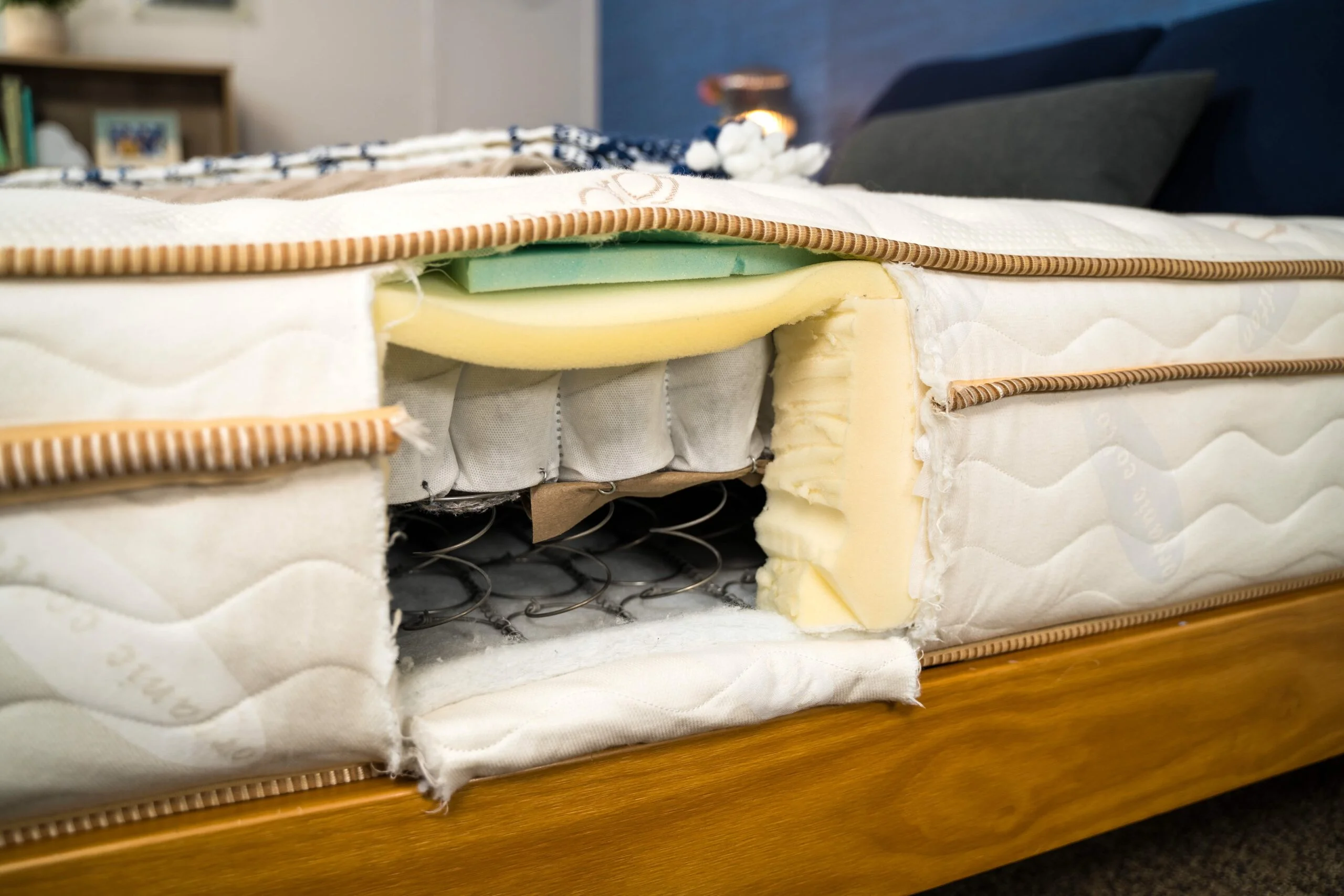
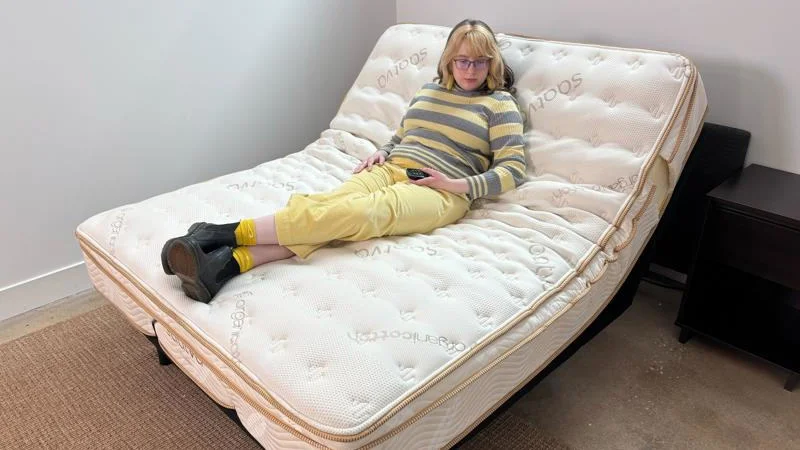
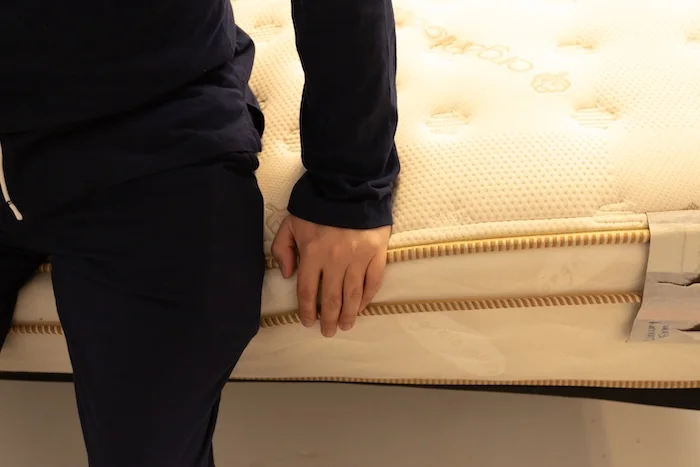
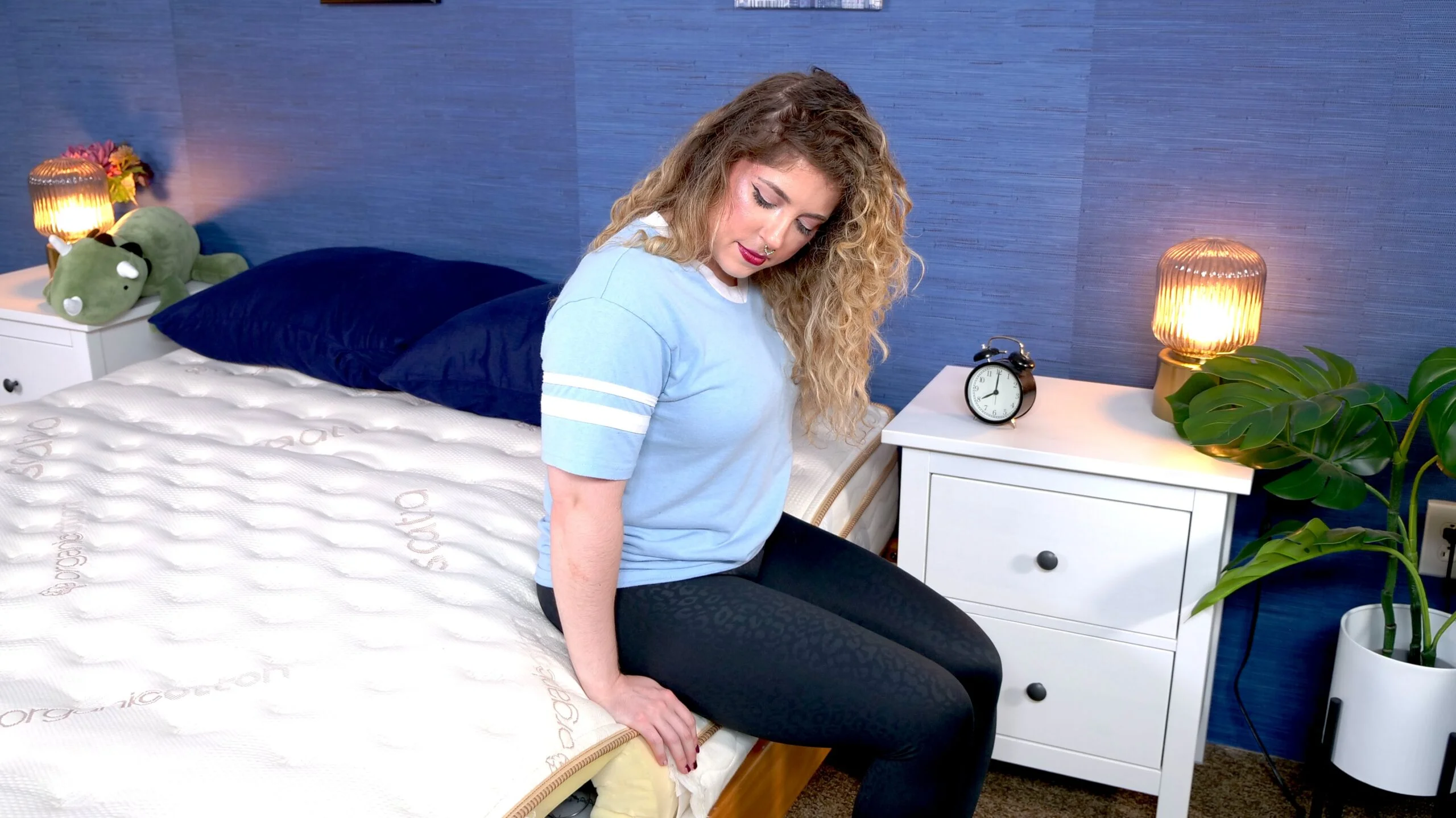
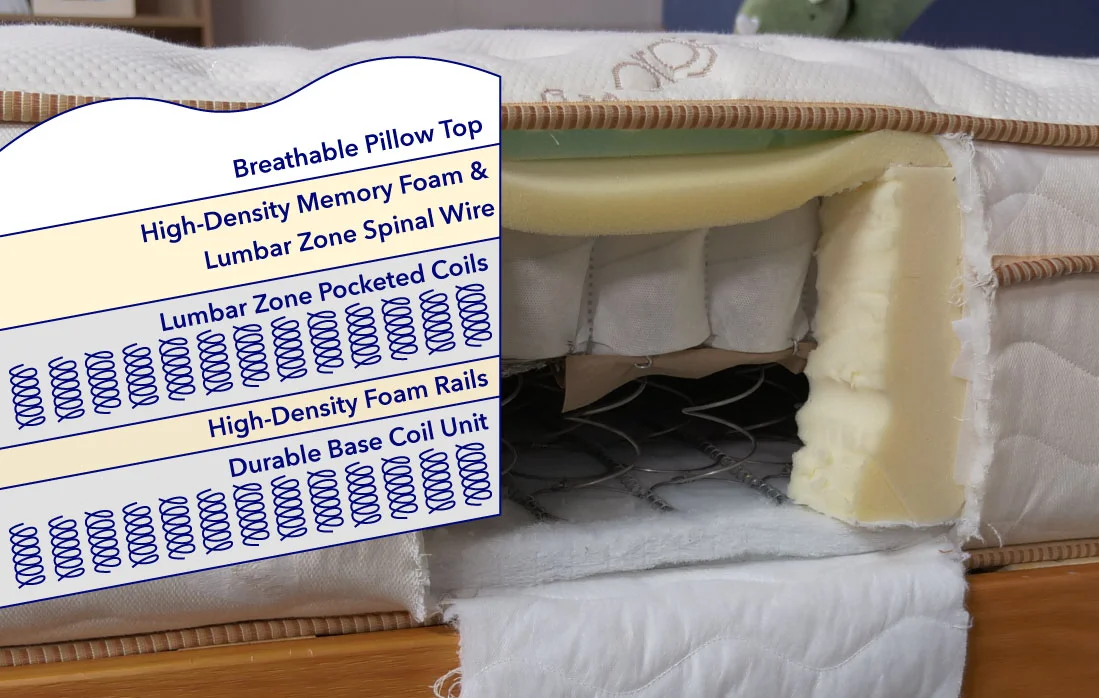
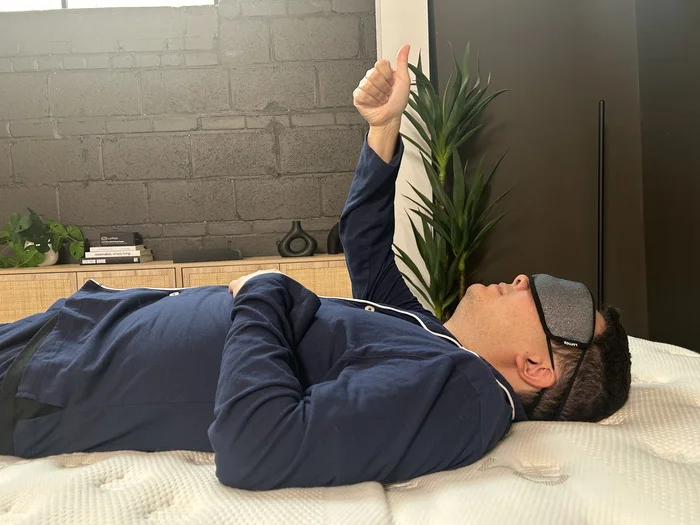


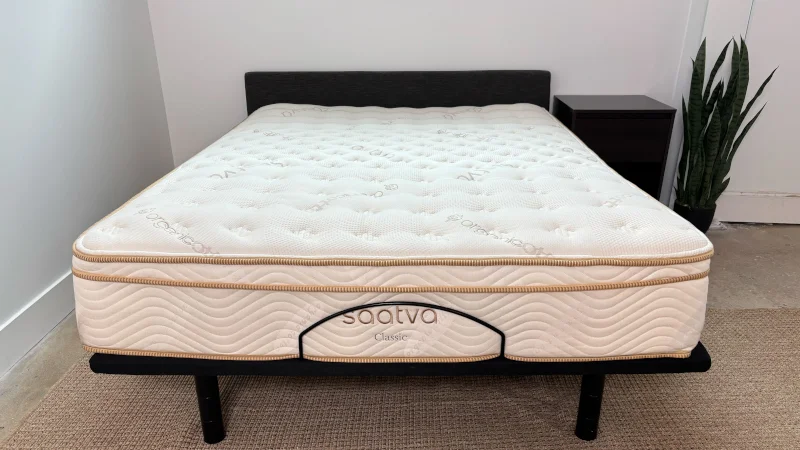
The Saatva’s coil-on-coil construction provides a classic innerspring feel. It’s a good option for combo sleepers, who will want to feel free to switch positions and avoid feeling “stuck” in the mattress. It comes in three firmness levels, so you should be able to find one that suits your needs. The white glove delivery Saatva provides is an added perk and will save you the headache of getting rid of your old mattress (they take it away for free!). For more information, watch our video review.
What our tester says:
“The Saatva Classic’s springy surface is perfect for combination sleepers looking for ease of movement as they toss and turn throughout the night. Also, back sleepers are perhaps best suited to the bed’s lifted support and balanced cushioning from the pillow top.” – Livvi DiCicco, staff writer and certified sleep science coach
Why is the Saatva Classic the Best Bed for Side Sleepers with Scoliosis?
Side sleeping is by far the most popular sleeping position, with 54 percent of American adults favoring this position. For those with scoliosis who prefer to sleep on their sides, it is important that they don’t sink into their mattress too much, as this can misalign the spine and potentially worsen symptoms.
For these sleepers, I recommend the Saatva Classic, specifically in the Plush Soft level. While we gave the Luxury Firm level 3.8 stars for pressure relief when side sleeping, the softer model will better cushion the sensitive joints. Dr. Tedesco also thinks the Saatva can help with scoliosis, rating it 4 stars for the condition. Moreover, this bed stood out to us due to its unique dual-coil construction, which helped it earn 5 stars for responsiveness and 4.8 stars for edge support.
Motion Isolation: 2.7/5
Our tester could feel a lot of his partner’s movement on the Saatva.
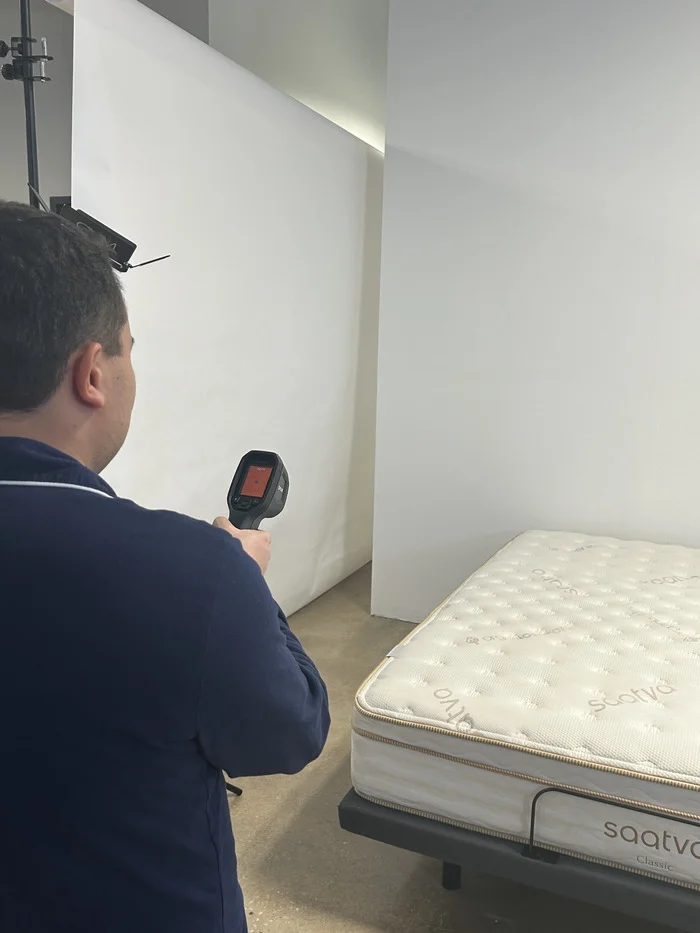
Cooling: 4/5
This bed has a temperature-neutral feel.
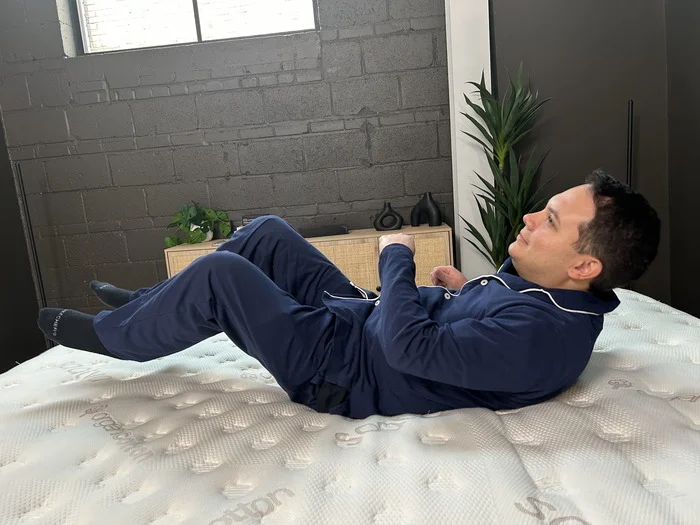
Response: 5/5
The Saatva’s innerspring feel makes it super bouncy and easy to move around on.
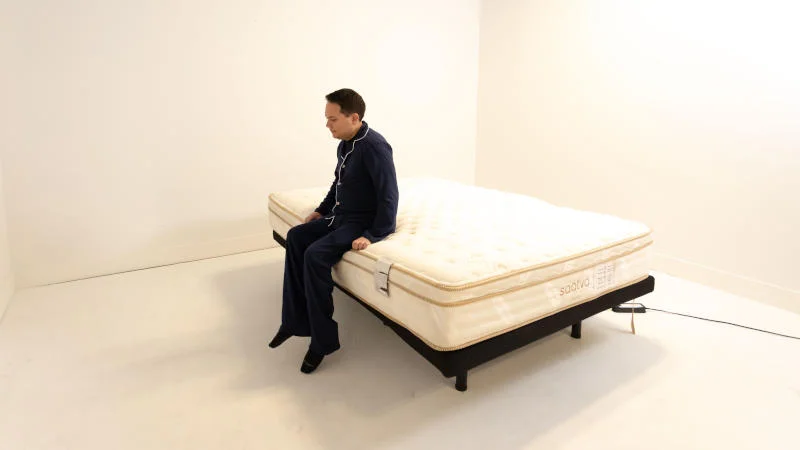
Edge Support: 4.8/5
The perimeter of the Saatva Classic is rock-solid.

Pressure Relief: 4/5
Pressure relief is better for back sleepers than side sleepers on this bed.
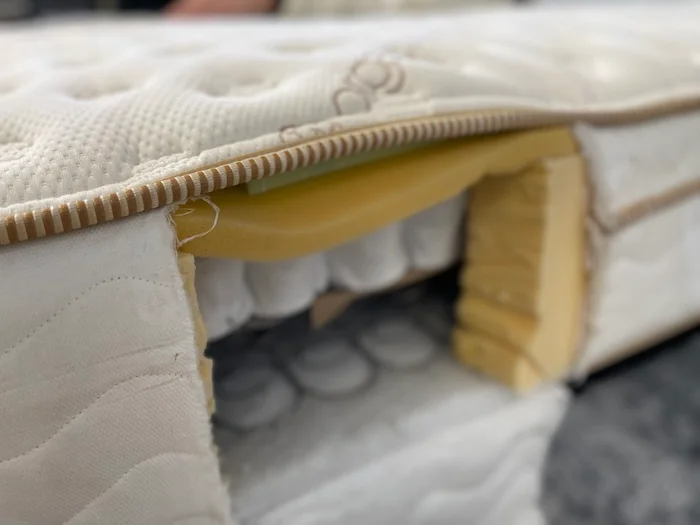
Firmness: 7.5/10
The Luxury Firm model of the Saatva Classic has a firmer feel.
How the Saatva Classic Performed
Dr. Tedesco notes that the overall construction of the bed is beneficial for scoliosis pain, rating it 4 stars. “The springs on this bed make it very orthopedically customizable; wherever pressure is applied, the springs absorb just enough of the pressure to make you feel weightless,” he said.
“The springs are placed appropriately to allow for good spinal alignment,” Dr. Tedesco added. “No matter if you have rotational scoliosis or anterior or posterior pelvic tilt, you should be able to feel comfortable on this mattress.”
My colleague Livvi DiCicco owns a Saatva Classic and regularly sleeps on her side, praising the Saatva’s balance of support and pressure relief in this position: “The pillow top gives you plenty of contouring around the hips and shoulders, but the springs keep my top and bottom halves in line. I do like a firmer feel in a mattress, so the Luxury Firm works great for me.”
Not only do the coils make this bed great for spinal alignment, but they also add a bit of bounce. Although this bed has a plush top layer, the two coil layers practically spring you from one sleeping position to the next, so you won’t be fighting against the mattress when trying to move around.
When he tested the Saatva for mobility, our expert Kenny Timper said, “I think this is pretty much the gold standard for responsiveness.” He rated it 5 stars in this category.
What to Keep in Mind About the Saatva Classic
Since the Saatva has an innerspring construction, it may not appeal to memory-foam lovers seeking deep sinkage and full-body contouring. On top of that, the two coil layers allow for motion to travel across the bed easily, so it only earned 2.8 stars for motion isolation. If you sleep with a partner, you’ll likely feel them toss and turn beside you.
Ready to learn more about this bed? Head over to our full Saatva Classic mattress review. For a bed with better motion isolation, I recommend the Saatva Loom & Leaf mattress.
WinkBeds – Best Hybrid Mattress for Scoliosis
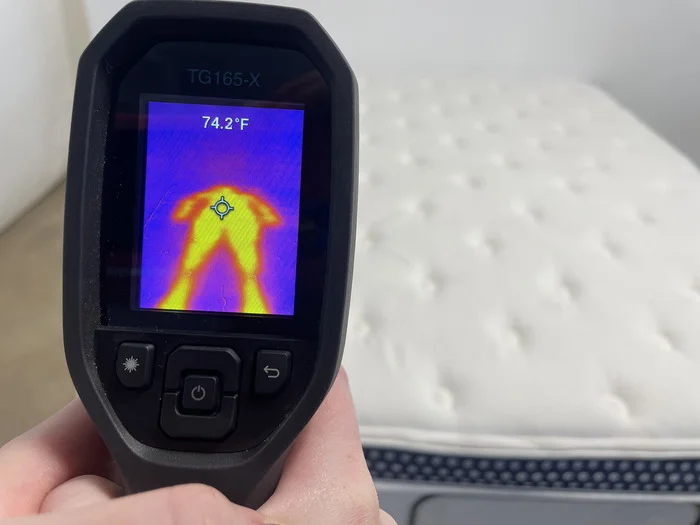
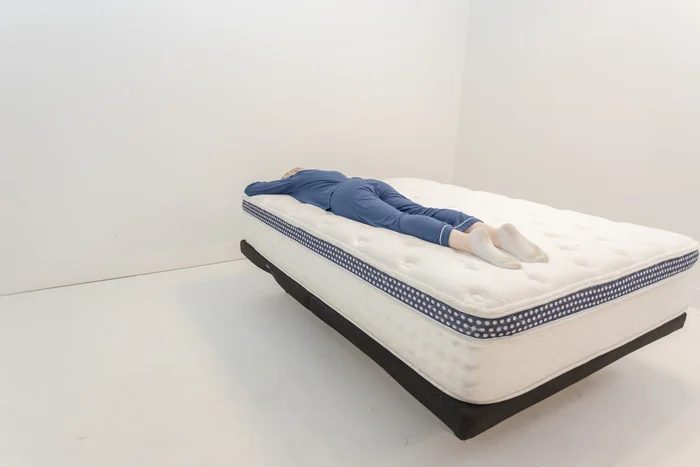
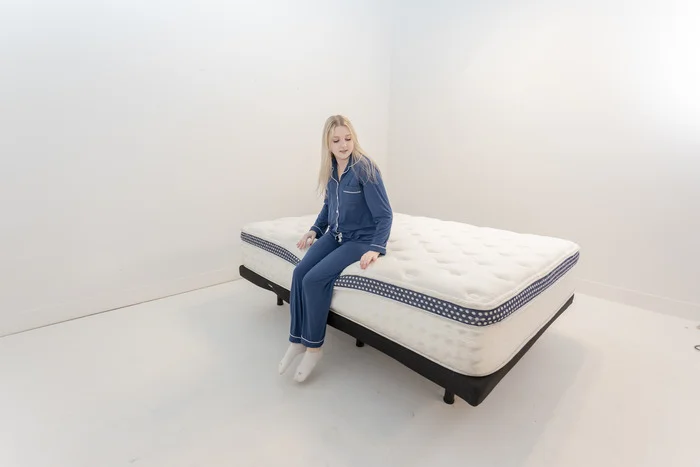
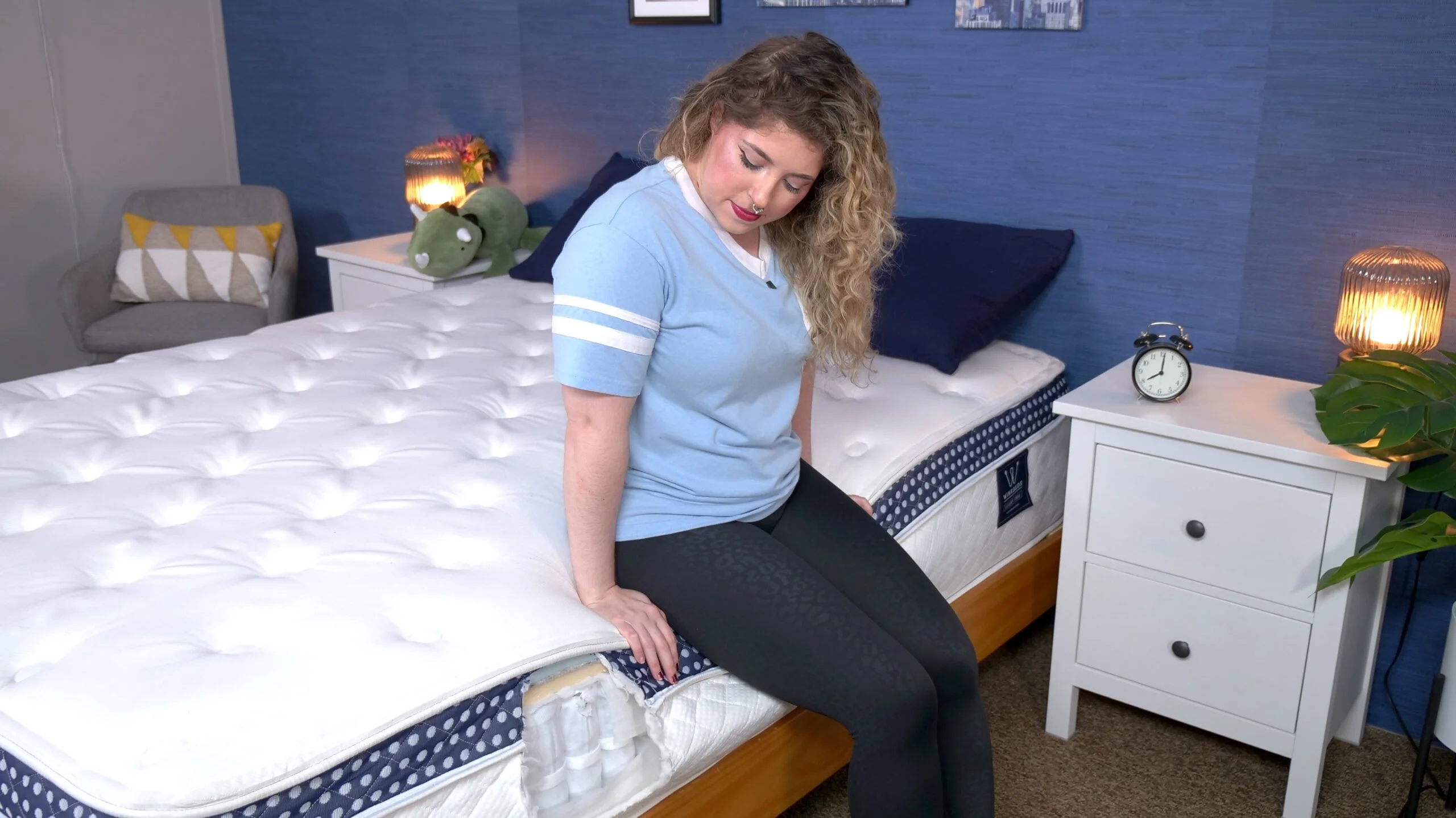
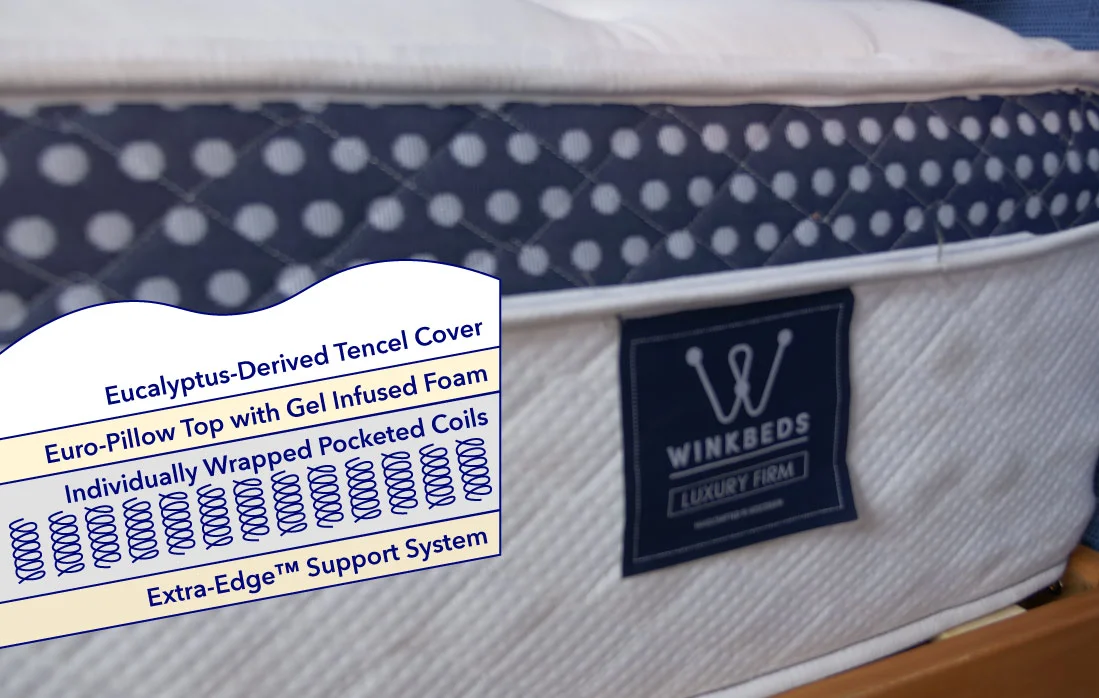




The WinkBed is a luxury hybrid mattress. It has a similarly supportive and sturdy feel to a traditional innerspring mattress, but upgrades like a Euro top and cooling Tencel cover give it a touch of modern luxury. Available in three firmness levels, there is a WinkBed for just about every sleeper. And a responsive and bouncy feel makes it a great pick for combination sleepers. Learn more in our video review.
What our tester says:
“If you like the feel of a traditional innerspring mattress, the WinkBed could work for you. Since this bed offered great pressure relief around my lumbar region, I’d also recommend it to folks who suffer from lower back pain.” – Nichole Mondshein, lead reviewer and staff writer
Why is the WinkBed the Best Hybrid for Scoliosis?
Dr. Dasgupta describes hybrid mattresses as “the superhero of sleep comfort.” These beds combine the foam layers of memory foam beds with the coil layers of innerspring mattresses to provide pressure relief and balanced support.
When it comes to relieving scoliosis pain, I think the WinkBed is one of the best hybrids on the market. Our testers especially appreciated the excellent spinal alignment they experienced while back sleeping, rating it 4.3 stars for pressure relief in this position. Dr. Tedesco was also impressed after trying this mattress, awarding it 4.5 stars for sleepers with scoliosis.
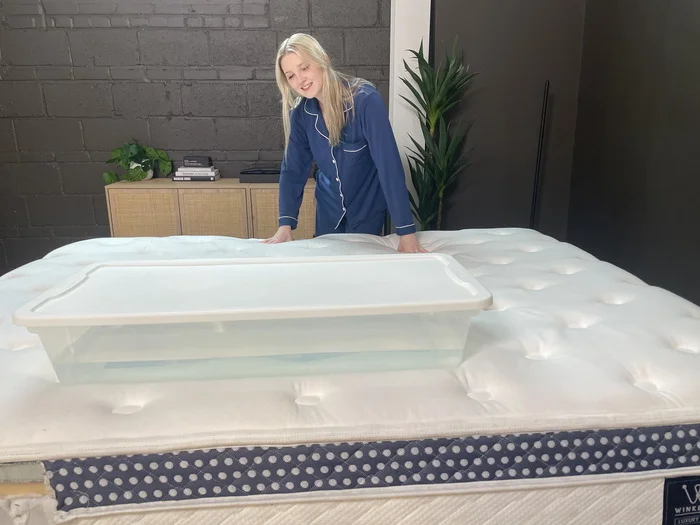
Motion Isolation: 4.3/5
Our tester didn’t notice much movement during our ripple test.
Cooling: 3.5/5
Our cooling test found that the WinkBed did not excel at temperature regulation.
Response: 3/5
It was a little difficult to move around on the WinkBed, despite its hybrid construction.
Edge Support: 4.4/5
We found the WinkBed’s edges to be very strong.

Pressure Relief: 3.8/5
While pressure mapping the WinkBed, our testers found some pressure buildup on their side.
Firmness: 6.5/10
The Luxury Firm WinkBed has a medium-firm feel.
How the WinkBed Performed
Like many hybrid mattresses, the WinkBed is offered in three firmness options — Softer, Luxury Firm, and Firmer. When our testers tried the Luxury Firm model, we thought it had a true medium-firm feel, with a firmness of 6.5 out of 10 on the firmness scale.
I personally tried out this mattress, and I thought the plush pillow-top layer did a great job of cushioning my hips, shoulders, and lower back in both the side- and back-sleeping positions.
Dr. Tedesco agreed that this bed provides a great mix of comfort and spinal alignment in both sleeping positions. When he tested this bed, he said, “This mattress provides enough support to alleviate pressure for those with scoliosis. The soft pillow top is comfortable enough that you should feel good in any sleeping position without worrying that you’re sinking in too much, which would exacerbate a spinal curvature.”
Its cushy feel up top also works well to absorb motion, which means couples can sleep undisturbed as they toss and turn side-by-side. When I tried out this bed with another tester, I could tell there was another person in the bed, but I couldn’t quite discern their movements — pretty solid motion isolation, which earned the WinkBed a 4.3 out of 5.
What to Keep in Mind About the WinkBed
While Dr. Tedesco and I enjoyed the Luxury Firm model on our sides, our lightweight tester felt an uneven weight distribution in this position. She rated this position only 2 stars for pressure relief, citing pressure buildup in the hips. If you have joint pain, I recommend the softer WinkBed model instead.
In addition to people with joint pain, I think hot sleepers may need a mattress with better cooling. While the WinkBed wasn’t noticeably warm, it wasn’t cool to the touch either. It earned 3.5 stars during our cooling test, indicating that its temperature-regulating abilities were only so-so.
For a deep dive into this bed, read my full WinkBed mattress review. For a hybrid option with more cooling technology, consider the Leesa Sapira Chill mattress.
Bear Original – Best Memory Foam Mattress for Sleepers with Scoliosis
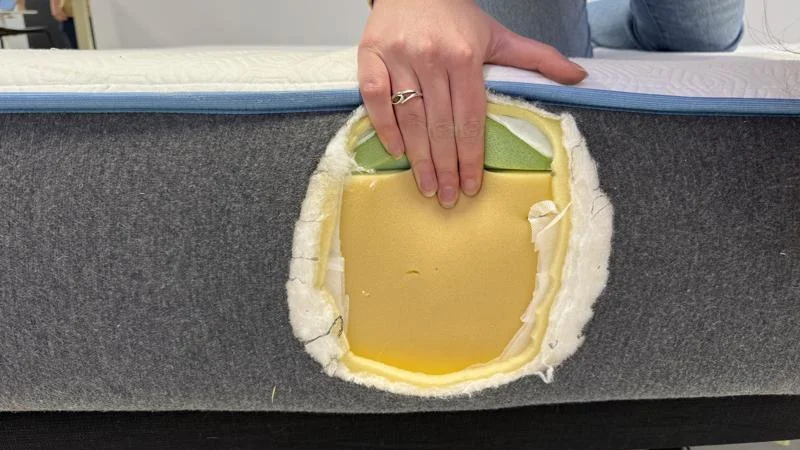
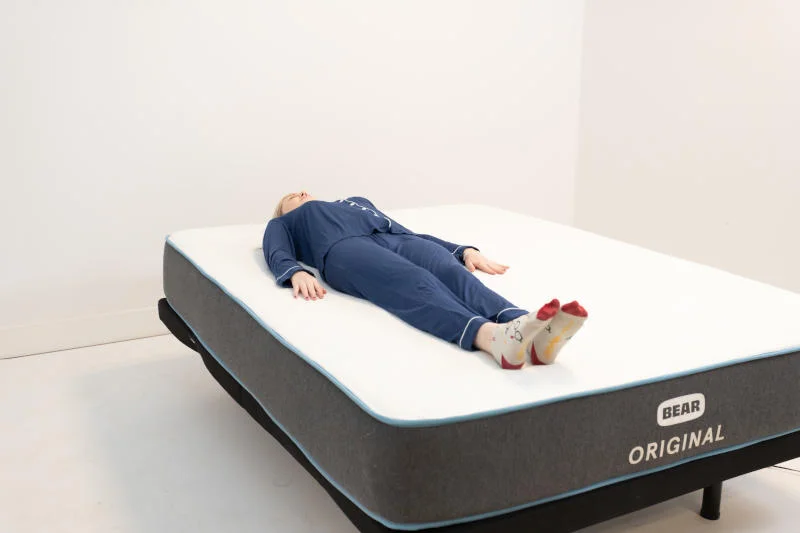
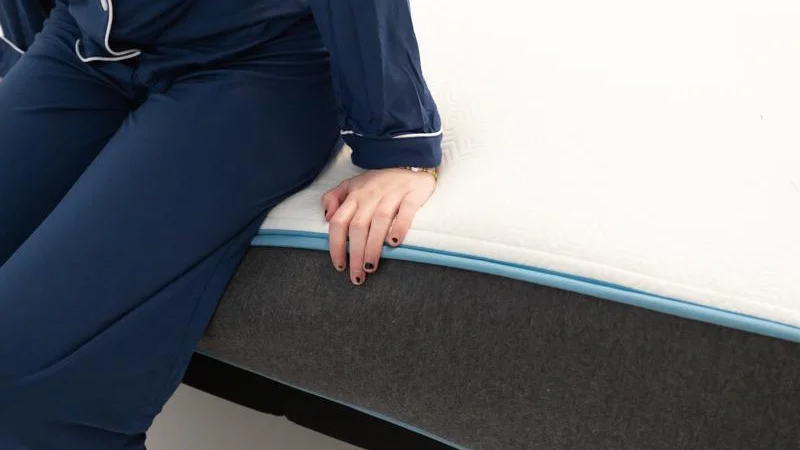
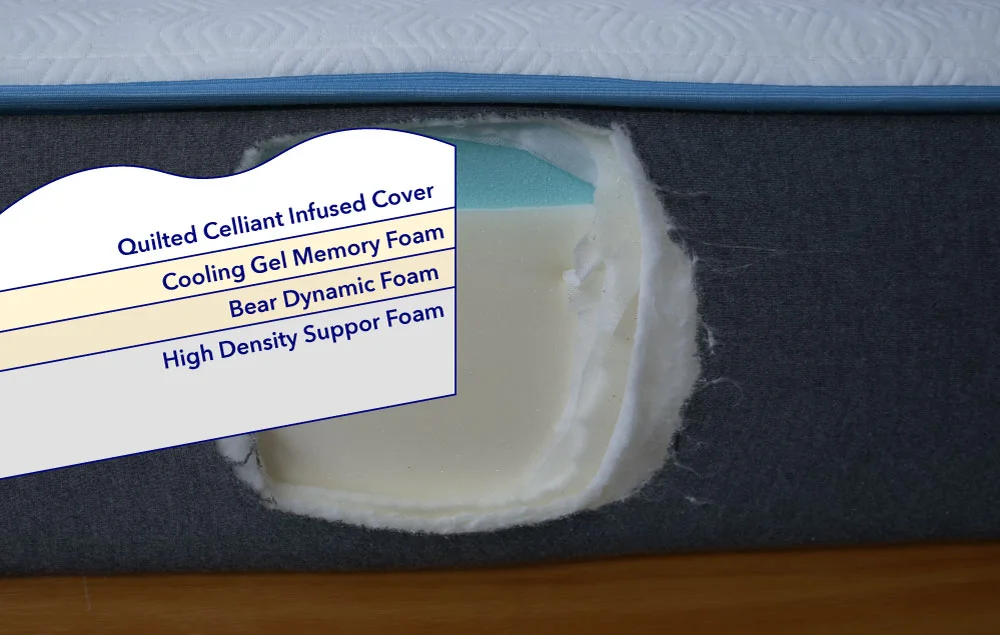
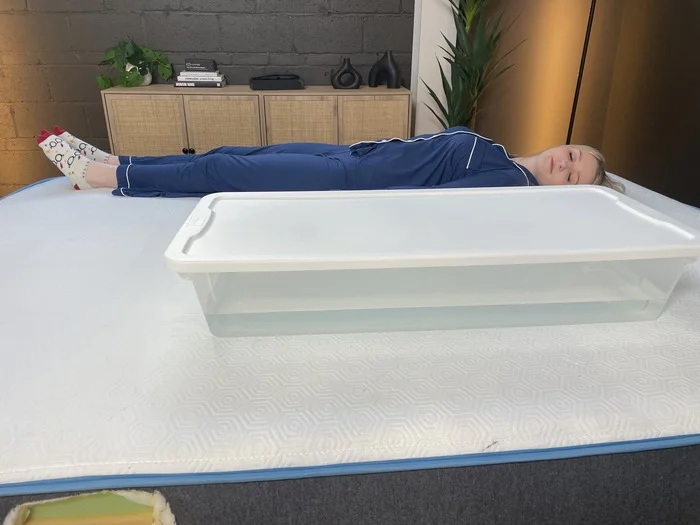
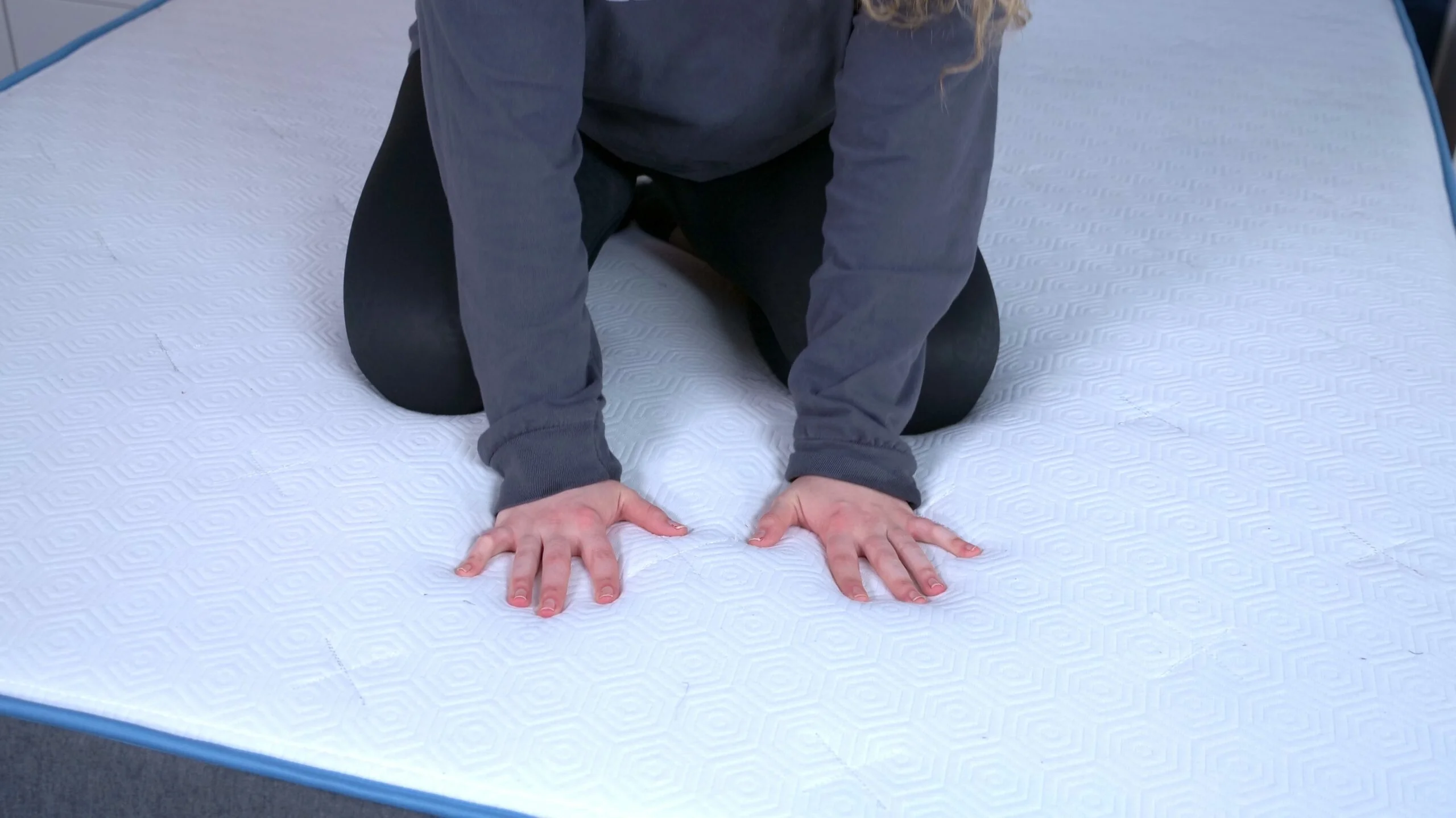
Even though it’s made entirely of foam, the Bear has a firm, supportive feel that should be sturdy enough for back sleepers and stomach sleepers alike. Additionally, combination sleepers should be able to easily move around on its surface. You can also pay extra for a Celliant cover that may help with cooling and muscle recovery. Learn more in our video review.
What our tester says:
“While the Bear offers a bit of cushioning from the memory foam comfort layer, we felt a lot of lift from deep within the mattress. This firmer-than-average feel and construction provided the best spinal alignment, pressure relief, and comfort in the back- and stomach-sleeping positions.” – Riley Otis, staff writer and certified sleep science coach
Why is the Bear Original the Best for Back Sleepers with Scoliosis?
Finding the right balance between support and pressure relief is crucial for maintaining a neutral spine alignment while remaining comfortable. This is especially important for sleepers with scoliosis, as it helps prevent the spine from bending further out of alignment, which can exacerbate existing pain.
Oftentimes, memory foam beds are too soft for these sleepers. Enter the Bear Original – a firmer mattress that keeps the spine straight without being too firm. When Dr. Tedesco tried out this mattress, he awarded it a 4.5 out of 5 for scoliosis, particularly those who sleep on their side.
Motion Isolation: 4.7/5
Like many other memory foam models, the Bear Original has excellent motion isolation.
Cooling: 4.5/5
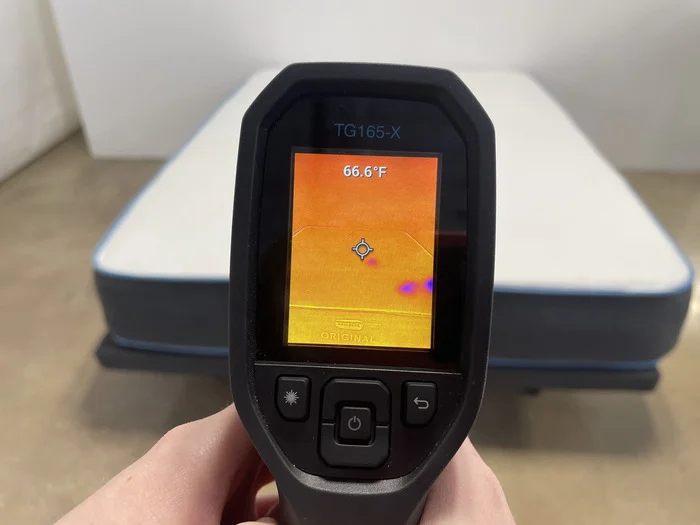
Our testers found that the surface of the Bear Original stayed cool and comfortable.
Response: 4/5
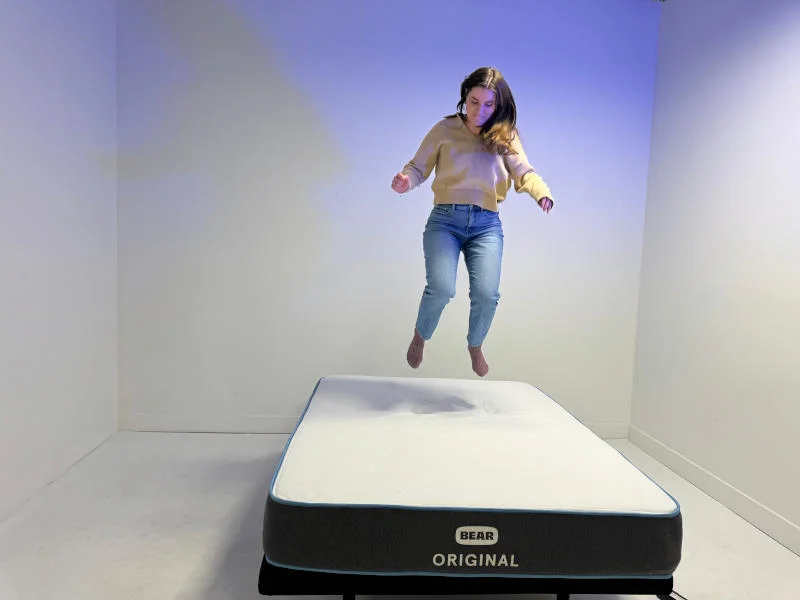
The Bear Original is surprisingly easy to move around on despite not having any springs in it.
Edge Support: 4.2/5
Sleepers should be able to lie along the perimeter of the mattress without feeling unsteady or falling off.

Pressure Relief: 3.2/5
The Bear Original excels at relieving pressure for back sleepers but might be too firm for some side sleepers.
Firmness: 7/10
The Bear Original is a touch firmer than the industry standard of medium-firm (6.5 out of 10).
How the Bear Original Performed
The Bear’s 7 out of 10 firmness rating means it still has a universally appealing firmness, but is just a touch firmer than average, helping it keep the spine in a supported neutral alignment. “I’d recommend this mattress for back sleepers with scoliosis, mainly because of the support it provides from the ribs all the way to the pelvis,” Dr. Tedesco said.
I personally tried this mattress in the back sleeping position, and I was wowed by how lifted and supported I felt. I was definitely more “on” the bed than “in” the bed, which helped prop my spine into the correct position.
Although there’s not a ton of cushioning like traditional foam beds, I didn’t feel pressure building up anywhere on my body. Although my fellow testers and I ultimately gave the Bear an average score of 3.5 stars for pressure relief when sleeping on our backs, don’t let this deter you. It’s supportive enough for lightweight and average-weight sleepers, but it lost a star because it’s not the best choice for sleepers who weigh more than 230 pounds.
Even if you don’t spend the entire night on your back, we think you can still appreciate the Bear mattress. The bed doesn’t have a pillow top, so there aren’t any peaks and valleys to impede your smooth transition from one position to the next. Although there are no coils to spring you along, we don’t think people with scoliosis will struggle to move around, so we rated the responsiveness 4 stars.
What to Keep in Mind About the Bear Original
In addition to heavy sleepers, I don’t think this bed is a top match for strict side sleepers. These folks may experience better cushioning on a slightly softer mattress, or one that has a pillow-top layer. Sound like you? I recommend checking out the Leesa Original mattress.
For all the details on this mattress, read our full Bear Original mattress review.
Nolah Evolution – Best Mattress for Couples with Scoliosis
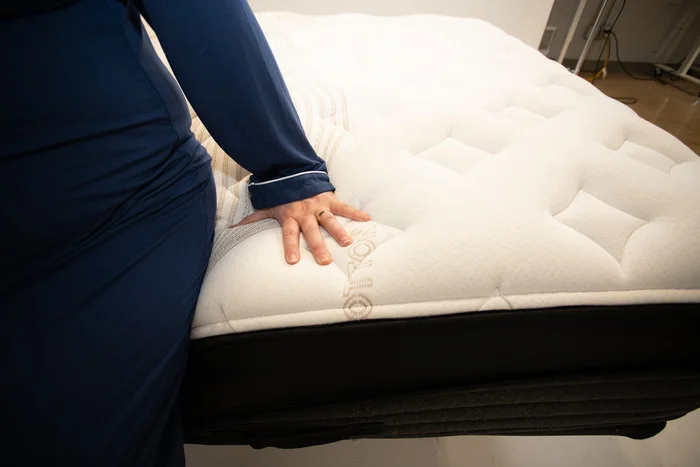
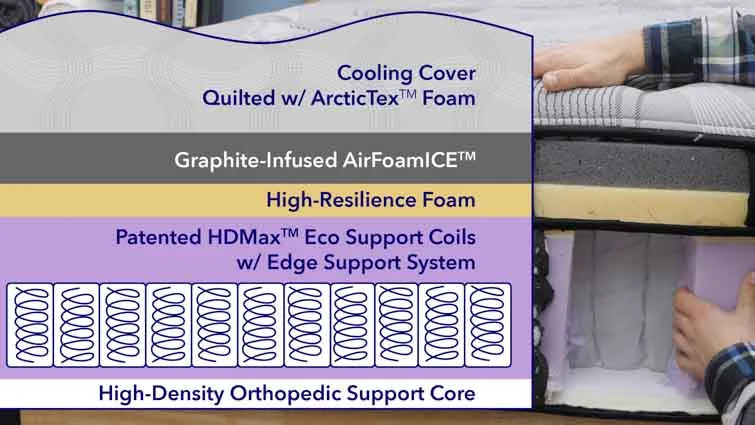
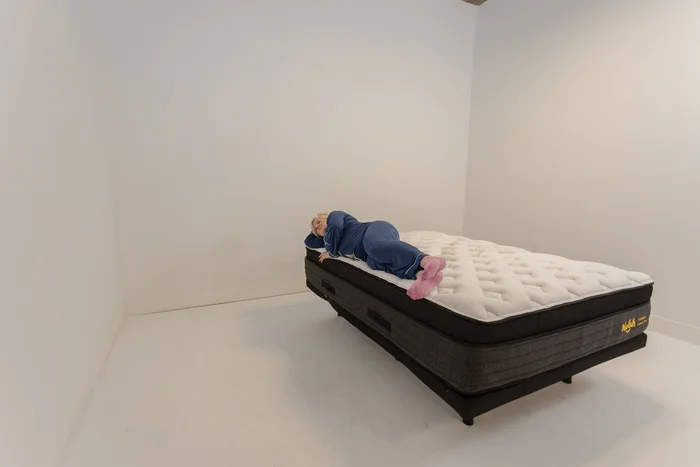
The Nolah Evolution’s hybrid construction offers the cushioning of memory foam with the responsiveness of coils. The Luxury Firm model is a good option for side and back sleepers, though there are Plush and Firm versions as well. Those who share a bed may also appreciate its low motion transfer, so you won’t be disturbed by a partner’s movements and its solid edge support to allow you to maximize surface area. For more information, check out our video review.
What our tester says:
“There’s enough cushioning for side sleepers to prevent pressure from building at the hips and shoulders. The mattress also scored highly in motion isolation, edge support, cooling, and responsiveness, all of which are important to couples.” – Riley Otis, staff writer and certified sleep science coach
Why is the Nolah Evolution the Best for Couples with Scoliosis?
If you’re sleeping beside another person, there are four key categories to consider — motion isolation, cooling, edge support, and responsiveness. Not only do these elements allow you to spread out and sleep undisturbed, but they’re also crucial for sexually active couples.
If you or your partner has scoliosis, we think the Nolah Evolution could be the perfect fit. With a score of 4 stars or higher in each of these four categories, an overall pressure relief score of 4.3 stars, and Dr. Tedesco’s seal of approval for scoliosis, this bed is chock-full of things to love.
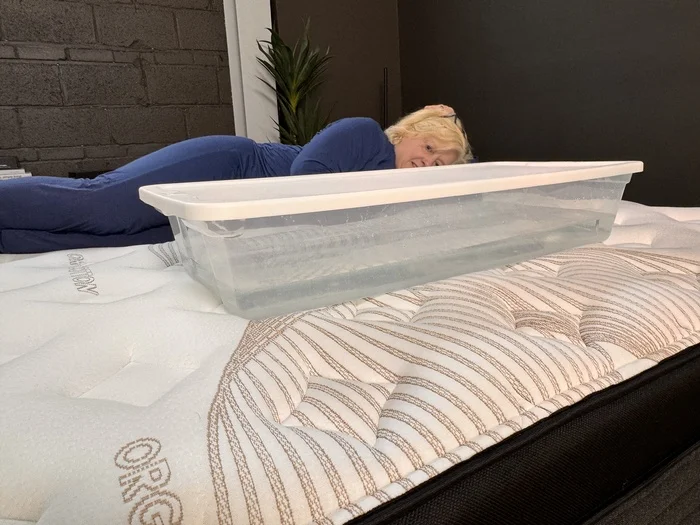
Motion Isolation: 5/5
Our tester noticed no movement during our ripple test, resulting in a perfect score for motion isolation.
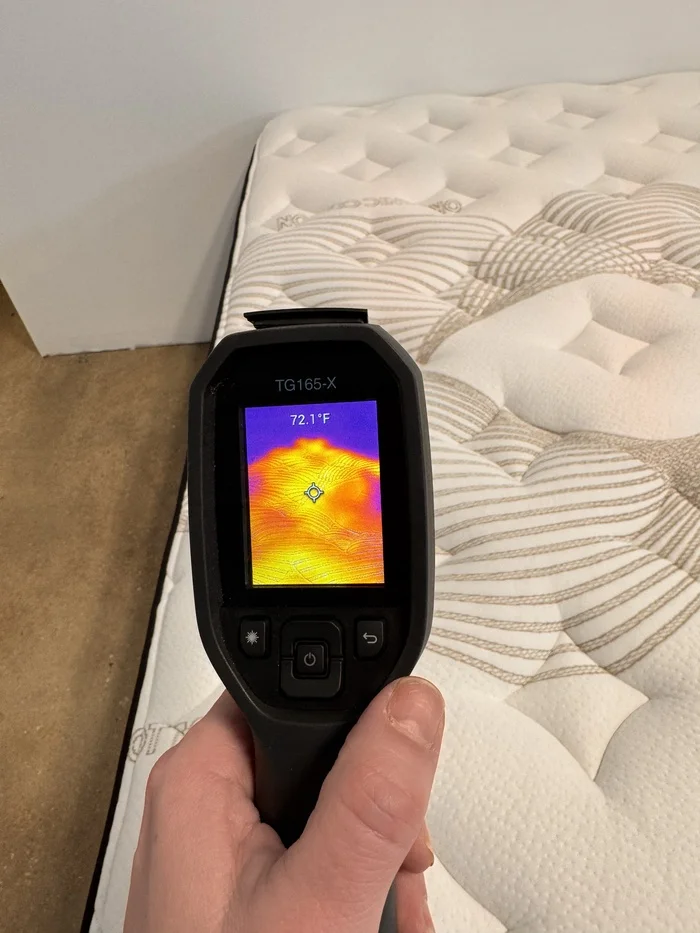
Cooling: 4.5/5
The Nolah Evolution showed above-average cooling capabilities.
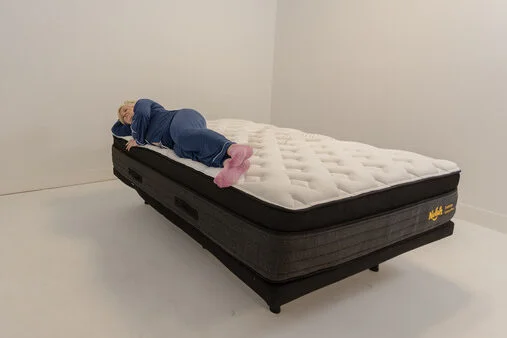
Response: 4/5
Our tester found it fairly easy to roll around on the Nolah Evolution.
Edge Support: 4.6/5
The Nolah Evolution had a strong perimeter, earning a high edge support test.
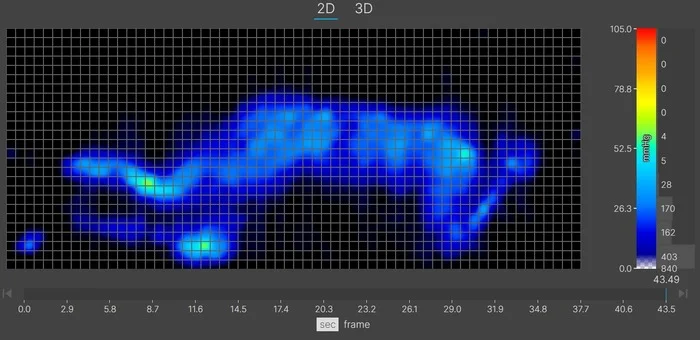
Pressure Relief: 4.3/5
The bed was good at relieving pressure, though some of our testers wanted more sinkage.
Firmness: 7/10
The springs in the construction made for a slightly firmer feel.
How the Nolah Evolution Performed
The Nolah Evolution mattress is supportive and pressure-relieving enough for sleepers with scoliosis. Our heavyweight tester, Caine Wilkes, who typically finds pillow-top mattresses less supportive, rated this bed 5 stars in both sleeping positions.
He said, “I feel great contouring in my lower back, and I’m very equally supported.” When we combine the ratings from all three testers, the Nolah Evolution earns 4.3 stars for pressure relief in both the back and side sleeping positions.
When we consulted Dr. Tedesco, he agreed with our testers, rating the Nolah Evolution 4 stars for sleepers with scoliosis. He explained, “Someone with scoliosis who sleeps on their back could find a lot of relief. You’ll feel weightless throughout your entire core.” He went on to add, “If you’re a side sleeper with scoliosis, I think you’ll still feel some great weightlessness in your spine just as I did.”
For couples, we recommend mattresses that score highly on our motion isolation test, which evaluates how likely you are to feel your partner tossing and turning throughout the night. A partner’s restlessness is a non-issue on the Nolah Evolution, as we could barely detect any motion coming from the other side of the bed, earning it a perfect score in this category.
To prevent couples from overheating, the Nolah Evolution sports a cool-to-the-touch cover and layers of breathable foams, which helped it earn 4.5 stars on our cooling test. The strong edge support (rated at 4.6) also allows couples to use the entire surface of the bed during sex and then fully spread out when it’s time to go to sleep.
Finally, a bit of bounce increases mobility, helping couples easily transition between positions. On the Nolah, we found it easy to move around despite its plush pillow top, so we rated it 4 stars for responsiveness.
What to Keep in Mind About the Nolah Evolution
I want to note that this luxury hybrid is pricier than some of the other beds on this roundup, costing $2,127 for a queen-size before discounts. On top of that, I’d opt for white-glove delivery if you can, as when the box arrived in our studio, it was quite beat up, which made the set-up process a bit more tedious and less glamorous.
For more information, read my full Nolah Evolution mattress review. If you’re seeking a cheaper luxury mattress, try the DreamCloud Premier Hybrid.
Brooklyn Bedding Aurora Luxe – Best Mattress for Back Sleepers with Scoliosis
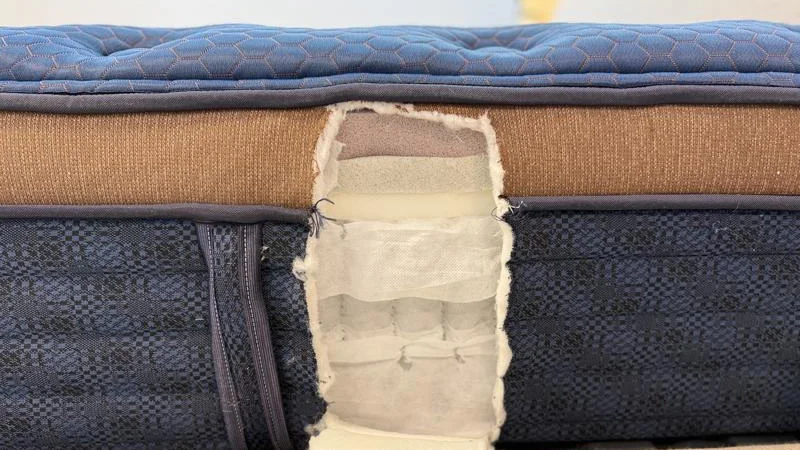
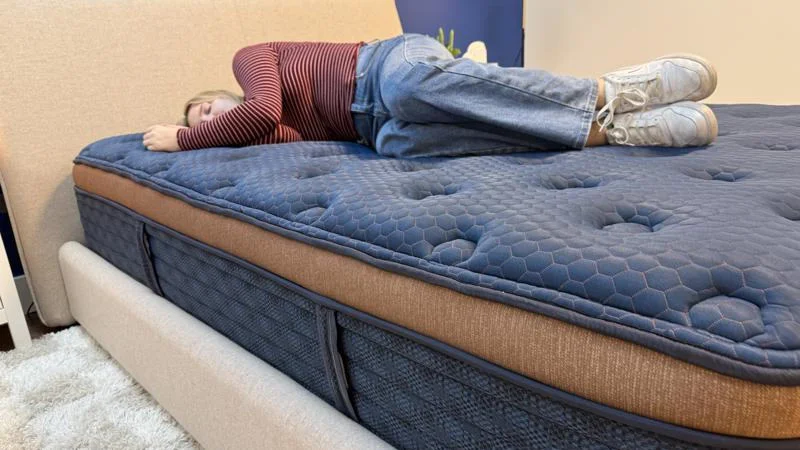
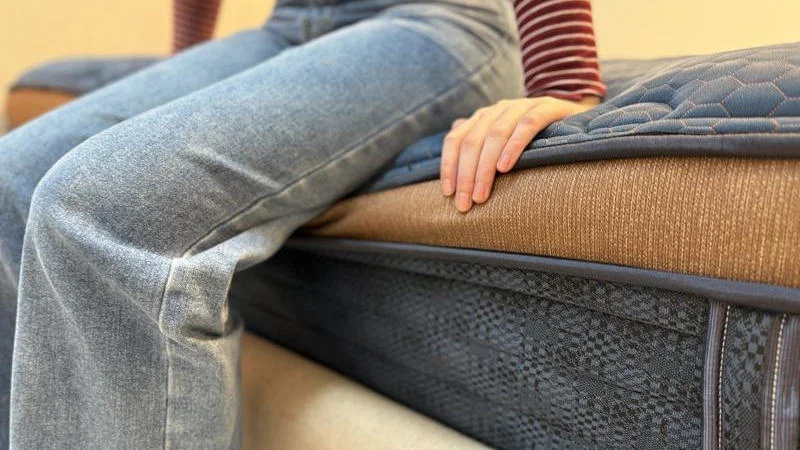
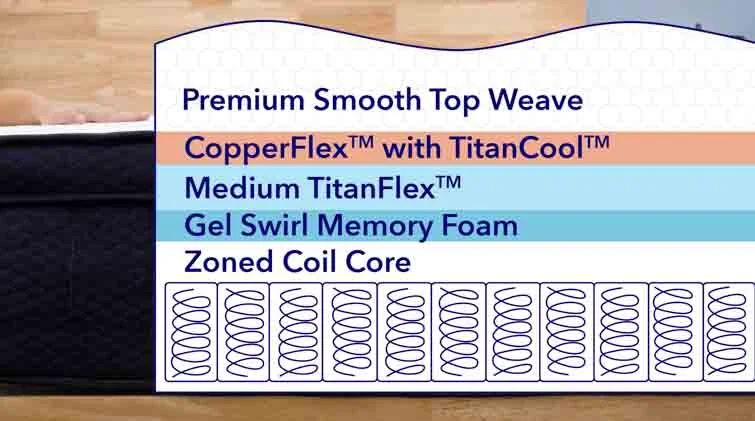


The Brookyn Bedding Aurora Luxe mattress is one of Brooklyn Bedding’s more high-end mattresses. It has a ton of cooling features in it that can help hot sleepers sleep cool all night. It’s also available in three different firmnesses, so it can accommodate a variety of sleeping positions and body types. For more information, check out our video review.
What our tester says:
“Back sleepers should find enough support to promote proper spinal alignment while also getting a bit of cushioning at the lumbar region. And the cooling, motion isolation, edge support, and responsiveness scores indicate the Aurora Luxe is a great match for couples.” – Riley Otis, staff writer and certified sleep science coach
Why is the Aurora Luxe the Best Cooling Bed for Scoliosis?
The Brooklyn Bedding Aurora Luxe mattress is extremely supportive for individuals with scoliosis, particularly when sleeping on their back — which is also the ideal position to keep the spine aligned and pressure off it. The Aurora Luxe earned an overall rating of 4.5 stars for pressure relief, including 5 out of 5 for back sleeping. In fact, Dr. Tedesco also rated this bed 4.5 stars for scoliosis.
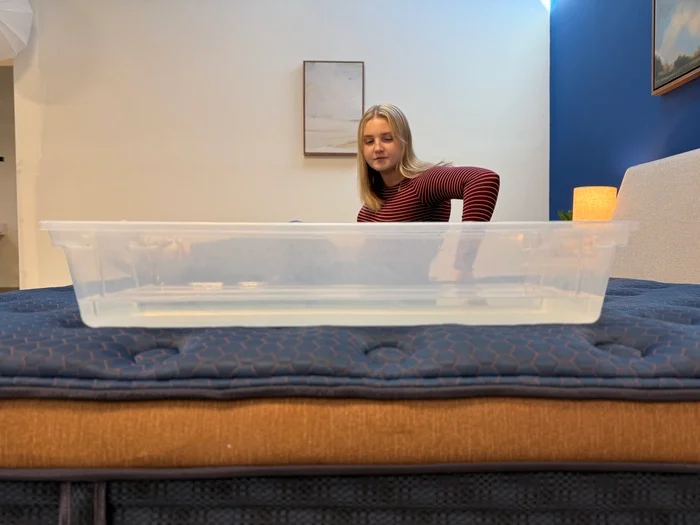
Motion Isolation: 3.8/5
We noticed a bit of disturbance in our water test when someone was switching positions on the other side of the bed.
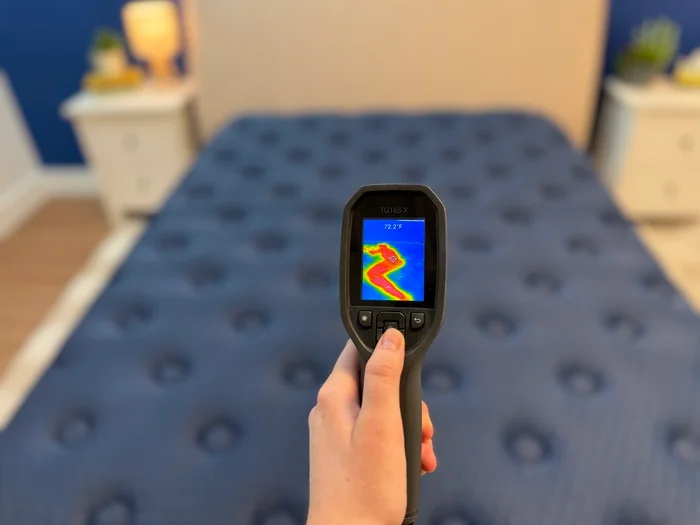
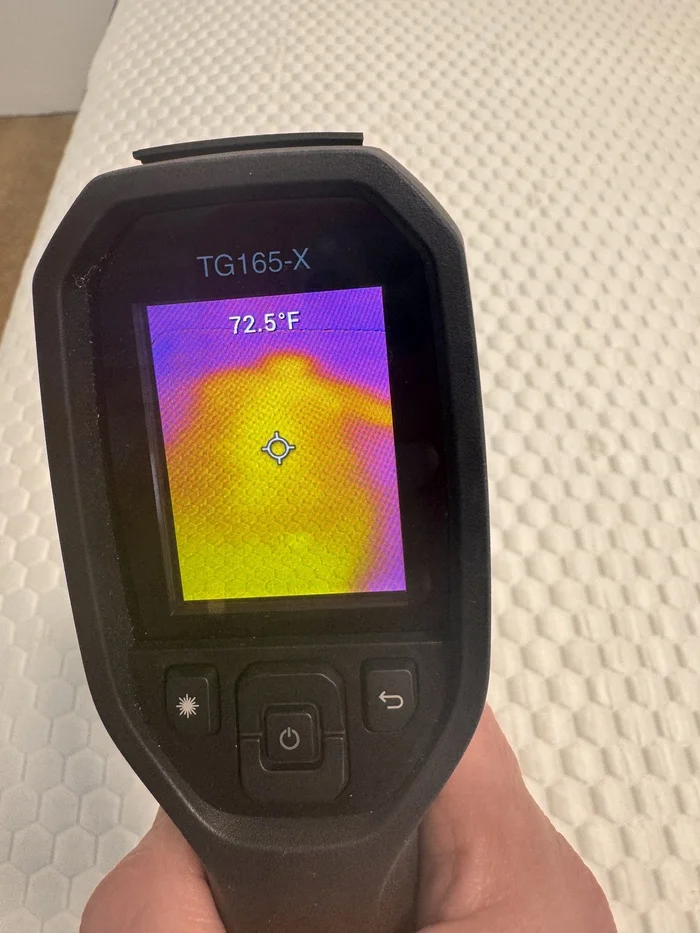
Cooling: 4/5
The Aurora Luxe has a cool, crisp-feeling cover.
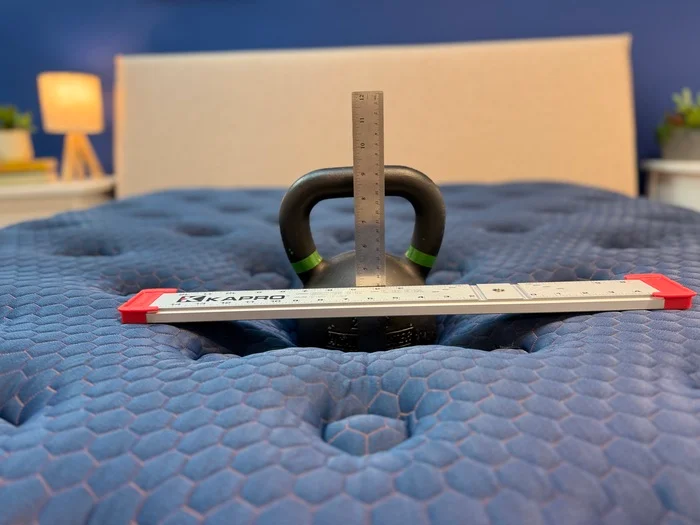
Response: 4/5
You sink into the surface of this bed a little bit, but it’s still relatively easy to switch positions and move around.
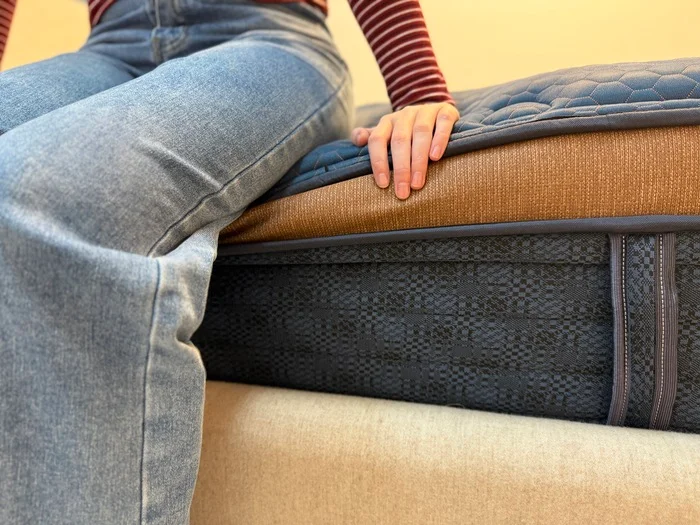
Edge Support: 4/5
We only noticed the edge dipping beneath our weight when we sat at the perimeter.

Pressure Relief: 4.5/5
This mattress earned an impressive perfect rating for back-sleeping pressure relief.
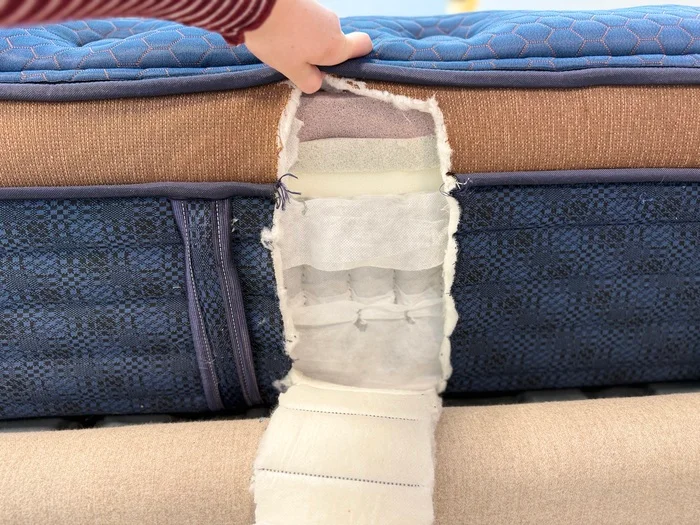
Firmness: 7/10
The Medium model of the Aurora Luxe feels slightly firmer than true medium-firm.
How the Aurora Luxe Performed
While you can pick between Soft, Medium, and Firm levels for the Aurora Luxe, we recommend the Medium model for back sleepers with scoliosis. It falls at a 7 out of 10 on the firmness scale, a smidge firmer than true medium-firm, but this doesn’t mean it lacks pressure relief. Even with the firm support of the coils below, I found the dense pillow top provided excellent cushioning.
Dr. Tedesco thought the Medium model was perfectly suitable in the back sleeping position, praising the spinal alignment specifically. He said, “I’m not experiencing any flexion or extension in my lumbar or thoracic spine.”
He also thought the mattress could work in the side-sleeping position: “Side sleepers with scoliosis should feel supported enough that the spine shouldn’t want to shift back and forth, and there’s enough contouring here.”
Since the Aurora Luxe was designed specially for hot sleepers, we weren’t surprised by its performance in cooling. Its cover is made from heat-wicking GlacioTex fibers, which feel cool to the touch and helps promote airflow while drawing away body heat.
While I did feel the mattress warming up while I lay on it, it never got to a point where it felt too warm or uncomfortable, so I gave it a respectable 4 out of 5 for cooling. Most hot sleepers who enjoy a temperature-neutral feel to their mattress should enjoy the Aurora Luxe.
What to Keep in Mind About the Aurora Luxe
Before you race to buy this bed, keep in mind that it may be too expensive for shoppers on a budget. As a luxury bed, it’s priced higher than average, costing $2,265 at full price for a queen mattress. You may also be unimpressed with the 120-night trial period, as some sleepers may prefer a full year to test the bed in order to determine if it helps with their scoliosis.
For a closer look at this bed, read my full Brooklyn Bedding Aurora Luxe mattress review. For a cheaper hybrid option that works for back sleepers and feels cool, check out the Silk & Snow Hybrid mattress.
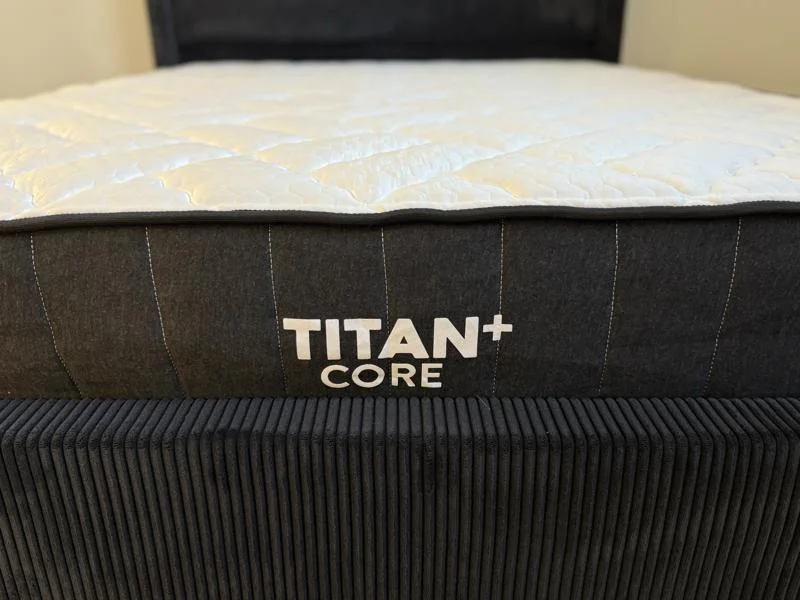
Titan Plus Core – Best Mattress for Heavy Sleepers with Scoliosis
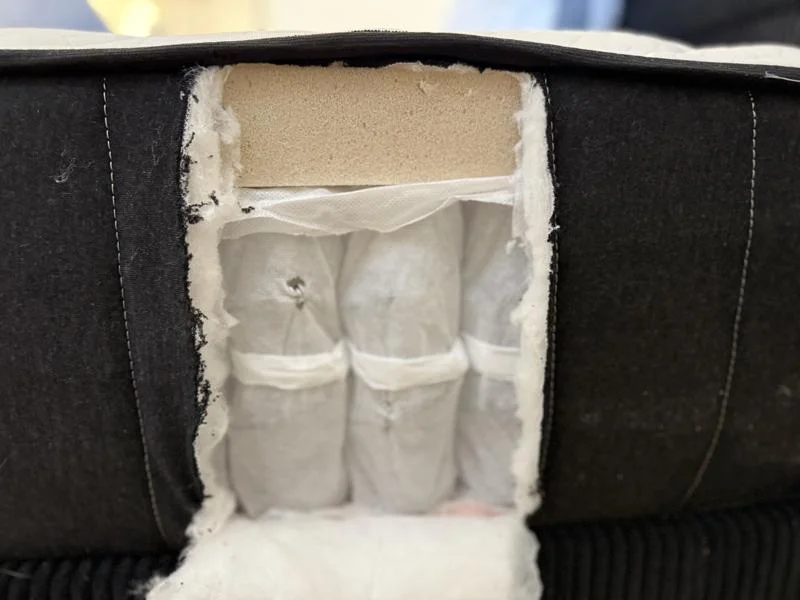
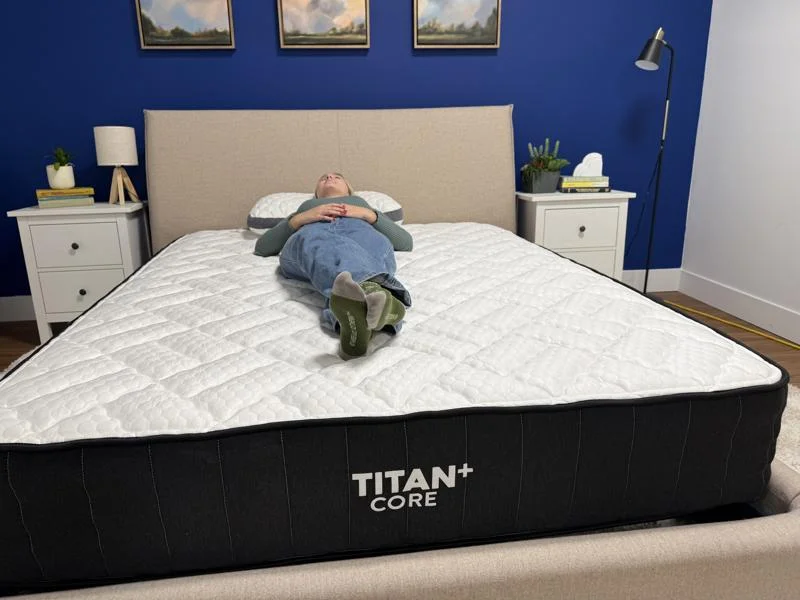
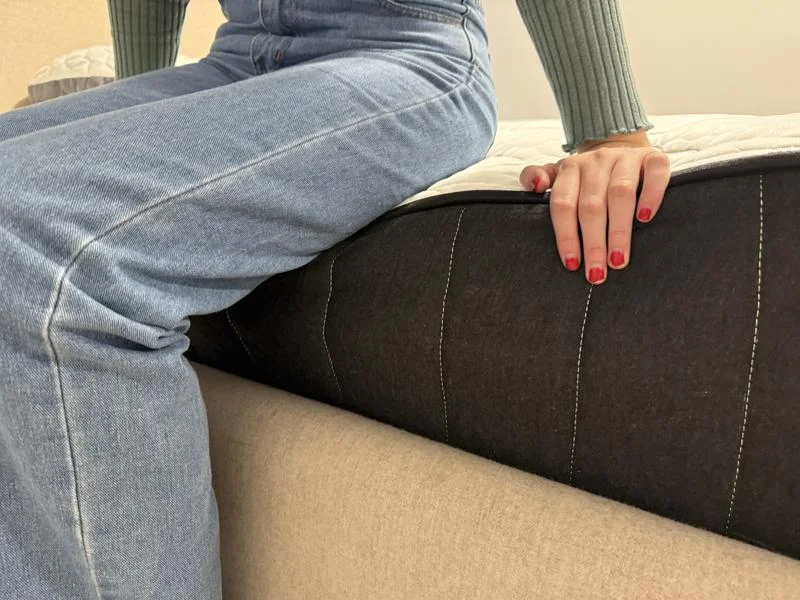
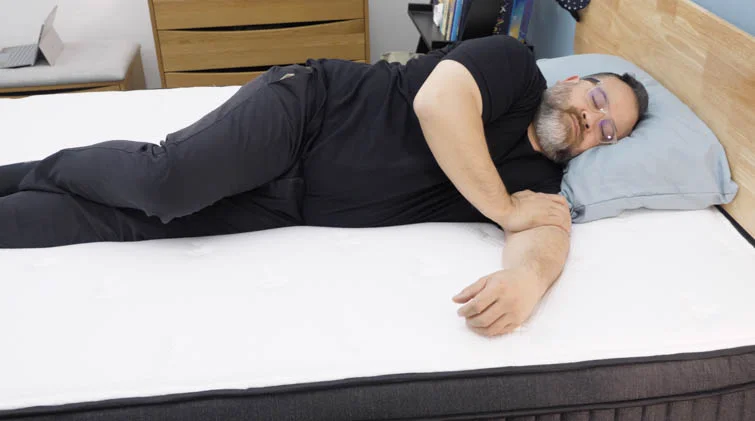
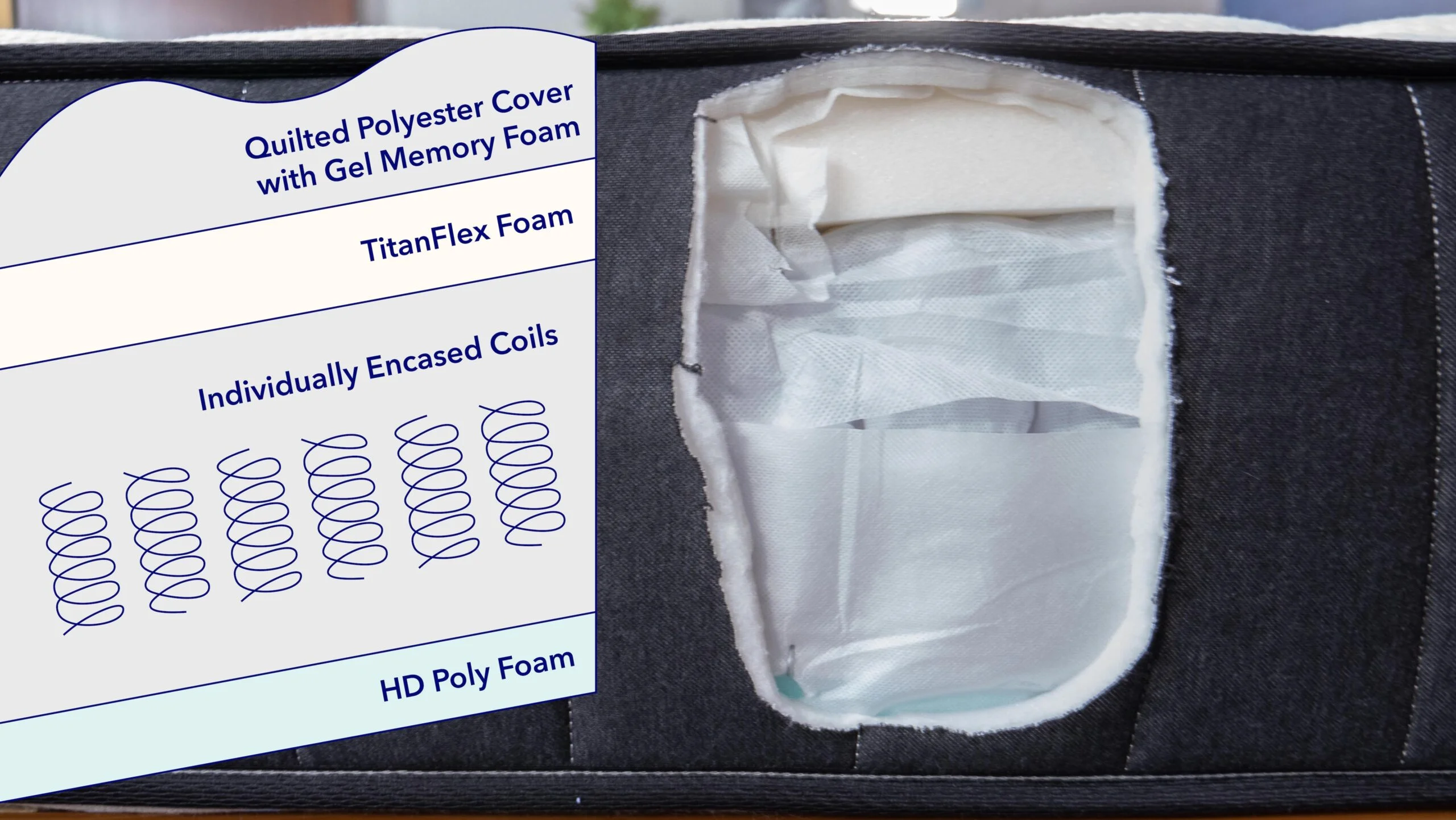
The Titan Plus mattress is a durable mattress made with heavy sleepers in mind. It’s firm and features heavy-duty coils and Titanflex foam that makes it bouncy and easy to move around on. We think that heavy back sleepers and stomach sleepers should be especially comfortable. For more information on the Titan Plus, check out our video review.
What our tester says:
“I think the Titan Plus lives up to its name as a good mattress for heavier sleepers. It will offer them the support and durability they need.” – Sosha Lewis, staff writer and certified sleep science coach.
Why is the Titan Plus Core the Best for Heavy Sleepers with Scoliosis?
Sleepers who weigh more than 230 pounds, which we classify as “heavy sleepers,” typically require more support than average to prevent them from “bottoming out”on the uncomfortable support layers. This support is essential for those dealing with scoliosis, as an unaligned spine can lead to worsening pain.
If you’re a heavy sleeper with scoliosis, allow me to introduce the Titan Plus Core hybrid, a mattress specifically designed for larger body types. Our heavyweight tester awarded the Titan Plus Core a 5-out-of-5 rating for back-sleeping pressure relief, leading to an overall pressure relief score of 4.2. Dr. Tedesco also gave it a 4 out of 5 for scoliosis support. .
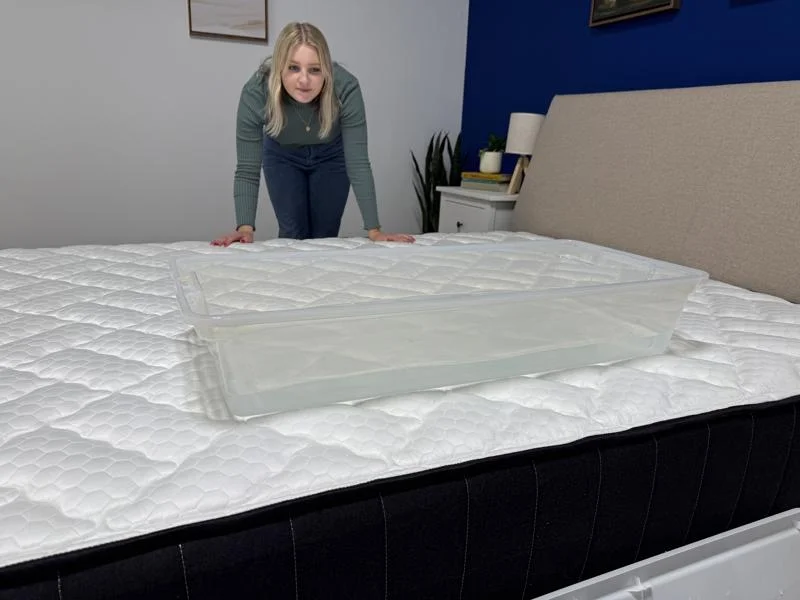
Motion Isolation: 4.3/5
Our testers were impressed by how the Core dampened motion and prevented it from rippling across the bed’s surface.
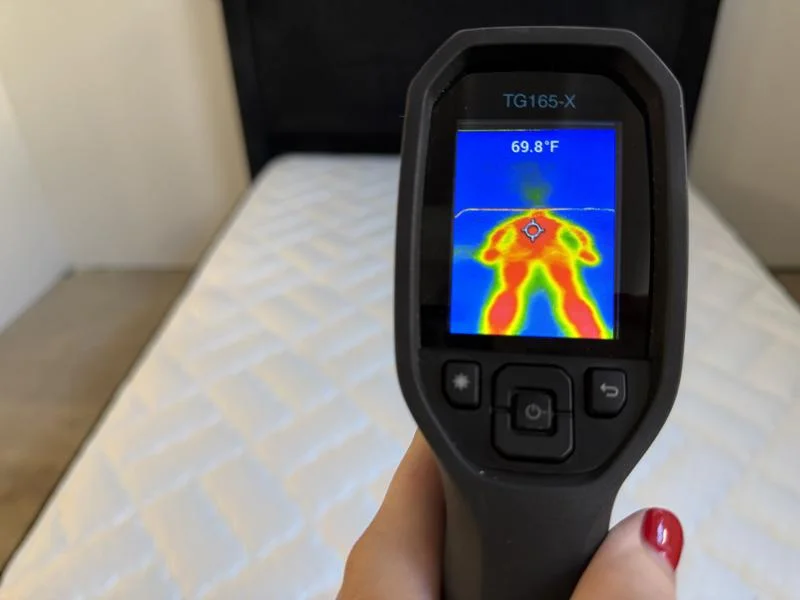
Cooling: 4/5
The innerspring coils and GlacioTex cooling cover give this mattress a temperature-regulating edge.
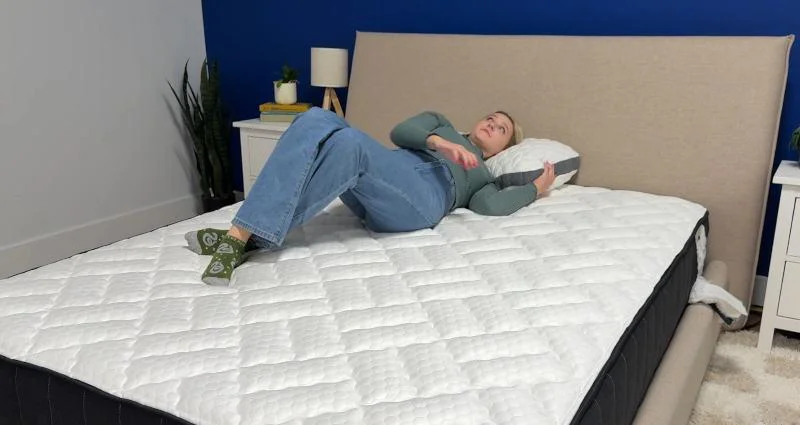
Response: 5/5
The sturdy innerspring coils make the surface of this mattress highly responsive and easy to move around on.
Edge Support: 4/5
We found minimal sinkage near the perimeter of the Titan, meaning it is a good pick for sleepers who rest on the edge.

Pressure Relief: 4.3/5
While most sleepers should experience solid pressure relief, those with sensitive joints may experience some buildup.
Firmness: 7.5/10
The Titan Plus Core’s heavy-duty construction is quite firm compared to most mattresses.
How the Titan Plus Core Performed
To evaluate a mattress for heavy sleepers, we thought it was only right that we bring in a heavyweight tester. Caine Wilkes, an expert mattress tester and Olympian, preferred the mattress for back sleeping. “I feel a lot more supported and in a neutral position. There’s no excessive pressure and cushioning feels nice; everything feels aligned,” he said. Although the Titan Plus was made with heavy sleepers in mind, lightweight and average-weight sleepers can also appreciate this bed if they’re seeking a firm bed. Falling at a 7.5 out of 10 on the firmness scale, this bed is solidly firm, which can work for back or stomach sleepers who need added support. .
While we don’t think the Titan Plus is best suited for side sleepers, Dr. Tedesco suggests that individuals with scoliosis pain should find sufficient support to relieve tension in the spine, regardless of their sleeping position.
However, he warns against stomach sleeping on this bed, saying, “It may lead to discomfort, because a lot of scoliosis happens in the thoracic spine. If your ribs aren’t supported properly, it could create unnecessary pressure.”
The Titan Plus Core also has excellent 5-star responsiveness, making it easy to move around without feeling trapped. This means that regardless of which positions you take up throughout the night, switching between them should feel like a breeze.
What to Keep in Mind About the Titan Plus Core
Since this bed was designed for heavier sleepers, those who weigh less than 130 pounds, especially if they have sensitive joints, may find it a bit too firm. Likewise, I don’t recommend this bed to anyone seeking deep sinkage and contouring, as you’ll most likely feel more “on” the mattress than “in” it.
For more information, read our full Brooklyn Bedding Titan Plus Core mattress review. If you’re seeking a bit more plushness, I recommend trying the Titan Plus Luxe.
Other Mattresses I Considered
Many mattresses on the market may help relieve scoliosis symptoms. While I couldn’t include dozens of beds on this roundup, I’ll leave you with two honorable mentions that just didn’t crack my top eight.
Plank Firm
The Plank Firm mattress by Brooklyn Bedding is one of the firmest mattresses I’ve ever tested, and I’ve lain on 75+ beds in the past three years. For sleepers seeking a super flat surface that offers minimal sinkage, this is a great choice. Since it’s flippable, offering both a firm side and an extra-firm side, you’re essentially getting two beds for the price of one. The firmness makes it super easy to move around on, so it earned 5 stars for responsiveness. However, I think sleepers with scoliosis will likely find this bed too firm. While the Plank keeps the sleeper lifted, there’s not enough plush cushioning to contour the hips, shoulders, and spinal curve, as it only earned 2.7 stars overall for pressure relief.
Nectar Luxe Hybrid
If you’re seeking a super soft bed with doughy layers and a hugging sensation, the Nectar Luxe Hybrid is a good match. Falling at a 5.5 out of 10 on the firmness scale, this bed allows for tons of deep sinkage and contouring. But for people with scoliosis, I think some firmer support is required. While the bed does cushion the sensitive areas, we found a lack of proper spinal alignment. The extreme level of softness actually prevents pressure from being properly alleviated, earning just 3.5 stars overall for pressure relief. This is crucial for preventing pain in these sleepers, so we recommend a slightly firmer model.
What Makes a Great Mattress for Scoliosis
Our team of Sleepopolis expert testers has tested hundreds of the most popular mattresses on the market, allowing us to analyze our testing data and curate this list specifically for individuals with scoliosis. When rounding up these beds, I focused on three key categories — spinal alignment, pressure relief, and firmness.
Spinal Alignment
Since people with scoliosis experience an unnatural curvature of the spine, finding a mattress that helps prop it in the correct position is crucial to relieving pain. This is largely determined by the support system inside the mattress, which is typically made from individually wrapped coils or high-density foam.
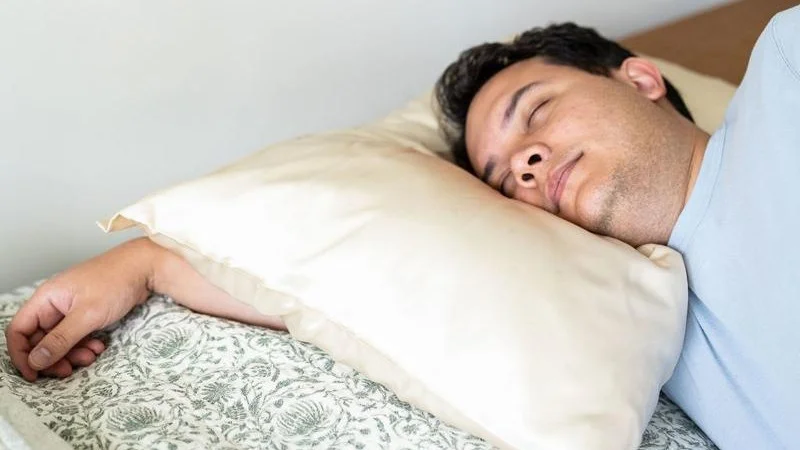
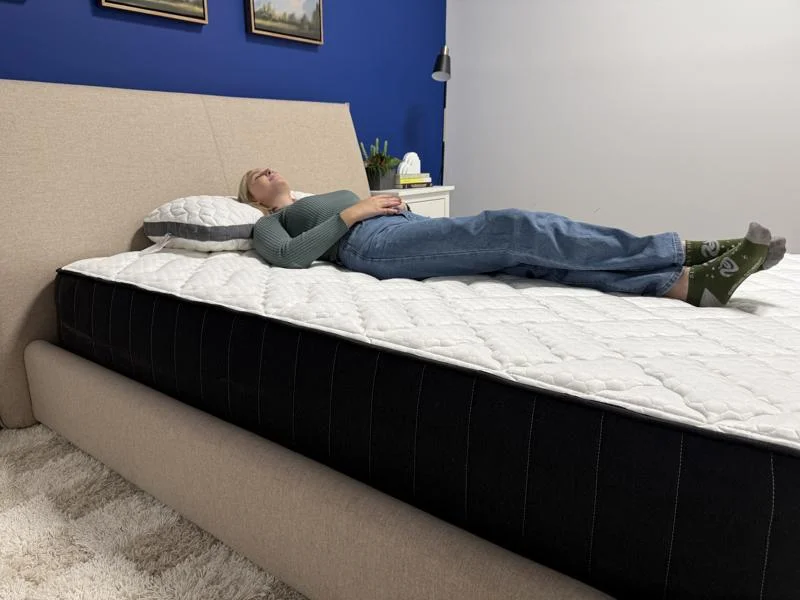
Regardless of whether you choose an all-foam, hybrid, or innerspring mattress, it should be supportive enough to lift your hips in line with your shoulders, thus keeping your spine in a straight, neutral line. If one part of the body sinks too far, the spine can become misaligned, leading to pain or stiffness upon waking in the morning.
Each mattress on this list was evaluated by testers of different weight classes — lightweight, average-weight, and heavy — to give us a better understanding of how the bed performs. For example, heavy sleepers typically require more support than average, as they sink further into a mattress and need stronger support to keep the spine straight. In contrast, lightweight sleepers can get away with softer, less supportive mattresses because they typically don’t sink in far enough to misalign the spine.
We asked these testers to lie on the mattresses in the back, side, and stomach-sleeping positions. They observed which parts of their body were being supported, and where they felt themselves sinking out of alignment.
Additionally, Dr. Joe Tedesco assessed these mattresses for support from a physical therapist’s perspective. If the bed is on this roundup, it’s been approved by Dr. Tedesco as a good match for scoliosis patients.
Pressure Relief
While spinal alignment is important, so is your overall comfort, and that is why it is important to look for a mattress that prevents pressure from building up while you sleep. According to Dr. Raj Dasgupta, the best mattresses for pressure relief typically include contouring materials, such as memory foam or latex foam layers.
This is especially crucial for sleepers with scoliosis, as they’re more prone to chronic back pain. When a mattress has good pressure-relieving abilities, it’s able to cradle the sensitive joints and help evenly distribute your body weight.
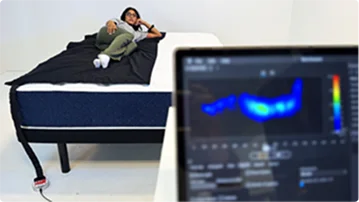
We tested for pressure relief by rolling a specialized mat across the mattress and inviting three testers of different body types to lie on it in the side and back-sleeping positions. These experts observe where their body is being lifted, cushioned, and supported, as well as noting any areas where pressure is being built up. Since each tester falls into a different weight class, this test provides a better understanding of how the mattress will feel for various sleepers.
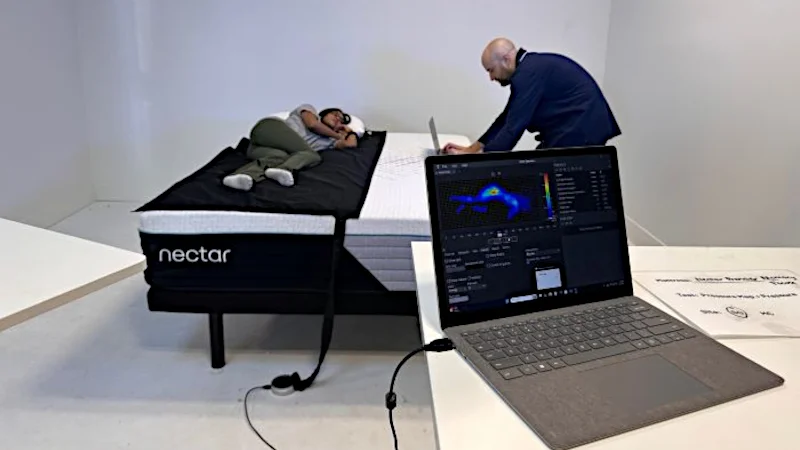
For sleepers with scoliosis, I sought mattresses that could provide lumbar support and fill in any gaps along the body. Although some of these beds lean firmer than average, this doesn’t necessarily mean they provide poor pressure relief. While soft beds do provide more cushioning, there’s a risk for too much sinkage, which can lead to a rise in pressure. These beds should hit the sweet spot between support and comfort; however, many are offered in multiple firmness options, so you can opt for a softer or firmer model if you prefer.
Firmness
According to Dr. Dasgupta, the ideal mattress for scoliosis has a medium-firm feel that strikes a balance between spinal alignment and pressure relief. We rate mattresses on a scale of 1 to 10, where 1 is the softest and 10 is the firmest. Typically, the mattresses we recommend fall between a 5 and 8.5 on the firmness scale. Anything lower than a 5 will likely provide inadequate support, while anything higher than an 8.5 will be too firm to provide pressure relief.
A rating of 6.5 out of 10 marks a true medium-firm feel that lifts the hips in line with the shoulders, regardless of your preferred sleeping position, while simultaneously cushioning the back, hips, and shoulders to prevent pain. There’s a bit of wiggle room when it comes to this firmness level. If you prefer a bit more softness to your mattress, a score of 6 out of 10 will allow for a bit more sinkage while still aligning the spine. For firm lovers, a score of 7 out of 10 will be just a touch firmer, while a score of 7.5 will feel solidly firm yet still pressure-relieving.
Each mattress has been evaluated for firmness by multiple certified sleep science coaches of different body types. Each tester provides their individual firmness rating, and then we find the average to create our final firmness score.
Responsiveness
Responsiveness refers to how quickly a mattress returns to its original shape after pressure has been applied. While slow-moving foams can feel cozy, they sometimes create a quick-sand effect, causing the sleeper to feel stuck in the bed when trying to switch between sleeping positions. On the other hand, a bouncy mattress made with buoyant materials can help spring the sleeper from one position to the next.
For those with scoliosis, you may find yourself tossing and turning between sleeping positions in an attempt to get comfortable. While we hope you’ll find supreme comfort on one of the mattresses on this list, we understand that some sleepers naturally switch between multiple positions. If this sounds like you, you’ll want to pay close attention to how these beds performed in this category, as some beds are more responsive than others.
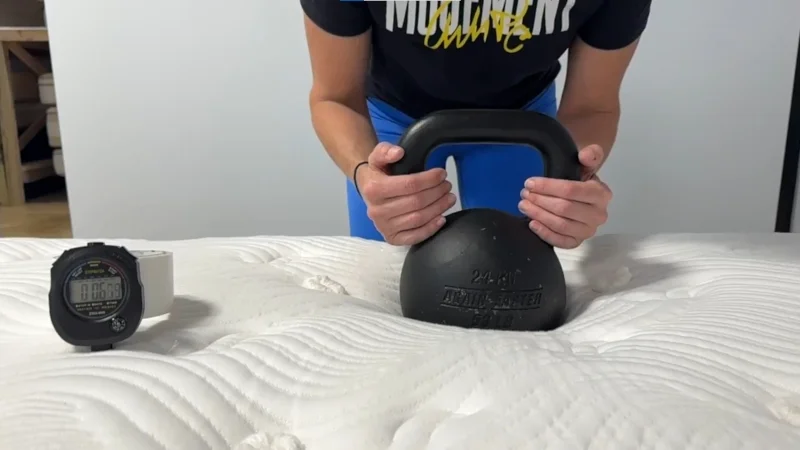
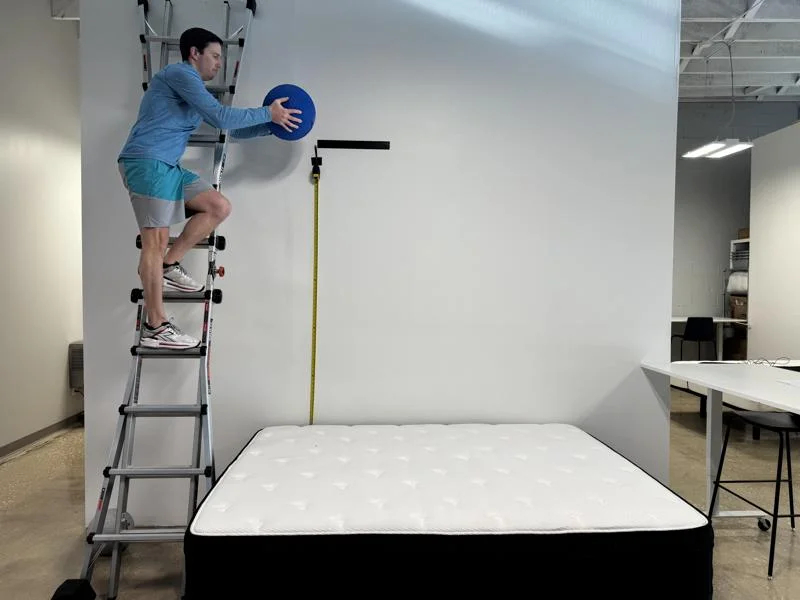
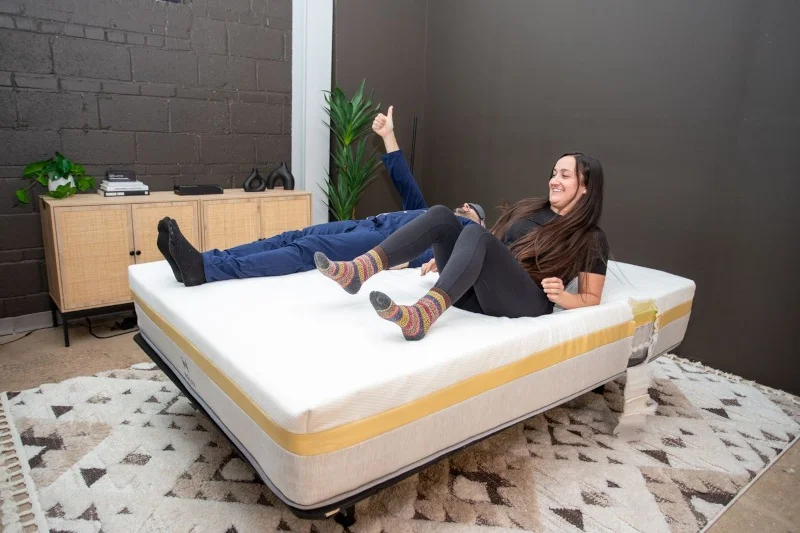
We test responsiveness using four distinct tests — one subjective test and three objective tests. These tests allow us to get a large scope of how easy it is to move around, how quickly the bed rises after pressure is applied, how much sinkage it provides, and how bouncy it is. Keep in mind, a low responsiveness score doesn’t mean the mattress is bad. It simply means that combination sleepers and people with mobility issues may have a harder time switching sleeping positions.
What Else to Consider in a Mattress for Scoliosis
When selecting a mattress, you may feel overwhelmed by all the options. To make your decision easier, I’ve broken down some of the most important factors that can determine how a bed feels for you.
Mattress Type
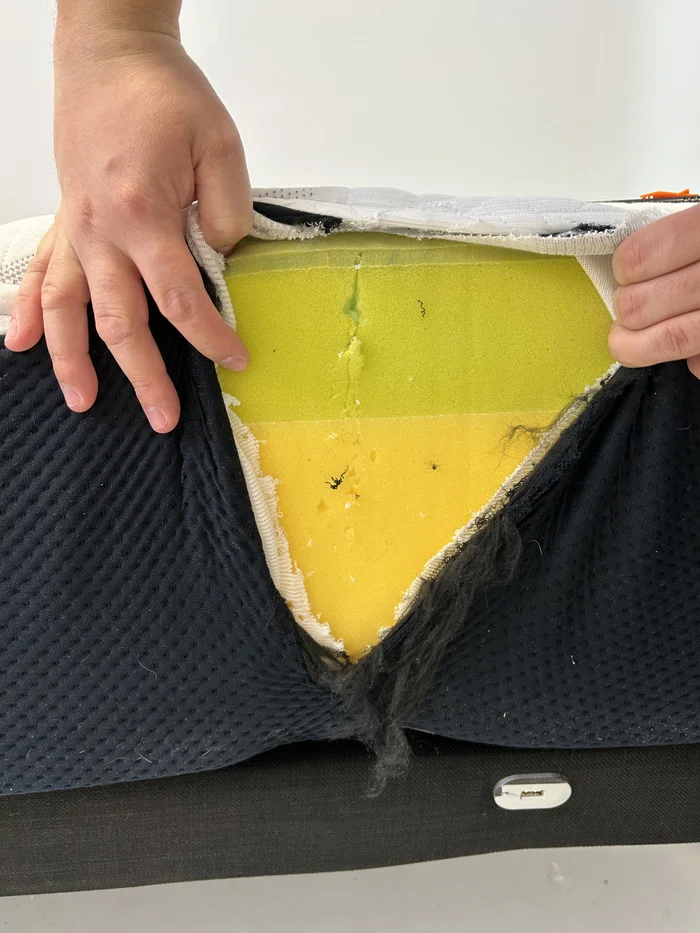
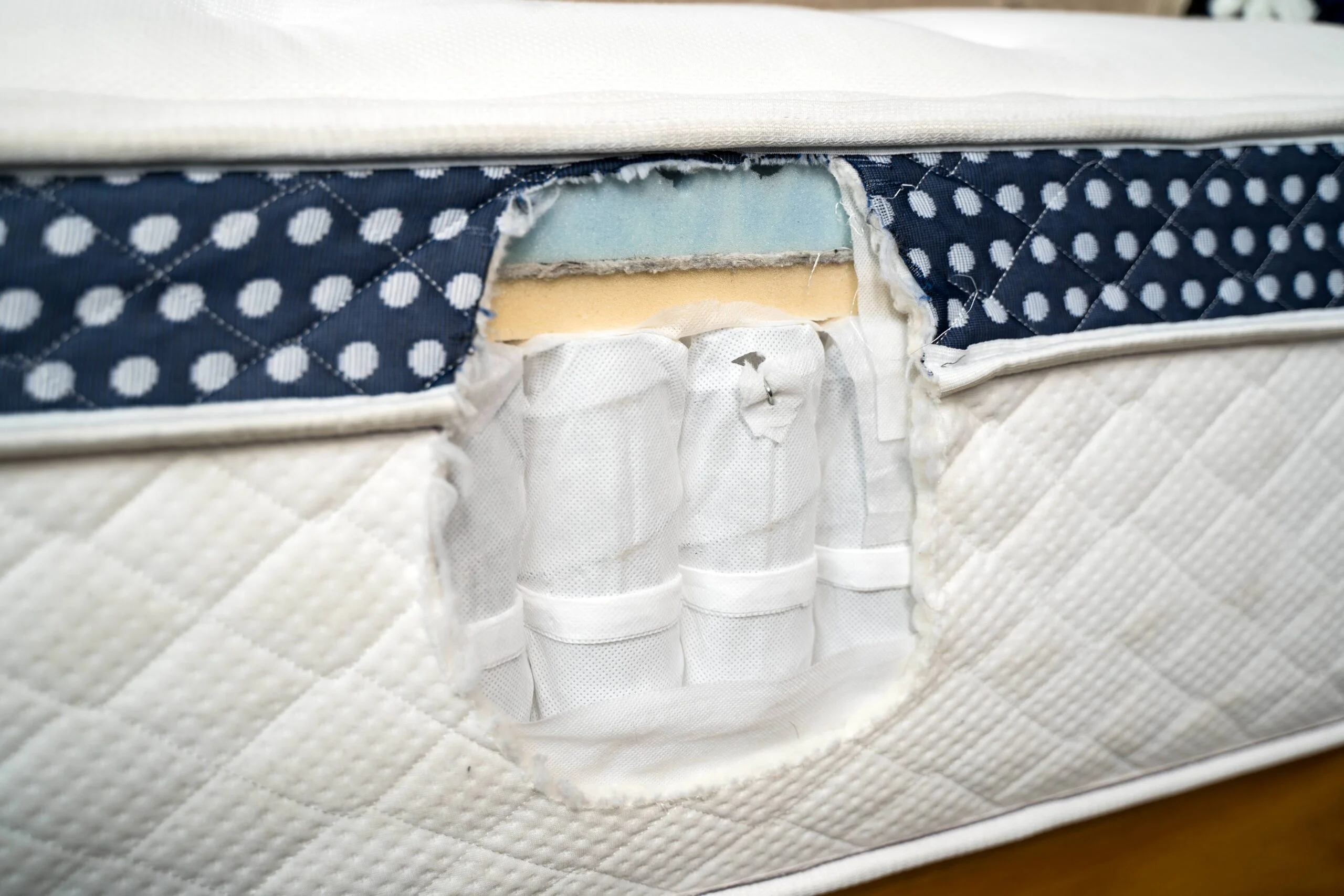
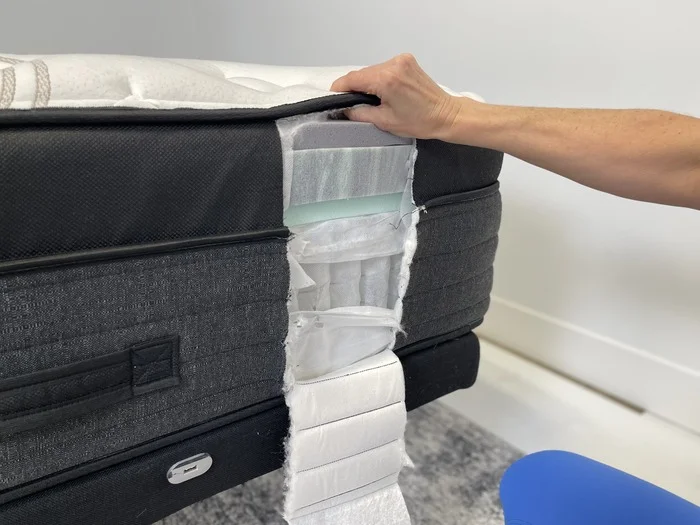
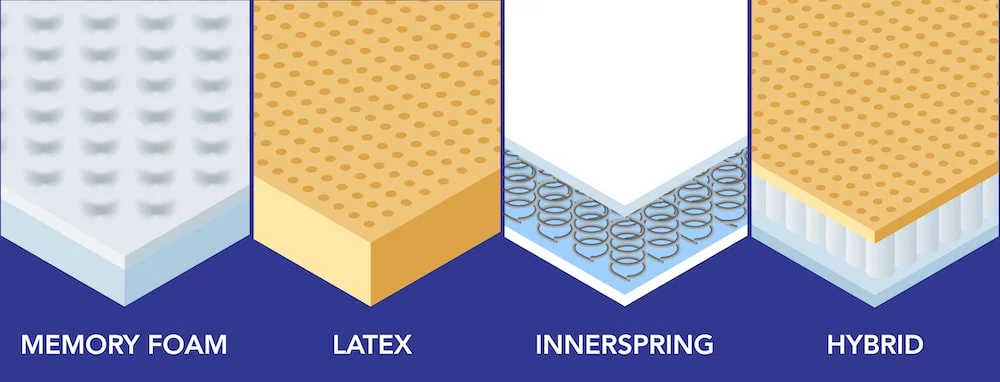
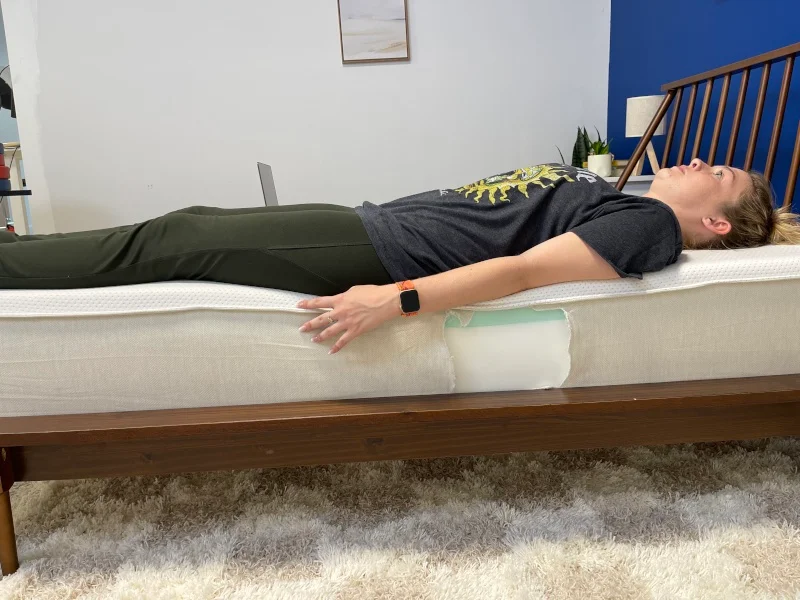
The materials inside a mattress can significantly impact its feel, responsiveness, pressure relief, firmness, and other characteristics, so it’s essential to understand the various types of mattresses available. We evaluate construction by cutting into the side of every bed we test and examining its layers.
Memory Foam
Memory foam is a distinct type of foam that is slow-moving and contouring, and many sleepers find it very comfortable. As the name implies, memory foam “remembers” your shape or the shape of something lying on the bed and maintains that shape even after moving away from it. This material is a great option for sleepers who like to feel like they are sinking into their mattress or hugged by their bed. It is also great at contouring the body, which helps provide excellent pressure relief.
Memory foam may be a good option for sleepers with scoliosis, as it can provide contouring and pressure relief that is imperative for pain relief, without being overly soft or lacking support. Memory foam comes in various levels of firmness and is a great material for people who experience pain when they sleep. However, it is not very responsive, which may make it difficult to move around when trying to get comfortable.
Innerspring
Innerspring mattresses are mattresses constructed out of two layers of coils, or springs, that are topped by a thinner layer of foam. However, this does not mean they are not comfortable. Innerspring mattresses are incredibly cooling as their coils provide a lot of breathability and air movement throughout the evening, and they usually offer good support.
Innerspring mattresses are also very durable, with strong edge support and long lives. They are a good choice for people who seek out durable and supportive mattresses that are less hugging than all-foam or memory mattresses.
Latex
Latex is a natural material, meaning that a lot of latex mattresses are naturally better at repelling allergens such as dust and better for the environment than some other materials, as natural latex is made from tree sap. Latex is also very comfortable and bouncy, but still offers the necessary support. It’s also a naturally cooling material, as it is very porous and breathable.
Latex can also be very bouncy and don’t always provide good motion isolation, so if you are prone to waking up to movements, latex may not be the best choice for you. However, it is a great choice for scoliosis sleepers who move a lot, as it is very responsive and you can move easily and comfortably.
Hybrid
Hybrid mattresses are made of one layer of coils and one layer of foam, so they are a hybrid between all-foam mattresses and innerspring. These mattresses combine the breathability of an innerspring mattress with the comfort and pressure relief of a foam mattress.
For many sleepers, hybrid beds are the ideal combination of these factors and are very appealing because of their comfort, support, and cooling. These mattresses are great for almost every type of sleeper and can provide the necessary support and comfort for many people. However, one downside of these mattresses is that they can cost a pretty penny. Due to their popularity and construction, hybrid mattresses are almost always upwards of $1,000.
Sleeping Position
Sleeping position, as we mentioned, is an important consideration when searching for the best mattress for scoliosis. While we generally recommend opting for a mattress that is softer to provide deep pressure relief and body contouring, this may not be the best option for you if you are a back or side sleeper. These sleepers require a bit more support than others, so softer mattresses may not provide sufficient support.
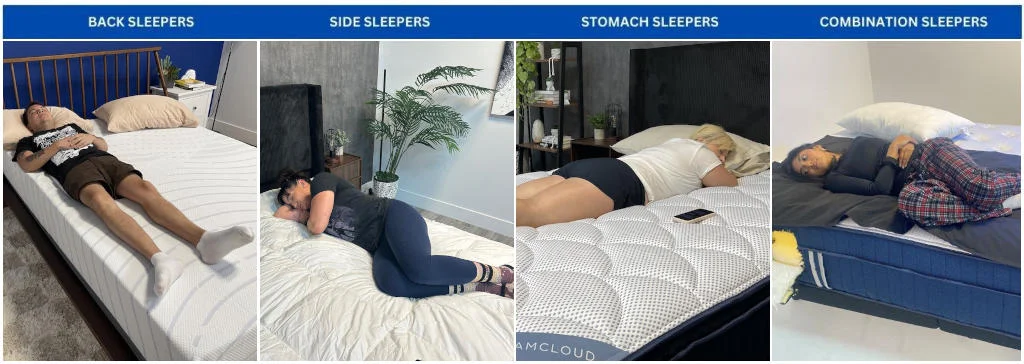
When picking the right mattress for you, we recommend starting with what feels the most comfortable. If you are a back sleeper who craves soft cushioning but needs relief from scoliosis pain, choose a bed that’s still supportive but offers good pressure relief. These guidelines are to help you navigate the world of mattress shopping, but they are not a one-size-fits-all rule. If you are struggling to choose the right option, it may help to try out some mattresses in person.
When we asked Dr. Dasgupta what the best sleeping position for scoliosis and back pain is, he said, “For patients with scoliosis, I recommend sleeping on your back with a pillow under the knees to alleviate any tension in the hips or lower back. You could also sleep on your side with a pillow between the knees to help keep your spine as aligned as possible. Both of these sleeping positions, with the help of pillows, can reduce pressure points and help support you throughout the night.”
- Back sleeping is widely considered the best sleeping position for alleviating back pain and promoting a neutral spinal alignment
- Side sleeping can be healthy for scoliosis, especially if you use the help of a pillow. Place a pillow on the curvier side of your lower back to promote maximum comfort and a healthy alignment.
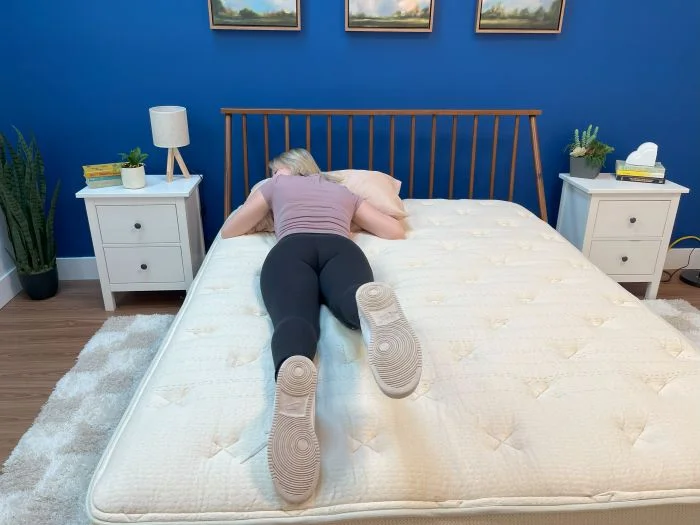
- Stomach sleeping is the riskiest sleeping position for scoliosis. It can put the neck in an unfavorable position that may cause misalignment and stress on the rest of the spine.
For more information on sleeping positions, see our Guide to Better Sleep Posture.
Edge Support
Throughout this review, you’ve heard me discuss edge support several times. While a strong support system is crucial for promoting proper spinal alignment, it’s only helpful if the entire mattress is equally supportive. Edge support refers to the strength of the edges of your mattress. This can affect how much of the mattress you can lie on, as well as the durability of the mattress.
If you struggle to get comfortable due to scoliosis pain while sleeping, then strong edge support will be necessary, as it allows you to move around and utilize the entire bed space. Furthermore, strong edges can help prevent your mattress from prematurely sagging, which is crucial for any consumer. The durability of your mattress also depends on the quality and type of materials, which will affect both the price of the mattress and how well it holds up.
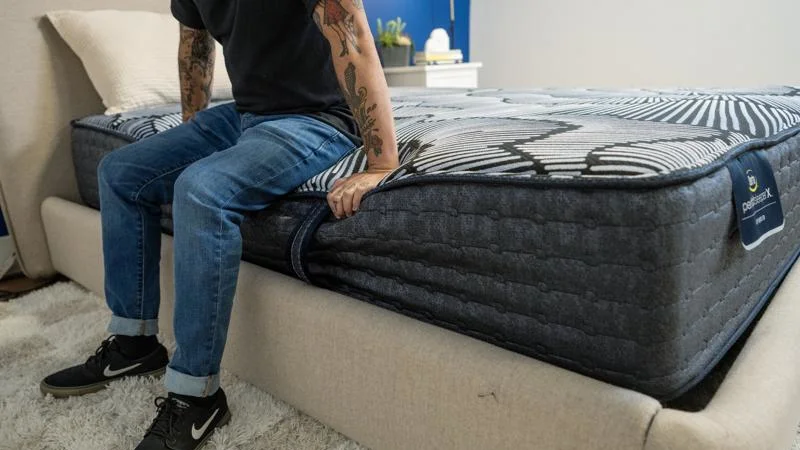
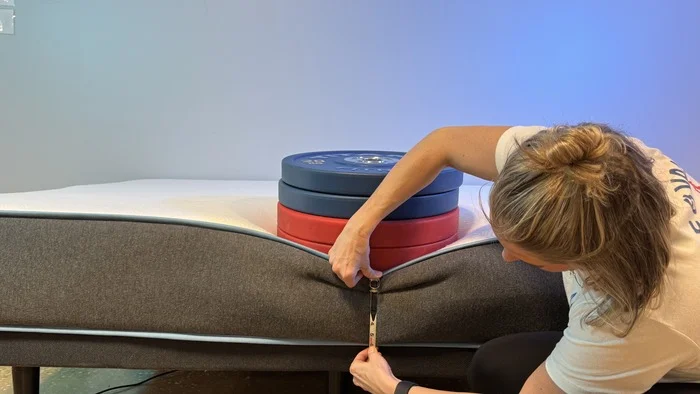
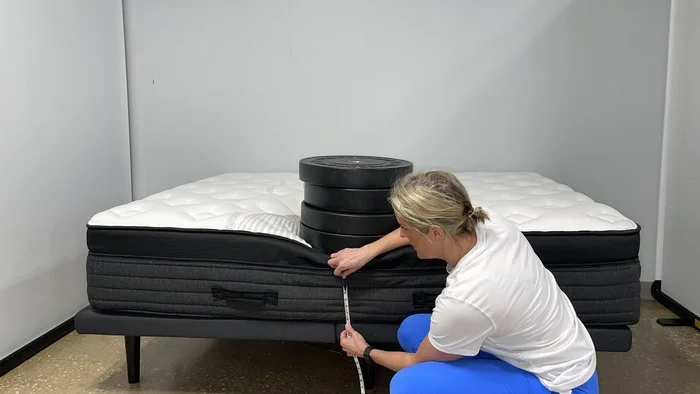
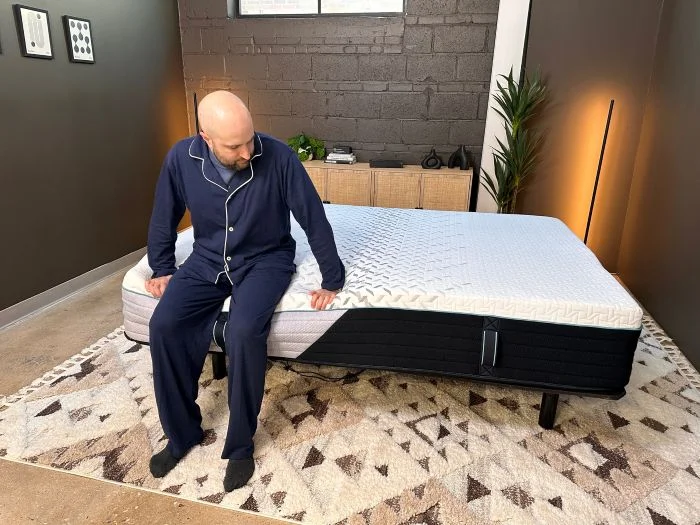
We test for edge support by sitting and lying directly on the edge of the mattress and observing our stability. Ideally, the edges should be just as supportive as the very center of the bed. If they lack support, our testers can feel themselves sloping off the bed, and sometimes even falling off.
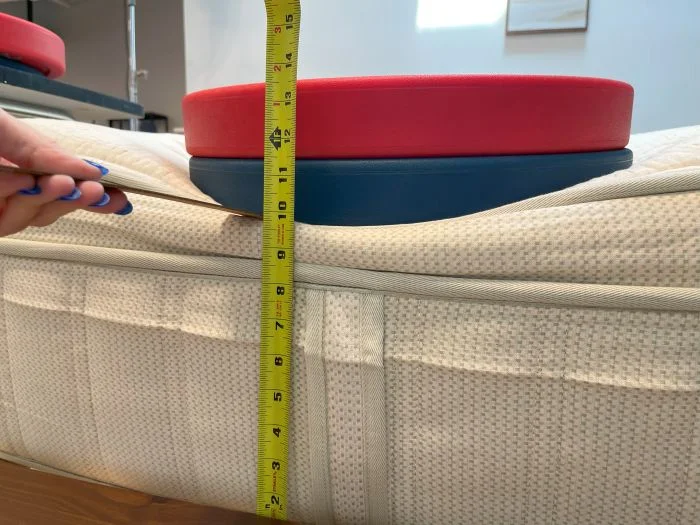
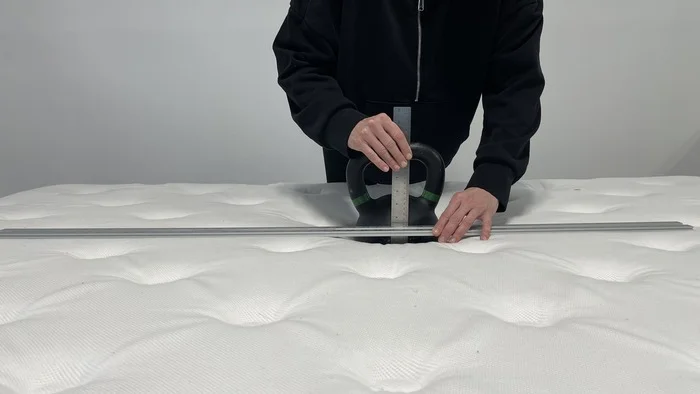
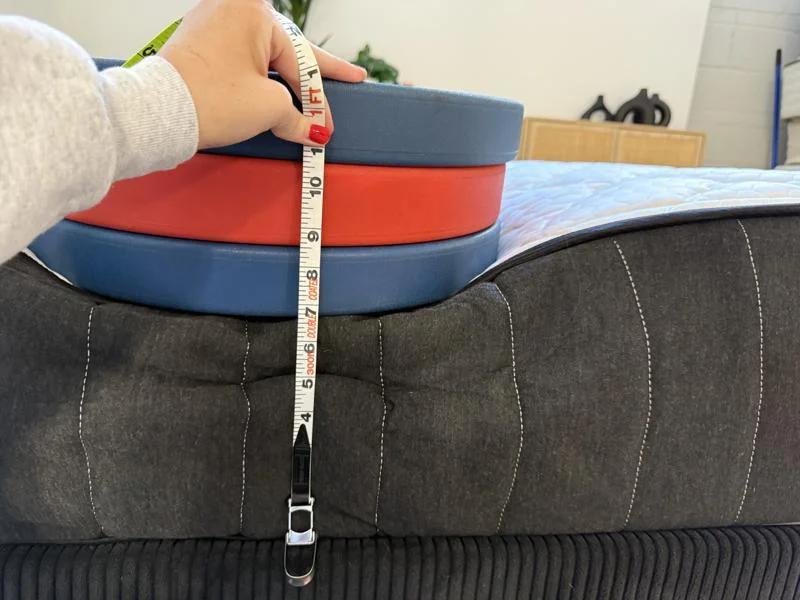
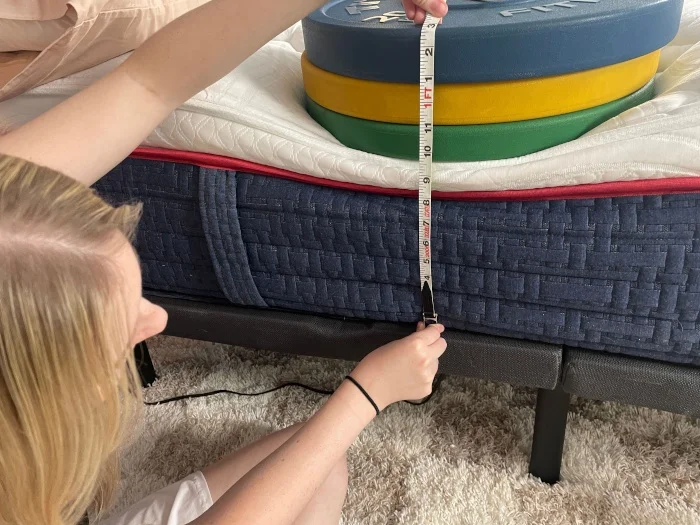
We also assess the edges by stacking weighted plates on them and measuring how many inches the layers compressed. While a tall mattress can get away with more inches of sinkage, you’ll really feel the lack of support if the bed is shorter.
Scoliosis and Sleep
Scoliosis does more than contribute to discomfort. It can also help lead to the development of sleep disorders like sleep apnea, which can make it harder to fall or stay asleep. A comfortable mattress is imperative for maintaining spinal alignment and creating a comfortable atmosphere for a restful sleep.
What Is Scoliosis?
The Mayo Clinic defines scoliosis as “a sideways curvature of the spine” that can result in respiratory issues, orthopedic issues, and/or an apparent asymmetry in areas like the ribs, hips, or shoulders It’s a relatively common condition that deserves its own roundup for mattresses we believe to be specifically helpful for scoliosis. The Columbia University Irving Medical Center suggests that 2–3 percent of the U.S. population has some form of scoliosis, with many cases arising during puberty.
Symptoms and Signs of Scoliosis
Symptoms of scoliosis, or a curvature in the spine, can include an abnormal bend through the back, uneven hips or shoulders, prominent shoulder blades, and pain throughout these areas. Parts of the neck and jaw may also be affected by scoliosis and may require chiropractic or surgical adjustment. Difficulty walking, opening the jaw, turning the head all the way, and bending over may also be associated with some cases of scoliosis. The best way to determine if the symptoms you are experiencing are related to scoliosis is to consult a doctor.
Tips for Sleeping with Scoliosis
We’ve got a whole page of tips for sleeping with scoliosis, but I wanted to leave you with five quick callouts from the article that you can implement into your nighttime routine.
- Avoid sleeping on your stomach
- Try sleeping on your back or side
- Find a balance of comfort and support (preferably somewhere around medium-firm)
- Use pillows to promote proper alignment. You can place a pillow under your hips or spinal curve to help promote spinal and hip alignment during the night. Or it may also help to place a pillow between your knees to aid in spinal alignment
- Find the right brace and take good care of it
FAQs
What type of mattress is best for scoliosis?
There is no one-size-fits-all all mattress, so the best mattress for you and your scoliosis will depend on several factors. This includes your personal preferences, needs, budget, and wants. In general, a foam mattress is a good place to start, as it can be supportive but still contouring and pressure-relieving. Hybrid mattresses offer excellent responsiveness but also have all of the great elements of all-foam mattresses. Innerspring and latex can be good options because they are so responsive, but generally not contouring enough for sleepers with pain.
Can you still sleep comfortably with scoliosis?
Yes! You certainly can still sleep comfortably and well, even with scoliosis. Finding the right mattress is a good first step, but consulting your doctor on other treatment options may help improve your comfort level when sleeping and living with scoliosis.
Is a firm or soft mattress better for scoliosis?
The answer is, it depends. In general terms, we suggest a softer mattress for individuals with scoliosis, as softer mattresses can provide deeper and more comfortable pressure relief and contouring, which can be helpful for those experiencing pain while sleeping. However, firmer mattresses generally offer a bit more support than soft mattresses, which can also be important for sleepers with scoliosis. We recommend considering your personal preferences when it comes to comfort and whether you want more contouring and relief, or more support and spinal alignment. However, there are certainly soft mattresses that offer excellent support, so it is helpful to do some research into the exact capabilities of the mattress you want to buy.
Sources:
- 8 facts to know about scoliosis. Columbia University Irving Medical Center. (2021, July 12). https://www.cuimc.columbia.edu/news/8-facts-know-about-scoliosis
- Janicki, J. A., & Alman, B. (2007, November). Scoliosis: Review of diagnosis and treatment. Paediatrics & child health. https://pmc.ncbi.nlm.nih.gov/articles/PMC2532872/
- Li, X. (2018, July 21). Does scoliosis affect sleep breathing?. World Neurosurgery. https://www.sciencedirect.com/science/article/abs/pii/S1878875018315845?via%3Dihub
- Mayo Foundation for Medical Education and Research. (2025, April 25). Scoliosis. Mayo Clinic. https://www.mayoclinic.org/diseases-conditions/scoliosis/symptoms-causes/syc-20350716
- The best – and worst – sleep positions for back pain. Keck Medicine of USC. (2025, June 28). https://www.keckmedicine.org/blog/the-best-and-worst-sleep-positions-for-back-pain/
- Public Broadcasting Service. (2013, September 10). Melting to keep cool. PBS. https://www.pbs.org/wgbh/nova/article/melting-to-keep-cool/
- Skarpsno, E. S., Mork, P. J., Nilsen, T. I. L., & Holtermann, A. (2017, November 1). Sleep positions and nocturnal body movements based on free-living acce: NSS. Nature and Science of Sleep. https://www.dovepress.com/sleep-positions-and-nocturnal-body-movements-based-on-free-living-acce-peer-reviewed-fulltext-article-NSS